Tom Bischof Critiques Bayern’s Performance After Wolfsburg Win
Tom Bischof had barely caught his breath when he started picking apart Bayern’s flaws.
"It's always bad when you concede so many goals and face so many chances," the 20-year-old told Sky after the 1–0 win in Wolfsburg, speaking with the bluntness of someone who has spent too long watching from the side. He talked about basics gone missing, counter-pressing that didn’t bite, distances that didn’t need to be run. For a player only just back from a muscle injury and not yet a regular, it was a striking choice of words.
Striking, and risky.
Bischof had only just returned to the pitch in Wolfsburg after four weeks out and two full games spent on the bench. He was effectively criticising a structure he’d only been part of again for 90 minutes, while at the same time placing himself slightly outside of it: “I haven't been on the pitch much recently, so I've observed this from the sidelines.” The implication was clear—he had seen the problems from a distance, and they weren’t primarily his.
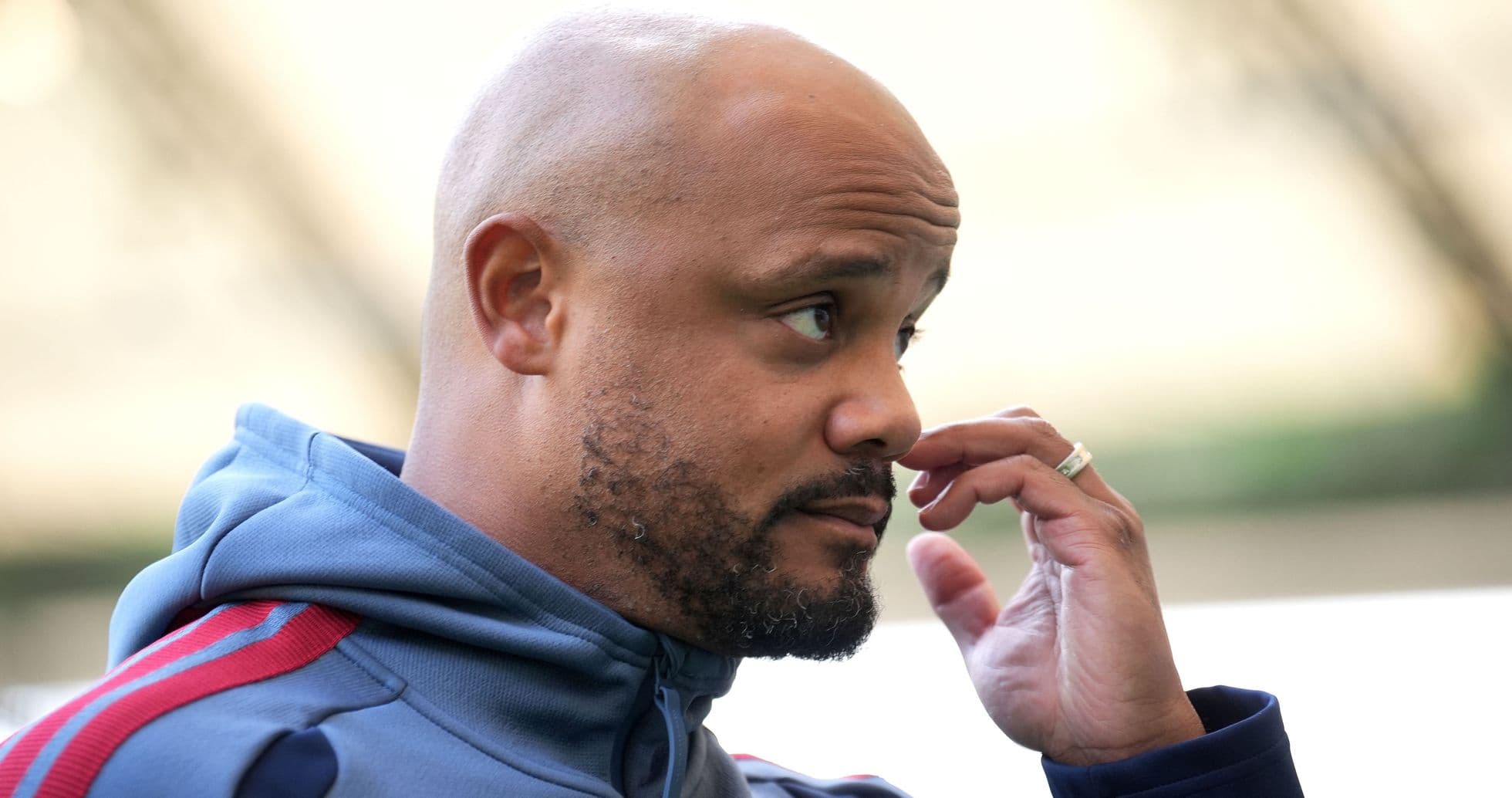
So when Vincent Kompany was asked whether the youngster had a point, the Bayern coach broke into a broad grin. Then he cut the idea down with one clean sentence.
"No, of course not. He is a young player and made a mistake in that interview."
From Kompany, that was unusual territory. The Belgian has made it almost a principle not to criticise his players in public. Yet the way he handled this small internal flare-up said more about his management than any tactical lecture. He didn’t bristle. He didn’t escalate. He corrected.
The tone mattered. His words were firm, not furious; dismissive of the opinion, not the player. Kompany simply reset the narrative with that same easy smile.
"The problem isn't a lack of willingness to counter-press; you can't win games that way," he explained, calmly dismantling Bischof’s analysis. For him, the issue was not desire but impatience. Bayern, he argued, had tried to decide the game too early. "You don't always have to decide games in the first ten or 15 minutes. That doesn't always work."
They had started strongly, then burned through their energy and shape. "You can go into counter-pressing once, twice or three times, but at some point your legs start to give way." In Kompany’s eyes, the correction came after the break, not in the interviews. Bayern kept the ball better, controlled possession, and no longer needed to chase it so frantically. The counter-press became an option, not a crutch.
His verdict on Bischof at the end was as simple as it was disarming. "Tom is a great lad. But it's straight after the match and I had a bit more perspective." With that, the coach effectively closed the file. No public feud. No lingering tension. Just a lesson delivered and the air cleared.
It was hard not to imagine how this might have played out under Julian Nagelsmann or Thomas Tuchel. Both brilliant tacticians, both occasionally combustible in front of a microphone. Confronted directly with a young player’s critique of their game model, they might have reacted on the merits—and still ended up singed by the fallout. Kompany, by contrast, stayed coherent and cool. That calm is becoming one of his defining assets at Säbener Straße.
The night itself in Wolfsburg followed a similar script: predictable in outline, strange in detail.
Bayern arrived as freshly crowned champions, three days removed from the emotional crash of their Champions League exit to Paris Saint-Germain. The Volkswagen Arena was sold out, the atmosphere raw, and 16th-placed VfL Wolfsburg played like a team with everything on the line. Bayern, by comparison, played like a side caught between relief and fatigue.
"They could have scored five goals; that wasn't good at all from us," Bischof admitted about the first half. The opening ten minutes, he felt, had hinted at what Bayern could do with the ball. Then the level dropped, the structure loosened, and Wolfsburg repeatedly carved out chances. Only the excellence of the man in goal kept the champions from serious trouble.
"The way Manu (Neuer) always steps up when he gets the chance is brilliant," Bischof said, giving his goalkeeper the praise he clearly deserved. Urbig, in the form he showed here, looked almost untouchable.
At the other end, Bayern barely laid a glove on the Wolves’ compact defence. The clearest opportunity fell, as it so often does, to Harry Kane. From the penalty spot in the 36th minute, the Englishman slipped at the decisive moment and dragged his shot wide. It was only his second miss from 25 Bundesliga penalties—a rarity, but not a shock in a week where Bayern’s margins had finally turned against them.
"With Harry, you're usually certain he'll score, but even he's allowed to miss every now and then," Bischof remarked. It sounded almost surreal: Bayern’s season, so relentlessly efficient, now resting on the idea that even their most reliable finishers are human.
The pattern was familiar. Since sealing the title on 19 April, Bayern had already stumbled through chaotic first halves in Mainz (4-3) and against Heidenheim (3-3). This time, there was no looming showdown with PSG to justify wholesale rotation. Kompany kept his core together. Kane, Michael Olise and Joshua Kimmich—the three outfield pillars of this side—all started.
Yet cohesion was missing. The dressing room at half-time could only be described as sour.
And then, as in Mainz and against Heidenheim, the switch flipped.
"I also paid tribute to the team for their reaction," Kompany said. "It's not easy to come out and practically turn everything around. We did that again today in the second half." Bayern emerged sharper, cleaner in possession, far more aggressive in their positioning. Wolfsburg, so bold before the break, were now forced back and rarely allowed to breathe.
Dieter Hecking, on the opposite bench, could only acknowledge what he had just seen. "What his counterpart has achieved with Bayern this season is on another level," the Wolfsburg coach said. He pointed to the consistency, the relentlessness, the ability to respond even after the emotional blow of losing to PSG. "Even today, it's not a given that, after such a defeat, they would keep the pressure on us so high and give it their all to still win this match. That's worthy of a compliment."
The pressure finally told on 56 minutes.
Olise, who has turned his trademark move into something close to an art form, picked up the ball on the right, drifted inside and unleashed a vicious left-footed shot across goal into the far corner. The strike was both utterly expected and still breathtaking. Everyone in the stadium knew what he wanted to do. Nobody could stop it.
Kompany had already framed this new normal weeks earlier, after a similar goal in Mainz. "Michael has set the bar so high for himself that I would have been disappointed if it hadn't gone in – and that's absurd. It shouldn't be normal, but he's got us used to it." Wolfsburg now understood exactly what he meant.
That single moment of quality was enough. Bayern, nursing bruises from Europe, walked away with three points and a flicker of joy just 72 hours after their Champions League dream had ended.
Next weekend, the champions will lift their 35th Bundesliga trophy in front of their own supporters after the final-day meeting with 1. FC Köln. Seven days later, they will step out in Berlin to face VfB Stuttgart in the DFB-Pokal final, with the chance to turn a strong season into a domestic statement.
For Max Eberl, the bar is clear. Before the Wolfsburg match, the sporting director made no attempt to dress things up. Anything less than a double, he told Sky, would leave the campaign feeling incomplete, even with the title already secured. "The way we play, we're German champions, we reached the Champions League semi-finals and held our own against the best team in Europe. We're also in our first cup final in years, and we want to win it," he said, calling it "a very, very good season so far."
He also pointed to something that never appears on a honours board. "Another soft fact is this: how many people rave about how much fun it is to watch Bayern games. They've never been Bayern fans, but they enjoy watching us because it's football just as you'd want it to be. You don't get a trophy for that, but it counts too."
The double would give this Bayern side its hard proof. The way they play—and the way Kompany handles nights like Wolfsburg—suggests they intend to go and get it.