Top 100 Football Academies Worldwide Ranked in New Study
A recent study has unveiled the ranking of the 100 best football academies globally. Every elite player begins their journey at an academy, and the quality of training they receive there heavily influences their future career.
Football demands dedication from grassroots levels. The early years spent in academies often set the trajectory for a player’s professional life. While some academies like Manchester United’s Carrington, Barcelona’s La Masia, and Jong Ajax are well-known for producing outstanding talent, many other academies operate quietly yet effectively without much spotlight.
The annual ranking by the CIES Football Observatory evaluated clubs training players active in 49 global leagues. Their training index considers how many players were trained, the level of clubs they last played for, and the official game minutes they logged in the past year.
Ranks 100-91: Hidden Gems
Even successful clubs like the 2024 Europa League winners Atalanta appear as low as 93rd. They share this tier with Villarreal, Basel, Braga, and Chile’s Colo-Colo. Atalanta’s academy, named after Mino Favini, boasts graduates like Alessandro Bastoni and Amad Diallo.
At 100th place is Le Havre AC, known for launching stars such as Paul Pogba and Dimitri Payet, even though bigger French clubs have recently overshadowed them.
- 100: Le Havre AC (France) – 37 players, Index 32.6
- 99: Caracas FC (Venezuela) – 49 players, Index 32.6
- 98: FC Basel (Switzerland) – 31 players, Index 32.8
- 97: FC Copenhagen (Denmark) – 30 players, Index 32.8
- 96: Lokomotiv Moscow (Russia) – 30 players, Index 32.8
- 95: SC Braga (Portugal) – 30 players, Index 33.1
- 94: Colo Colo (Chile) – 47 players, Index 33.2
- 93: Atalanta (Italy) – 25 players, Index 33.5
- 92: Gimnasia La Plata (Argentina) – 26 players, Index 33.5
- 91: Villarreal (Spain) – 30 players, Index 34.1
Ranks 90-81: Underappreciated Talent Pools
Italian giants Inter Milan and Juventus rank lower, perhaps highlighting Serie A’s preference for transfers over youth. Yet, emerging talents like Kenan Yildiz and Federico Dimarco tell a different story.
Clubs like Uzbekistan’s Pakhtakor and Peru’s Sporting Cristal emphasize quantity over star power, with dozens of professionals emerging despite limited fame. Atletico Mineiro stands as Brazil’s first representative here, notable for producing Manchester City’s Savinho.
- 90: Pakhtakor (Uzbekistan) – 57 players, Index 34.1
- 89: Liverpool FC (Uruguay) – 37 players, Index 34.7
- 88: Inter Milan (Italy) – 29 players, Index 35.0
- 87: Juventus (Italy) – 32 players, Index 35.0
- 86: Standard Liege (Belgium) – 34 players, Index 35.5
- 85: LDU Quito (Ecuador) – 40 players, Index 35.8
- 84: Sporting Cristal (Peru) – 56 players, Index 35.9
- 83: CA Union (Argentina) – 36 players, Index 37.0
- 82: Deportivo Saprissa (Costa Rica) – 45 players, Index 37.1
- 81: Atletico Mineiro (Brazil) – 33 players, Index 37.2
Ranks 80-71: Youth Traditions and Surprises
Liverpool remains England's most decorated club with a strong youth tradition, having produced Steven Gerrard and more recently Trent Alexander-Arnold and Curtis Jones. Despite their commitment to young players, Liverpool ranks only 75th, the lowest Premier League academy in the top 100.
They sit above AS Monaco, known for world-class alumni like Kylian Mbappe, yet trail behind lesser-known European clubs like Slovakia’s MSK Zilina and Serbia’s FK Vojvodina, a ranking that may seem unfair.
- 80: Chivas Guadalajara (Mexico) – 37 players, Index 37.5
- 79: RCD Espanyol (Spain) – 33 players, Index 37.5
- 78: AS Monaco (France) – 36 players, Index 37.5
- 77: FC Midtjylland (Denmark) – 37 players, Index 37.9
- 76: Maccabi Tel Aviv (Israel) – 38 players, Index 38.9
- 75: Liverpool (England) – 36 players, Index 39.1
- 74: Deportivo Cali (Colombia) – 54 players, Index 39.7
- 73: MSK Zilina (Slovakia) – 41 players, Index 39.7
- 72: FK Vojvodina (Serbia) – 42 players, Index 39.9
- 71: CA Banfield (Argentina) – 49 players, Index 40.1
Ranks 70-61: Spain’s Basque Excellence and Argentine Influence
The Basque region continues to produce top-level managers and promising players through Real Sociedad’s La Cantera. Players like Martin Zubimendi chose Arsenal over bigger suitors, while Mikel Oyarzabal remains a feared opponent.
Atletico Madrid maintains homegrown talent with stars like Rodri, Koke, Giuliano Simeone, and Pablo Barrios regularly competing in the Champions League.
- 70: CA Belgrano (Argentina) – 41 players, Index 40.9
- 69: Montevideo Wanderers (Uruguay) – 43 players, Index 41.0
- 68: FC Nordsjaelland (Denmark) – 39 players, Index 41.1
- 67: Independiente Medellin (Colombia) – 43 players, Index 41.9
- 66: Valencia (Spain) – 38 players, Index 42.0
- 65: Atletico Madrid (Spain) – 33 players, Index 42.2
- 64: Slavia Praha (Czechia) – 39 players, Index 42.3
- 63: Athletic Club (Spain) – 28 players, Index 42.5
- 62: Sparta Praha (Czechia) – 41 players, Index 42.8
- 61: Real Sociedad (Spain) – 27 players, Index 43.3
Ranks 60-51: Established European Powerhouses
Manchester United’s Carrington academy, once central to Sir Alex Ferguson’s dominance, continues to develop key players like Marcus Rashford and Scott McTominay but now ranks 56th. Bayern Munich, two spots higher at 54th, benefits from stars like Jamal Musiala and Karim Adeyemi.
Feyenoord upholds its Dutch motto "Getting Better Every Day," combining football skill with personal growth. Their graduates number 47, reflecting the effectiveness of their youth policy.
- 60: Club Guarani (Paraguay) – 46 players, Index 43.5
- 59: FC Porto (Portugal) – 38 players, Index 44.0
- 58: Athletico Paranaense (Brazil) – 35 players, Index 44.5
- 57: Olimpia Asuncion (Paraguay) – 55 players, Index 44.5
- 56: Manchester United (England) – 40 players, Index 45.2
- 55: CA Independiente (Argentina) – 43 players, Index 45.2
- 54: Bayern Munich (Germany) – 40 players, Index 45.9
- 53: Club Brugge (Belgium) – 35 players, Index 47.2
- 52: CF Pachuca (Mexico) – 46 players, Index 47.4
- 51: Feyenoord (Netherlands) – 47 players, Index 47.9
Ranks 50-41: English Clubs and South American Powerhouses
Chelsea struggles with an over-reliance on signings instead of trusting its Cobham academy, which produces talents like Michael Olise and Declan Rice. In contrast, Arsenal integrates youth more effectively, with Bukayo Saka and Myles Lewis-Skelly as examples.
South American clubs like Colombia’s Envigado FC and Argentina’s Racing Club continue to supply many professionals worldwide.
- 50: Chelsea (England) – 34 players, Index 48.3
- 49: Envigado FC (Colombia) – 64 players, Index 48.3
- 48: Arsenal (England) – 42 players, Index 48.7
- 47: Racing Club (Argentina) – 49 players, Index 50.1
- 46: Hajduk Split (Croatia) – 40 players, Index 50.5
- 45: Argentinos Juniors (Argentina) – 48 players, Index 50.8
- 44: Stade Rennais (France) – 43 players, Index 50.9
- 43: AZ Alkmaar (Netherlands) – 43 players, Index 52.8
- 42: Shakhtar Donetsk (Ukraine) – 60 players, Index 53.1
- 41: Club Estudiantes (Argentina) – 51 players, Index 53.5
Ranks 40-31: Brazilian Dominance
Brazilian clubs lead this segment. Fluminense produced Joao Pedro and Evanilson; SC Internacional laid the groundwork for Alisson’s success; Cruzeiro counts 43 players logging significant minutes, while Gremio tops with 55.
Santos remains iconic for launching Neymar, whose 2017 £192 million transfer to PSG remains a record, underscoring Brazil’s talent production.
- 40: Penarol (Uruguay) – 60 players, Index 53.5
- 39: RB Salzburg (Austria) – 50 players, Index 54.3
- 38: Fluminense (Brazil) – 51 players, Index 55.2
- 37: SC Internacional (Brazil) – 44 players, Index 55.4
- 36: Club Libertad (Paraguay) – 51 players, Index 55.5
- 35: Cruzeiro (Brazil) – 50 players, Index 56.0
- 34: Lyon (France) – 48 players, Index 56.1
- 33: Gremio (Brazil) – 55 players, Index 56.4
- 32: Independiente del Valle (Ecuador) – 54 players, Index 56.8
- 31: Santos (Brazil) – 53 players, Index 57.6
Ranks 30-21: Dutch and Argentine Contributions
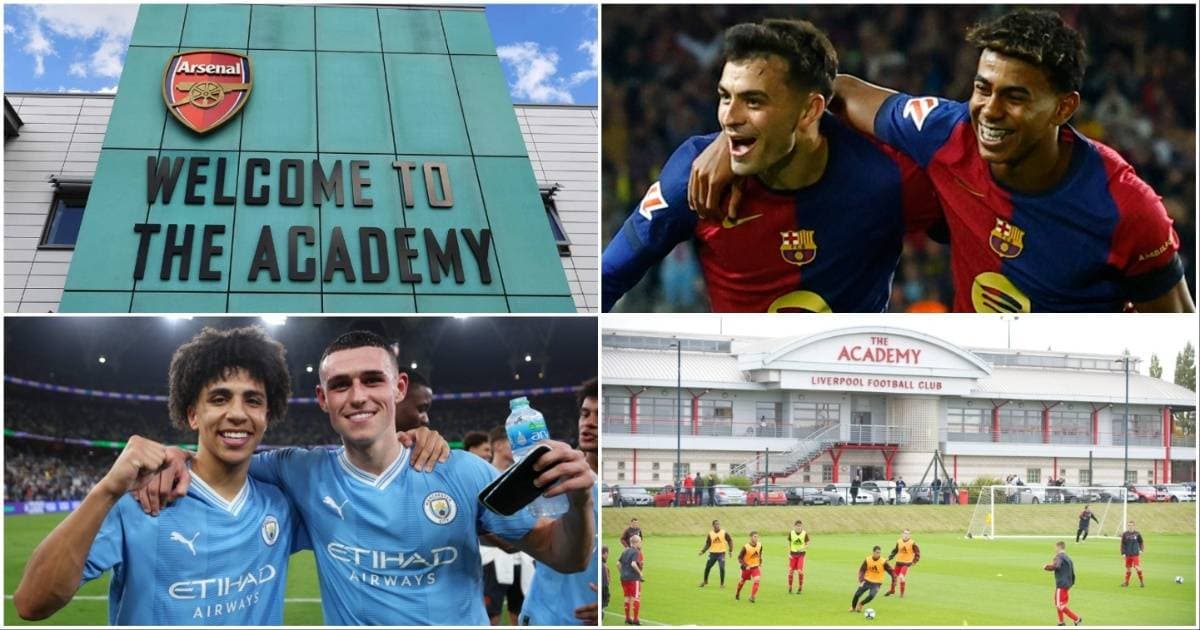
Manchester City has built a steady academy producing Phil Foden, Cole Palmer, and Morgan Rogers, but tends to lose young stars too easily.
PSV Eindhoven shines with graduates like Cody Gakpo and Memphis Depay, while Argentina’s Newell’s Old Boys, home to Messi’s roots, still contribute many players, though playing time has decreased.
- 30: PSV (Netherlands) – 48 players, Index 57.8
- 29: Danubio FC (Uruguay) – 66 players, Index 58.7
- 28: Cerro Porteno (Paraguay) – 57 players, Index 58.9
- 27: KRC Genk (Belgium) – 45 players, Index 59.7
- 26: Newell's Old Boys (Argentina) – 69 players, Index 60.6
- 25: RSC Anderlecht (Belgium) – 52 players, Index 60.9
- 24: Rosario Central (Argentina) – 60 players, Index 61.7
- 23: CA Lanus (Argentina) – 65 players, Index 61.7
- 22: Atletico Nacional (Colombia) – 62 players, Index 63.2
- 21: Manchester City (England) – 50 players, Index 63.2
Ranks 20-11: Rising Stars and Brazilian Strength
Paris Saint-Germain shifted focus to youth under Luis Enrique, with Warren Zaire-Emery becoming a key player in recent Champions League successes.
Palmeiras ranks 18th, producing high-potential talents Estevao and Endrick. Other Brazilian sides include Flamengo at 15th and Corinthians at 14th, but the highest-ranked is Sao Paulo, with 65 graduates including Antony.
- 20: FK Partisan (Serbia) – 70 players, Index 63.9
- 19: Paris Saint-Germain (France) – 62 players, Index 65.0
- 18: Palmeiras (Brazil) – 56 players, Index 65.1
- 17: Club Nacional (Uruguay) – 70 players, Index 65.4
- 16: CA San Lorenzo (Argentina) – 66 players, Index 66.8
- 15: Flamengo (Brazil) – 51 players, Index 67.4
- 14: Sc Corinthians (Brazil) – 57 players, Index 68.8
- 13: Dynamo Kyiv (Ukraine) – 63 players, Index 70.3
- 12: Sao Paulo (Brazil) – 65 players, Index 71.3
- 11: Red Star Belgrade (Serbia) – 79 players, Index 73.3
Top 10: Benfica Leads Ahead of Giants
Red Star Belgrade ranks 11th, ahead of Real Madrid at 9th, though the quality gap is clear with Real producing stars like Achraf Hakimi.
Boca Juniors is not Argentina’s leading academy; that honor belongs to River Plate, boasting 97 graduates worldwide, placing them above even Ajax.
Surprisingly, Barcelona’s La Masia ranks second, with Benfica topping the list for the second year running. Benfica’s notable graduates include Ruben Dias, Goncalo Ramos, Bernardo Silva, Joao Cancelo, and Joao Neves.
- 10: Velez Sarsfield (Argentina) – 70 players, Index 73.8
- 9: Real Madrid (Spain) – 58 players, Index 74.8
- 8: Defensor SC (Uruguay) – 88 players, Index 77.0
- 7: Dinamo Zagreb (Croatia) – 77 players, Index 77.9
- 6: Sporting CP (Portugal) – 76 players, Index 83.4
- 5: Boca Juniors (Argentina) – 86 players, Index 95.0
- 4: Ajax (Netherlands) – 80 players, Index 97.6
- 3: River Plate (Argentina) – 97 players, Index 98.3
- 2: Barcelona (Spain) – 76 players, Index 98.7
- 1: Benfica (Portugal) – 93 players, Index 105.1