Top Center Forwards of 2025-26: Rankings and Insights
Center forwards live and die by goals. Miss a few chances, go a couple of games without scoring, and the murmurs start. But the very best No. 9s bend games even when the ball won’t go in: dragging centre-backs into places they don’t want to go, dropping into pockets to knit play together, or ghosting into the six-yard box a split second before anyone else has even smelled danger.
The latest FC 100 ranking of center forwards is stacked with exactly those types. Some are pure finishers, some are creators disguised as strikers, some are ageing greats still bullying defenses on muscle memory and instinct. All of them, in very different ways, are still shaping seasons.
20. Alexander Sørloth, Atlético Madrid/Norway, 30
At 6-foot-5, Alexander Sørloth is everything defenders hate in the air and calm enough in front of goal to make that size count. He led Atlético Madrid with 13 LaLiga goals in 2025-26, and over the past three seasons only Robert Lewandowski has scored more in the league than his 56.
The numbers say “automatic starter.” Diego Simeone’s trust says otherwise. Sørloth’s 13 league goals came in just 1,981 minutes, five more than teammate Julián Álvarez with similar time, yet Simeone still grumbled that the Norwegian doesn’t impose himself often enough. After Sørloth scored twice in a 4-2 win over Espanyol in February, Simeone reminded him he’d created three chances in just 15 minutes in a previous outing and demanded that version of him more often.
That’s the story with Sørloth: a battering ram with clinical finishing who hasn’t quite convinced his coach he can dominate week after week.
His future mirrors that uncertainty. Both he and Álvarez have been linked with moves away this summer. If Álvarez goes and Sørloth stays, the door opens for him to own Atlético’s No. 9 role in 2026-27. If he stays in Madrid at all, this is his chance to prove he’s more than just a numbers striker.
19. Viktor Gyökeres, Arsenal/Sweden, 28
Viktor Gyökeres arrived at Arsenal with a €70 million price tag and the expectation he’d explode immediately. He didn’t quite do that. He still finished with 21 goals in 55 games, 14 of them in the Premier League as the Gunners finally ended a 22-year title drought.
He picked his moments. A brace in a 3-1 win over Tottenham in the North London derby. Five goals in Arsenal’s run to the Champions League final. Three separate games in which he both scored and assisted, all after January, more than any other player at an English club.
For Sweden, he dragged them to the World Cup with a hat trick against Ukraine and an 88th-minute winner versus Poland in the playoffs, then chipped in a goal and two assists at the tournament before Graham Potter’s side fell to France in the round of 32.
Yet the feeling around Gyökeres is that there’s still another gear. His numbers in Portugal with Sporting — 97 goals in 102 games — set a brutal standard, and he hasn’t reached that level in England. Mikel Arteta has also shown he doesn’t see him as an automatic starter in the biggest games; Gyökeres watched the Champions League final defeat to Paris Saint-Germain from the bench.
To become Arsenal’s undisputed No. 9 instead of a high-end rotation piece, he needs more goals, and more of them in defining moments.
18. Mikel Oyarzabal, Real Sociedad/Spain, 29
For years, Mikel Oyarzabal was the clever left-sided creator at Real Sociedad: sharp runs, precise crosses, steady goal returns. In 2025-26, he reinvented himself as something else entirely — and Spain rode that reinvention to a World Cup.
Oyarzabal hit 15 goals and four assists in over 2,700 LaLiga minutes, but Real Sociedad limped to a 10th-place finish after an eight-game winless run to close the season. Then came the summer. Spain moved him inside as their attacking fulcrum, an unconventional center forward who pressed from the front, linked play around the box and still finished ruthlessly.
He ended the tournament with five goals, equalling Spain’s record for a single World Cup, and no Spanish player scored more than his 21 goals for club and country in 2026. With Lamine Yamal struggling for fitness, Oyarzabal’s work rate and intelligence without the ball were as important as his finishing.
He’s now at the peak of his powers: smart, technically sharp, capable of playing anywhere across the front line. That versatility almost feels unfair.
Transfer links to Barcelona come every year, but Oyarzabal has two years left on his deal and insists he’s at home in San Sebastián, emotionally tied to the club that made him. Real Sociedad still feel like his natural stage, even as his game screams “superclub.”
17. Donyell Malen, Roma/Netherlands, 27
Donyell Malen has always been a puzzle. A striker’s instincts in a winger’s frame, a player who can look out of place in the wrong setup and devastating in the right one.
Roma found the right one.
After a flat spell at Aston Villa, Malen arrived in Rome on loan in January and tore Serie A open. He scored 14 league goals, tied for second behind Lautaro Martínez’s 17, and did it at a rate of a goal every 105.6 minutes — the best among players with at least 10 goals.
He didn’t just finish. He led Roma in shots, shots on target, one-on-one attempts, successful one-on-ones in the box, fouls won high up the pitch and ball recoveries in the attacking third. From mid-March, Roma only lost to eventual champions Inter and surged from sixth, eight points off third, to finish third.
Malen doesn’t offer much as a classic link-up No. 9, but once he sees the whites of the goalkeeper’s eyes, he’s relentless.
Roma have, predictably, turned his loan into a permanent deal and will pair him with summer signing Santiago Castro from Bologna. If that partnership clicks and Malen keeps attacking the box with the same ferocity, Roma have every right to talk about a title push.
16. Marcus Thuram, Inter Milan/France, 29
Marcus Thuram is the forward every manager wants in their dressing room. He runs, he presses, he fights for everything — and he makes everyone around him better.
He can lead the line alone or work in a front two, dominate in the air and stretch defenses with his movement. In 2025-26, he added another layer: end product. Thuram finished with 18 goals and eight assists in 44 games across all competitions, driving Inter to another Serie A crown and a domestic double with the Coppa Italia.
With Lautaro Martínez injured for a chunk of the season, the burden fell heavily on Thuram. He carried it. The World Cup was less kind; an injury limited his minutes and blunted his influence for France. Even so, his reliability and work ethic remain beyond doubt.
After three straight seasons with at least 15 goals for Inter, Thuram has just turned 28 and is heading into what should be the sharpest years of his career. Inter know exactly what they’re getting: consistency, versatility and a teammate every star striker wants beside him.
15. Antoine Griezmann, Orlando City/France, 35
Antoine Griezmann walked away from Atlético Madrid as the club’s record scorer and one of its defining figures. His farewell in May, heavy with tributes and emotion, underlined just how hard he’ll be to replace.
No one has scored more for Los Rojiblancos, and only three players have worn the shirt more often. Even in his final season, at 34, he produced 14 goals and eight assists in all competitions, the highest goal contribution tally in LaLiga for any player 34 or older.
His LaLiga return — seven goals and four assists — reflected a reduced role, but his fingerprints were all over Atlético’s first Champions League semifinal run in nine years. Diego Simeone’s impromptu speech to Griezmann in a news conference before facing Barcelona, thanking him as both coach and fan, captured the bond between player and club.
Griezmann had long made it clear he wanted to end his career in MLS, drawn by a genuine obsession with American sports and culture. Orlando City finally gave him that route, and he has already started scoring, including against San José Earthquakes on July 23.
He stepped away from France duty in 2024, so there are no international distractions now. The rest of 2026 in MLS belongs to him — and to whatever tricks he has left in a career that has already given more than enough.
14. Cristiano Ronaldo, Al Nassr/Portugal, 41
Cristiano Ronaldo at 40 was supposed to be a coda. Instead, he found another gear.
The Al Nassr forward, a permanent fixture in the FC 100 for a decade with only one blip during his Manchester United exile, delivered a 2025-26 season that looked alarmingly like his prime. He scored 28 league goals, dragging Al Nassr to their first Saudi Pro League title since 2018-19 and claiming his first league trophy in five years.
On the World Cup stage, the ending was quieter. Portugal laboured to the round of 16, then fizzled out against Spain in a flat performance. Ronaldo still added two goals, becoming the first player to score in six consecutive World Cups, and finished with 11 World Cup goals in 27 games — both Portugal records. His 27 appearances are the most by any player never to lift the trophy.
He has given no sign of chasing a European return. His focus is on Al Nassr, though the two-year extension he signed in 2025 runs out next summer. At that point, he’ll be staring at his mid-40s. Will there be one more chapter, or is this the final stretch of an extraordinary career? No one can say for sure, but the world will keep watching.
13. Robert Lewandowski, Free agent/Poland, 37
Robert Lewandowski’s game has been picked apart in recent years — his mobility, his pressing, his involvement between the lines. The one thing that has never deserted him is the thing that matters most: goals.
In his final season at Barcelona, he scored 19 in LaLiga, helping the club to the league title and the Supercopa de España. He left Camp Nou with 120 goals in four seasons, enough to crack the club’s all-time top 10 scorers. His farewell against Real Betis, complete with a rousing sendoff from supporters, showed exactly what he came to represent: the striker who helped haul Barça back towards Europe’s elite after arriving from Bayern Munich in 2022.
There were frustrations. He lost his status as an automatic starter, battling Ferran Torres for the No. 9 role. Internationally, Poland fell in the World Cup playoffs to Sweden, meaning Lewandowski missed the tournament altogether.
He has since joined Chicago Fire, aiming to leave a mark on MLS the way he did in Germany and Spain. The Fire have not lifted an MLS Cup in almost 30 years. With his track record, he sees a chance to change that. “I see the potential to win the titles with this club,” he said when the move was confirmed. At this stage, he owes nothing to anyone — but he clearly still craves trophies.
12. Ollie Watkins, Aston Villa/England, 30
Ollie Watkins has become the Premier League defender’s recurring nightmare: 90 minutes of constant movement, relentless pressing and clever runs that never stop asking questions.
He has posted at least 20 combined goals and assists in four straight seasons for Aston Villa, a staggering level of consistency. His off-the-ball work under Unai Emery is elite, from triggering the press to covering for teammates, and his timing in the box keeps improving.
The 2025-26 campaign started slowly. Fitness doubts, questions about his sharpness. Then March arrived. Watkins caught fire, scoring 13 goals in two months. His performance in the Europa League semifinal second leg against Nottingham Forest, a 4-0 win, might be the best of his Villa career.
The summer brought uncertainty. Almost no one at Villa Park felt entirely safe, and links to Fenerbahçe lingered through June and July. Yet he looks set to stay and lead the line again. For a club trying to live permanently among England’s elite, there are few better forwards to build around.
11. Igor Thiago, Brentford/Brazil, 25
Igor Thiago’s first real Premier League season was supposed to be a test. It turned into a statement.
Signed for a club-record £30 million, he barely kicked a ball in his debut campaign because of serious injuries. The 2026-27 season was his reset. He responded with 22 league goals, second only to Erling Haaland, and earned a place in Brazil’s World Cup squad.
His eight penalty goals led the Premier League and trailed only Harry Kane across Europe’s top five leagues, but Thiago offered far more than set pieces. He bullied centre-backs, occupied entire back lines and created chaos that allowed teammates to thrive. He is the ideal focal point for a so-called smaller side: a striker whose physical presence matters as much as his finishing.
Brentford rode his form into the top half, well clear of any relegation talk. Yet his year ended with a whimper: a lean run-in and a disappointing World Cup.
So he finds himself in an odd spot. He has already proved he can dominate a Premier League season, but the way it ended means he walks into the new campaign with something to prove all over again.
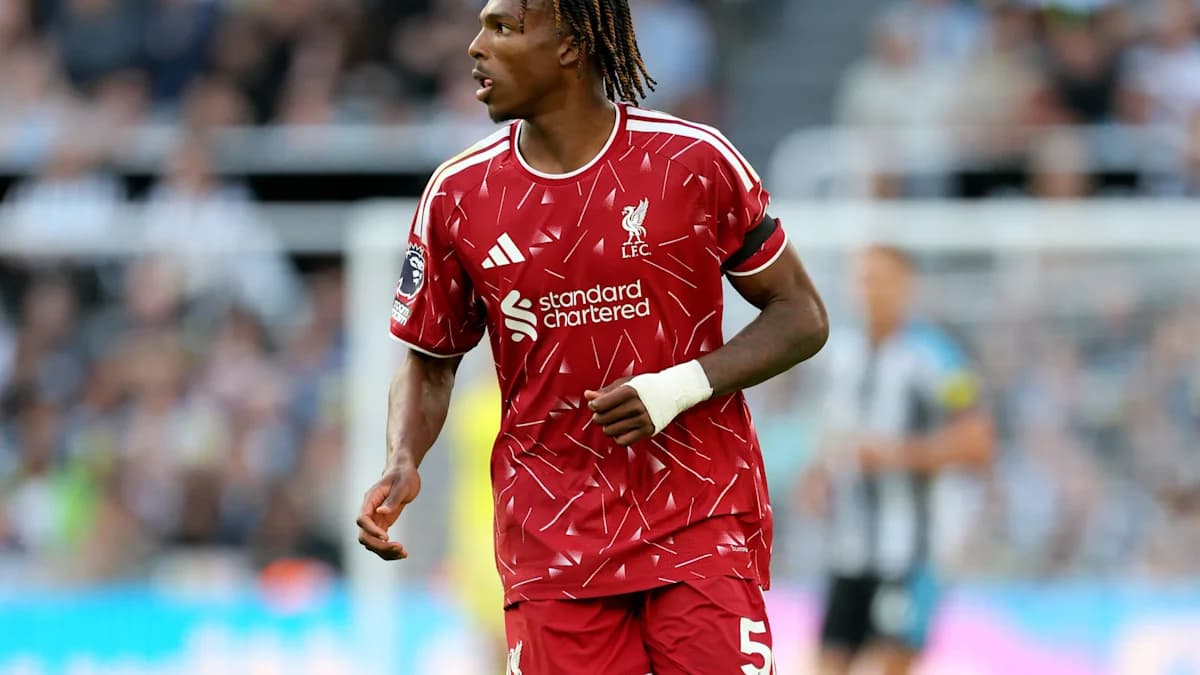
10. Hugo Ekitike, Liverpool/France, 24
Hugo Ekitike arrived at Liverpool from Eintracht Frankfurt for £60 million and immediately looked worth every penny. While Alexander Isak battled form and fitness, Ekitike became the main man.
He led Liverpool in Premier League goal contributions with 15 (11 goals, four assists), quickly turned Anfield in his favour and forced his way into the France squad. His finishing looked natural, his movement sharp, his ceiling obvious.
Then it all stopped. A ruptured Achilles tendon against PSG in the Champions League quarterfinals ended his season and killed any chance of a World Cup debut. For a 24-year-old on the brink of stardom, it was a brutal pause.
Achilles injuries are among the toughest to come back from, and Liverpool do not expect him to play again until 2027. For now, his story is about rehab and resilience. He is already working at Anfield to speed that return. If he comes back close to the level he showed last season, Liverpool will have a world-class No. 9 on their hands.
9. Victor Osimhen, Galatasaray/Nigeria, 27
Victor Osimhen has followed an unconventional path for a striker of his talent, spending key prime years at Napoli and then Galatasaray rather than one of Europe’s usual giants. The goals have followed him anyway.
He is a machine for high-quality chances, averaging at least 1.05 combined league goals and assists per 90 minutes in three of his past four seasons and at least four shots per 90 for five straight years. With Galatasaray, the most dominant side in Turkey, those numbers could be dismissed as domestic bullying. His Champions League output says otherwise.
In 2025-26, he averaged 4.5 shots per 90 in Europe and scored seven times as Galatasaray beat Liverpool twice in three games and crushed Juventus. His blend of physicality, timing and spatial awareness evokes his idol Didier Drogba — and he plays like it.
Transfer rumours have followed him for years. Tottenham Hotspur, Atlético Madrid and others are all linked again this summer. Yet the only move he has actually made in that time was to Istanbul.
Predicting his next step is pointless. What’s certain is that wherever he lines up next season, he’ll keep battering defences and racking up shots like almost no one else.
8. João Pedro, Chelsea/Brazil, 24
Chelsea spent big on two strikers last summer. Liam Delap cost £30 million and arrived with plenty of noise. João Pedro arrived at the same time and quietly became the club’s attacking heartbeat.
He finished his debut season at Stamford Bridge with 20 goals and 26 goal contributions in all competitions, leading Chelsea in both categories. None of those goals came from the penalty spot. In a chaotic, directionless campaign that ended without European football, Pedro was the one constant, winning the club’s player of the season award.
His game is more than finishing. He drops off the front line to connect midfield and attack, holds the ball in tight areas and links moves together with rare composure. In a disjointed team, he often looked like the only coherent plan.
Missing the World Cup with Brazil hurt. Carlo Ancelotti admitted Pedro “deserved” a place, only to leave him out in favour of another option, a decision that backfired as Igor Thiago and Endrick failed to convince and Brazil went out in the round of 16 to Norway.
Now comes another reset. Chelsea have turned to Xabi Alonso as their latest head coach, and Pedro is clearly central to the project. The club are already in talks over a new contract after just one season. How Alonso uses him — and who he puts around him — will shape Chelsea’s attack for years.
7. Kai Havertz, Arsenal/Germany, 27
Kai Havertz remains one of the game’s great paradoxes. Elegant, intelligent, decisive in big moments — and yet often underappreciated, judged almost solely by his goal tally.
Injuries have not helped. Knee and hamstring problems restricted him to just 12 Premier League appearances for Arsenal in 2025-26, yielding two goals. He saved his best for Europe, scoring four times in six Champions League matches and striking after six minutes in the final against PSG, darting off Willian Pacho’s shoulder and finishing with typical calm. Once he went off, Arsenal’s threat faded, and they eventually lost on penalties.
Havertz himself knows the narrative around him. “It is often said about me ‘Havertz didn’t score again, he’s useless!’ And when I do score, they say: ‘Well, he’s supposed to, it’s about time!’” he told the Guardian before the World Cup.
In that tournament, he scored twice in Germany’s opener against Curaçao and again in the round of 32 versus Paraguay, only to miss the first penalty in the shootout that contributed to Germany’s shock exit.
Arsenal’s signing of Viktor Gyökeres last summer, and fresh links to Atlético’s Julián Álvarez, cloud his future as a central striker at the Emirates. Yet his versatility — the “Alleskönner” tag from his Bundesliga days, the jack-of-all-trades — keeps him relevant. There will always be a manager who looks at his skill set and sees solutions.
6. Lautaro Martínez, Inter Milan/Argentina, 28
Lautaro Martínez scores goals. He has done it relentlessly for Inter Milan since 2018, and he isn’t slowing down.
The club captain now sits third on Inter’s all-time scoring list with 175 goals. At his current rate — five straight seasons of 20-plus goals — Giuseppe Meazza’s record of 287 doesn’t look untouchable.
In 2025-26, Martínez battled a calf injury that limited him to one appearance between mid-February and early May, yet still racked up 22 goals and six assists in all competitions. His 17 Serie A goals topped the league, and Inter, under Cristian Chivu, collected both the Scudetto and the Coppa Italia.
For Argentina at the World Cup, he scored three times, second only to Lionel Messi. Used mostly off the bench in the final three matches, he still delivered key goals against Switzerland and England as a super-sub.
He is under contract at Inter until 2029 and has brushed off interest from elsewhere. Expect more of the same: goals, leadership, trophies. The only real question is what role he will play for Argentina when the Copa América rolls around in 2028.
5. Julián Álvarez, Atlético Madrid/Argentina, 26
Julián Álvarez is a coach’s dream and a tactical headache rolled into one: a centre forward who can also play wide, create, press like a midfielder and bend free kicks into the top corner.
He has already scored 25 Champions League goals in just 41 games, breaking Lionel Messi’s mark for the fastest South American to that milestone. That alone explains why Barcelona want him as Robert Lewandowski’s long-term successor.
Yet his club career has been complicated. At Manchester City, he lived in Erling Haaland’s shadow. At Atlético Madrid, he has not always meshed with Diego Simeone’s demands. His 2025-26 LaLiga return — eight goals, down from 17 the year before — felt underwhelming. The Champions League told a different story: 10 goals on the way to the semifinals, including strikes against Tottenham, Barcelona and Arsenal.
For Argentina at the World Cup, he began on the bench behind Lautaro Martínez but forced his way into the XI by the knockouts, starting every game from the round of 16 onwards. In the final against Spain, he, like his teammates, struggled, failing to register a shot in 102 minutes.
Now comes the decision that could define his prime years. Atlético have already turned down a €150 million bid from Real Madrid. Barcelona cannot go that high but remain desperate to land him. Álvarez has openly described joining Barça as his “dream,” a comment that raised eyebrows during the World Cup.
For now, he is back in preseason with Atlético, clearly unsettled, his future unresolved. Wherever he ends up, the team that finally builds fully around him will be getting one of the most complete forwards in the game.
4. Ousmane Dembélé, Paris Saint-Germain/France, 29
Ousmane Dembélé is the chaos merchant of modern football: two-footed, explosive, unpredictable, and now, finally, relentlessly productive. The current Ballon d’Or holder is playing the best football of his life.
In 2025-26, he delivered a goal or assist every 70 minutes in league and Champions League play, second only to Harry Kane among players with at least 30 games. He finished with 22 goals and 12 assists in 44 appearances for PSG, despite missing time in Ligue 1 through injuries and rotation.
He saved his biggest performances for Europe. Two goals in the quarterfinals, three in the semifinals and one in the final powered PSG to another Champions League title. Some of his strikes — against Lille, against Bayern Munich — were pure Dembélé: outrageous skill, sudden acceleration, impossible angles.
For France at the World Cup, he added six goals and two assists in eight games, again rising to the biggest stage.
After difficult, stop-start years at Barcelona, his evolution under Luis Enrique into a leader and match-winner has been remarkable. Contract extension talks with PSG are ongoing, but his form and confidence look unshakeable. The rest of Europe can only hope he cools off. There’s no sign he will.
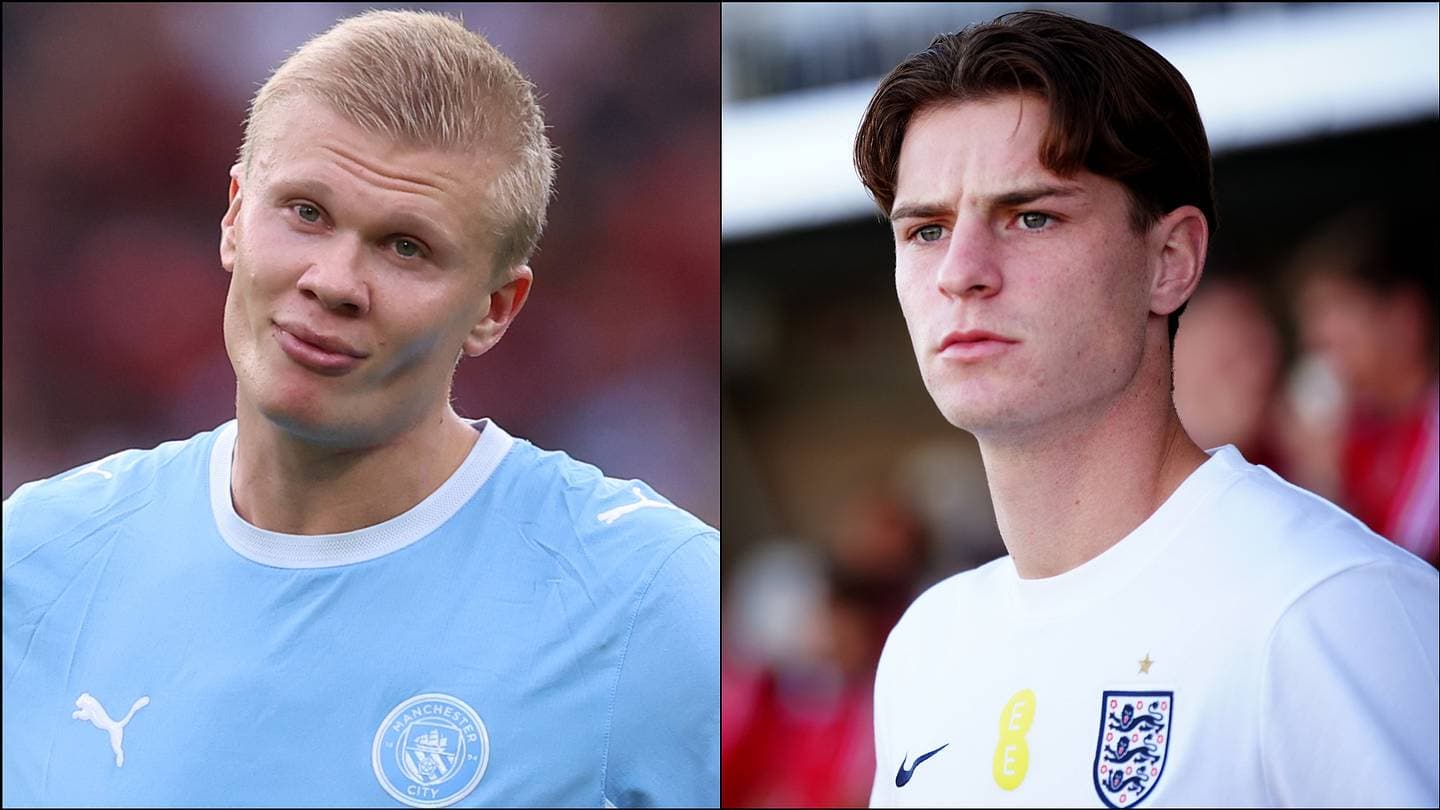
3. Erling Haaland, Manchester City/Norway, 26
Erling Haaland’s job is simple and brutal: score. He does it at a rate that bends belief.
In 198 Premier League games for Manchester City, he has 162 goals. He has won the Golden Boot in three of his four seasons in England. Last term, he hit 27 in the league and 38 in all competitions, then took that form straight into his first World Cup.
On the biggest stage, he looked entirely at home. Seven goals in North America, the most by a debutant since Grzegorz Lato in 1974, and Norway’s first World Cup quarterfinal in their first appearance since 1998. His two goals in a 2-1 win over Brazil — including a towering header over Arsenal’s Gabriel Magalhães — felt like a changing-of-the-guard moment.
Off the pitch, his goofy, self-deprecating social media presence only added to his appeal. With Lionel Messi and Cristiano Ronaldo nearing the end, Haaland has both the output and the personality to become the sport’s central figure.
Speculation about a move to Real Madrid or Barcelona never goes away, but his contract at City runs until 2034. Any Spanish dream will have to wait. In the meantime, he’ll chase more trophies and records under new manager Enzo Maresca, who inherits the most ruthless finisher on the planet.
2. Kylian Mbappé, Real Madrid/France, 27
Kylian Mbappé spent the summer rewriting World Cup history. He is now the tournament’s all-time leading scorer with 22 goals, having added 10 more in 2026. He became the first men’s player to win the Golden Boot at two World Cups and joined the tiny club of those who have scored 10 or more in a single edition. Four multigoal games in one tournament — matched only by the greats.
France fell in the semifinals to Spain, but Mbappé could hardly have done more. His blend of blistering pace, strength, movement and finishing remains unmatched. On the biggest stages, he is still the most terrifying forward in the game.
At Real Madrid, the story is more complicated. Individually, he has delivered: 25 league goals and 15 in the Champions League in 2025-26, and he already sits 27th on the club’s all-time scoring list after just two seasons. Give him two more campaigns and he should be in the top 10.
Collectively, Madrid have stalled. Two seasons without a major trophy is unacceptable by their standards. Mbappé has been blunt about his priorities: “It’s not about goals, it’s about winning trophies.” José Mourinho has been brought in to fix that, with Mbappé the centrepiece of his project.
The challenge is to make a front line of Mbappé, Vinícius Júnior and new signing Yan Diomande function as a unit. At international level, he will now play under one of his childhood idols, Zinedine Zidane, who has replaced Didier Deschamps. The stage is set. What he does next will shape eras for both club and country.
1. Harry Kane, Bayern Munich/England, 33
Harry Kane has spent his career scoring at a pace that broke models and expectations. At Bayern Munich, the flood became a tidal wave.
He hit 58 goals in all competitions last season, smashing club records previously held by Robert Lewandowski and Gerd Müller. For club and country, including the World Cup, he finished with 73 goals — the highest total by any player since Lionel Messi’s 82 in 2011-12.
He also reached 14 World Cup goals, the most by an Englishman. Six of those came in 2026 as England finished third, with his winner against DR Congo standing out as one of the most outrageous strikes of his career.
Yet the numbers only tell half the story. Kane has reshaped what a No. 9 can be. He drops into midfield to dictate play, sometimes taking passes from his own goalkeeper, then arrives in the box to finish moves he started. His willingness to create for teammates like Michael Olise and Luis Díaz, even as he chases records, makes his goal tallies even more remarkable.
He has finally added major trophies with Bayern. One prize remains: the Champions League. That will be the obsession in 2026-27. For England, the next shot at silverware comes at Euro 2028.
At 33, with records tumbling and his game more complete than ever, the question isn’t whether Kane belongs atop this list. It’s how much higher he can still push the bar for what a modern centre forward is supposed to be.