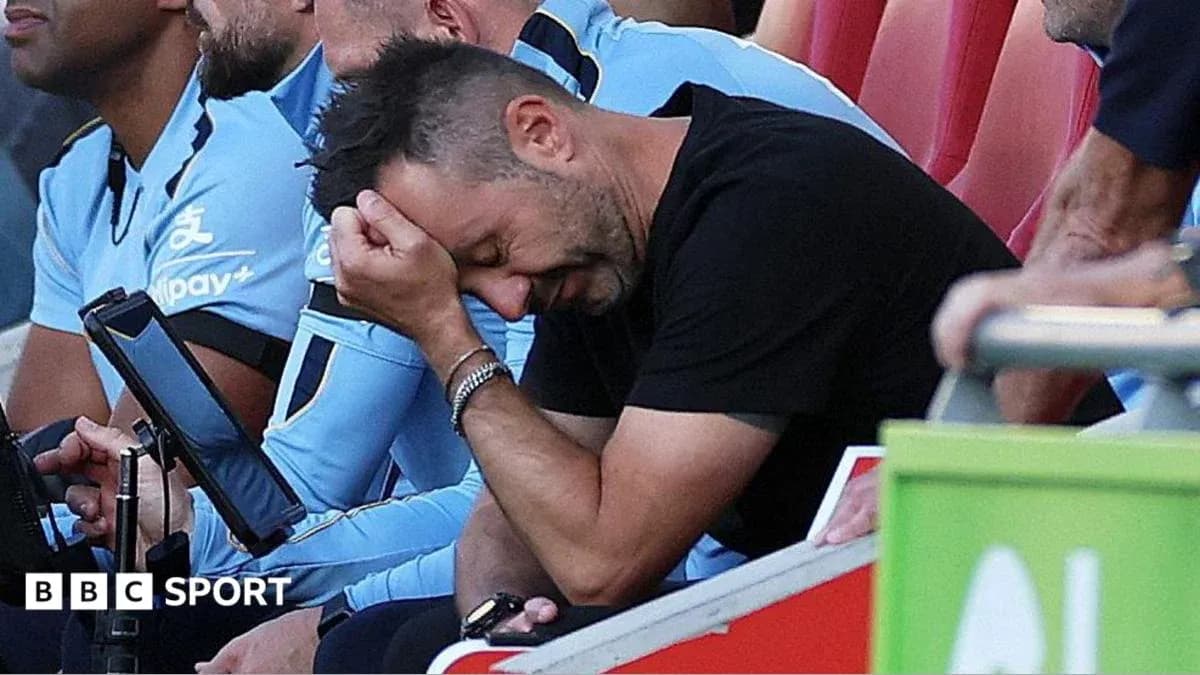
Tottenham's £400m Rebuild Faces Familiar Collapse
Roberto De Zerbi walked into this season knowing the bill for his Tottenham Hotspur overhaul could nudge £400m. One Premier League game in, the price of a new mentality looks far higher.
The Italian arrived in March talking as much about psychology as tactics. Seven games to keep Spurs up, seven games spent coaxing belief out of a squad that had forgotten how to win. Survival came on the final day against Everton, just. The chequebook opened soon after, with the promise that such jeopardy would not return.
Yet in the west London sun, it all felt horribly familiar.
A New Era, Same Fragile Core
This 3-0 defeat at Brentford was not the grand unveiling Spurs’ hierarchy had imagined. Not with the club’s revamped transfer strategy, not with the fanfare around big-name arrivals. At the first hint of real pressure, Spurs folded. Again.
Brentford didn’t just beat them. They chased them down, out-ran them, out-fought them. Spurs’ resistance crumbled so quickly it was difficult to believe this was supposed to be the start of something new.
De Zerbi has tried to strip away the weaknesses that left Spurs finishing 17th in back-to-back seasons. On this evidence, the surgery has barely begun. The new Spurs looked alarmingly like the old version, brittle and overwhelmed, as Brentford tore into them with relish.
He pointed to fitness. Players who arrived late after the World Cup. New signings still adjusting. Legs not yet ready. What he could not explain away was the lack of basics, the shortage of resilience, the absence of any edge in the duels he later called “the key of this game”.
“Bad game. We lost and suffered the difference in the duels,” he told BBC Sport’s Match of the Day. “We didn’t fight in the right way… Our physical condition was not in the right level… But we have to analyse this game better because we can’t play this way in this type of game.”
From Roar to Resignation
The day began with noise and hope. In one corner of The Gtech Community Stadium, Spurs fans greeted the new signings like saviours. Songs, flags, a sense that the chaos of recent years might finally be behind them.
By the final whistle, those same players applauded rows of empty plastic. Some supporters had seen enough when Michael Kayode made it 3-0 just four minutes into the second half. The exits started early. They barely slowed.
It might have been even uglier. Igor Thiago, usually so reliable from the spot, smacked a penalty against the post. A let-off, technically. Not that it offered much comfort to De Zerbi on a day that stripped his team bare.
Even the celebrity gloss couldn’t mask it. Rock star Jon Bon Jovi watched on from the stands, and Spurs handed him material for a catalogue of sad ballads. They started poorly and then simply unravelled.
Big Names, Small Impact
De Zerbi threw four of his new signings straight into the fire: Andrew Robertson, Marcos Senesi, Jan Paul van Hecke and Sandro Tonali. If they were looking for a platform, they found a trapdoor instead.
None impressed. None imposed themselves. Truthfully, neither did anyone else in a white shirt.
Tonali, the £100m headline arrival from Newcastle United, endured a particularly bruising afternoon. Brentford’s record signing Mamadou Sangare dominated midfield, the outstanding performer on the pitch, and made that price tag look like a burden rather than a statement.
Tonali’s most notable moment came with a wild first-half shot that flew high into the sky, greeted by mocking chants from Brentford fans about wasted money. On this showing, they had a point.
Matheus Fernades, an £85m buy from West Ham United, entered from the bench. Savinho and possibly Omar Marmoush will follow to add depth and flair. Yet none of that matters if the core issue remains the same: a team that does not seem to relish the fight.
Brentford Sense Blood
From the opening whistle, Spurs’ “brave new world” looked haunted by old ghosts. One heavy press from Brentford, one early challenge won, and the visitors shrank. Thomas Frank’s side sensed it instantly and went hunting.
They should have been ahead even before Keane Lewis-Potter broke through after 12 minutes. Once Vitaly Janelt made it 2-0 before half-time, the contest felt done. Spurs looked beaten in body language as much as on the scoreboard.
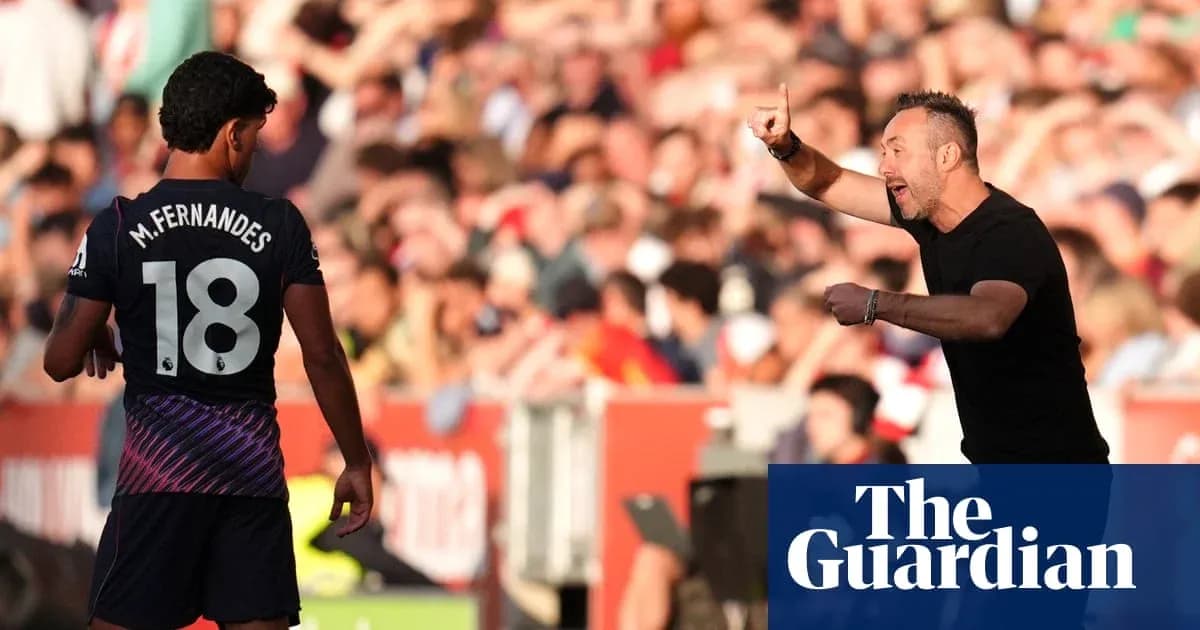
De Zerbi prowled the touchline, arms waving, words flying, desperate to jolt his team awake. Nothing changed. Heads dropped. Challenges were lost all over the pitch. Panic set in. There was no sign of a group that believed it could turn the tide.
Conor Gallagher and Lucas Bergvall did not reappear after the interval, withdrawn at the break. They could justifiably argue that several team-mates might have joined them. The problems were collective.
Four minutes after the restart, Kayode’s third killed any lingering doubt. The stands began to thin. Spurs had no response.
A Culture Problem, Not a Squad List
De Zerbi knows this pattern too well. He has walked into a club where defeat has become a habit, not a shock. His predecessors lived it too. Ange Postecoglou at least left with a Europa League win. Thomas Frank and Igor Tudor – whose stint barely registered – could not arrest the slide.
“I am surprised for the result and performance,” De Zerbi admitted. “I knew we were not in the right condition. We can’t find an excuse. I am sorry for the result and performance. We are starting a new project and we couldn’t find the principle.”
He namechecked Senesi, van Hecke and Tonali as players short of their peak physically. “We knew that before the game,” he added. Organisation, pressing, conditioning – all on his to-do list.
New signings will almost certainly keep coming. The club has the money and the intent. De Zerbi, though, refused to hide behind the idea that he simply needs more.
“I don’t want the excuse that the first XI was not enough to compete and get a result,” he said. “Brentford’s spirit on the pitch was great, it has to be the right example for us.”
That was the starkest contrast of all. Brentford’s spirit against Spurs’ submission.
This was only the first match of the Premier League season. Big clubs have stumbled on opening weekends before and gone on to achieve plenty. The problem for Spurs is that this did not feel like a stumble. It felt like the latest chapter in a story that has been repeating for two years.
The squad has changed. The manager has changed. The spending has soared. The culture has not.
If De Zerbi is to justify that £400m rebuild, he cannot just shuffle personnel. He has to rip out the mindset that treats days like this as inevitable. How long he takes to do that will define far more than any transfer window ever could.