Tottenham's Struggles: From European Ambitions to a Complete Reset
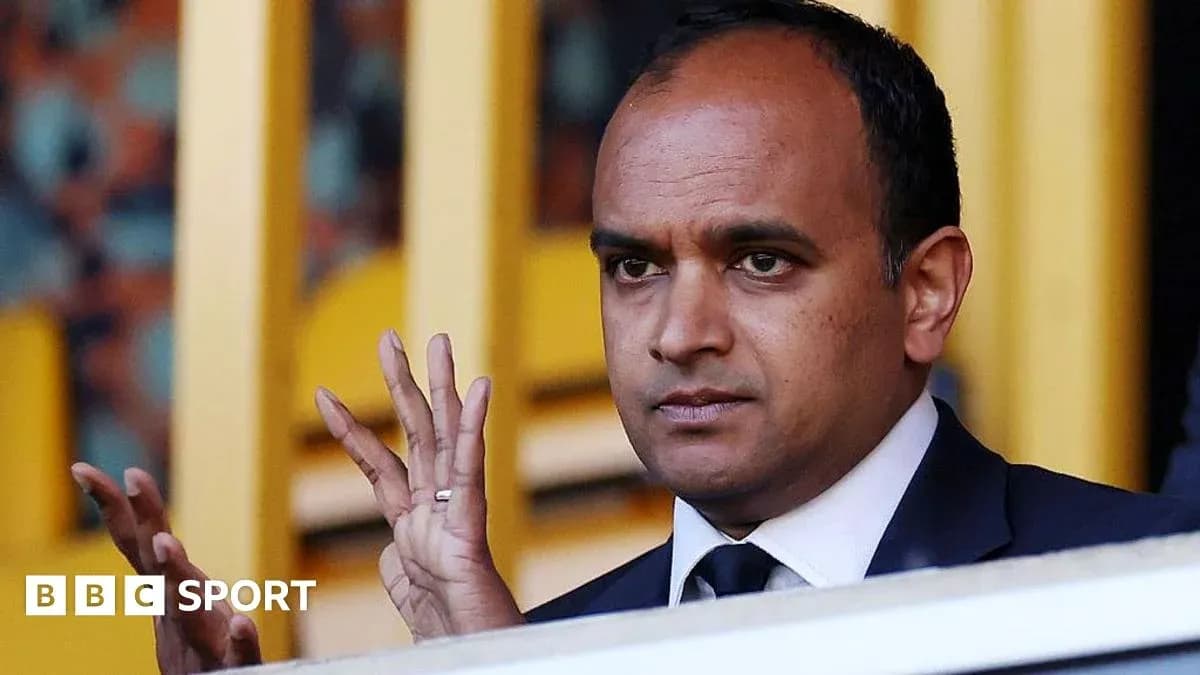
Vinai Venkatesham walked into Tottenham Hotspur last June talking about Europe. He ended his first season clinging to the Premier League by his fingernails.
The mood has flipped that sharply.
What was sold as a fresh era for Spurs’ new chief executive became a survival mission that went to the final minutes of the final day, sealed only by a nervy win over Everton. When the whistle went, it wasn’t joy that poured out of the away end. It was relief.
“A huge outpouring of relief,” Venkatesham called it. He knows that’s a damning verdict on a club that only a year ago was lifting the Europa League and talking about building on it.
Relief is not a standard. Not here. Not at a club that insists it should live among England’s elite.
From European talk to “complete reset”
On 1 June last year, Venkatesham arrived with a simple, ambitious target: Tottenham’s men’s first team should be fighting for European places. The logic seemed sound enough. Ange Postecoglou had just dragged a flawed side to 17th but also delivered the club’s first trophy since 2008. The squad was full of internationals. The stadium is a cash machine. The training ground is the envy of most of Europe.
Then he stepped inside.
“A few months after I joined, when I was no longer an outsider, I would have told you the club was in a significantly worse state in some places than I thought,” he admitted.
The verdict he reached was brutal. This wasn’t a tune-up. It wasn’t even a rebuild. “It was really a complete reset.”
Off the pitch, he found strength. Stadium operations. Commercial operations. Those departments, he says, are “really strong”.
On the football side, the picture was far less flattering. In the five years since Tottenham’s last great push under Mauricio Pochettino, the Premier League has accelerated. Data, recruitment, coaching, sports science – the arms race has exploded.
Tottenham, Venkatesham found, had slipped behind.
“I’m not saying that Tottenham didn’t improve in that period,” he said. “But… there was a significant gap. In some areas really quite worryingly so. I don’t think that there was what I would call a relentless obsession with football success.”
He points to the training centre as the perfect metaphor. One of the best in the world, he says. But it “looks more like a five-star hotel than it does a performance environment”. That, he promises, will change this summer.
The diagnosis is clear: too little hard-edged football expertise, too much comfort.
Thomas Frank: a slow-motion sacking
The irony is that the season didn’t start like a crisis. Under Thomas Frank, appointed last June, Tottenham lost only one of their first 10 games in all competitions. On paper, it looked stable.
The slide was ruthless and unforgiving.
By February, the only surprise about Frank’s dismissal was that it had taken so long. Venkatesham and sporting director Johan Lange were hammered by supporters for letting it drift.
“Plenty of coverage that the club was passive,” Venkatesham said. “That’s absolutely not true.”
Inside the club, they were running the numbers. Results. The probability of Frank turning it around. The disruption a change might cause to the January window. The fixture list. The lack of appealing options on the interim market.
They hesitated. The season burned.
When the decision finally came, it opened the door to the first big sliding-doors moment of Venkatesham’s reign.
De Zerbi chase, Tudor gamble
Tottenham went straight for Roberto de Zerbi. The Italian was leaving Marseille. The fit, stylistically and emotionally, felt obvious.
They tried to tempt him into taking the job mid-season. He declined. He did not want to walk into that kind of chaos halfway through a campaign.
So Spurs rolled the dice.
Enter Igor Tudor, a left-field interim choice who lasted just seven games before leaving by mutual consent. The experiment was short, sharp and costly.
“There was a number of reasons why Igor was selected,” Venkatesham explained. High-pressure experience. A reputation for instant impact. A different personality to Frank – deliberately so. Spurs wanted a jolt, not a gentle transition.
But there was a glaring issue: no Premier League experience. They knew it. They took the risk anyway.
“Was it a risk in appointing him? Absolutely,” Venkatesham said. Asked if it was a mistake, he didn’t duck. “It didn’t work out. I think it’s very clear it didn’t work out. And I don’t think that is in question.”
In a season full of missteps, Tudor’s short reign will sit high on the list.
Levy out, Venkatesham in the firing line
For a quarter of a century, Daniel Levy absorbed the fury. When results dipped, the chants found him. When managers fell, the banners named him.
Levy’s departure in September left a vacuum. Someone else was always going to fill it.
This season, that has been Venkatesham.
Two 17th-place finishes in a row have left Spurs fans exhausted and angry. The Europa League win has not softened the mood. If anything, it has sharpened the sense of underachievement.
“I understand the frustration,” he said. “It’s clearly not good enough… The club had some serious challenges that it needs to address on the football side. We know what those are. We are addressing them. We are fixing them.”
He is realistic enough to know that line buys him limited patience. “They built up over many years,” he said of the problems. “I wish I could wave my magic wand and fix them overnight, but that is not possible.”
So he braces himself.
“It’s not easy. You have to develop a thick skin,” he admitted. Fifteen years in football, much of it at Arsenal, have given him some armour. But the intensity of modern abuse – for players, referees, executives – is a different beast.
“It’s a game of opinions,” he said. “I have absolutely no problem with being criticised… The challenge in football is that that criticism frequently goes way past the line.”
He insists he has “complete confidence” in the plan. He also knows supporters are “rightly impatient.”
He will have to ride the storm he walked into.
De Zerbi’s early impact
Behind the scenes, the tone around Tottenham changed the moment De Zerbi finally walked through the door.
The Italian arrived late, but not too late. Eleven points from seven games. Survival secured. A dressing room jolted awake.
“I think he has made an extraordinary impact so far,” Venkatesham said. The word “extraordinary” is not thrown around lightly inside clubs that have just survived by a whisker.
The challenge he inherited, Venkatesham insists, is hard to overstate. A fragile squad. A fanbase on edge. A club still processing the failure of two managerial bets in a single season.
Yet De Zerbi has quickly imposed himself in the dressing room and on the training pitch. Style matters here, and Venkatesham is clear: “We think that he plays the style of football that our supporters and the broader football public want to see.”
This time, Spurs have their man from the start of a summer, not the middle of a crisis. He is expected to be fully involved in recruitment, not merely handed a squad and told to cope.
The hope is that this is where the reset starts to look like progress.
Recruitment, wages and the hard rebuild ahead
The diagnosis on the squad is blunt.
“The squad needs work and the squad hasn’t got the right balance,” Venkatesham said. Tottenham need experience. Leadership. Physical robustness for what he calls “the most demanding league that exists”.
Talks have already taken place with former Borussia Dortmund sporting director Sebastian Kehl as Spurs look to strengthen the football structure around De Zerbi. The wage ceiling has been raised, a clear signal that the club is finally prepared to pay closer to the going rate for top-tier talent.
They know this cannot be fixed in one summer. Multiple windows will be needed. But this one, Venkatesham admits, is “going to be critical.”
Tottenham have survived. That is all. The question now is whether this season marks the bottom of the curve – the moment a club that once aimed for titles and Champions League finals finally stops slipping and starts climbing again.