Can Trent Alexander-Arnold Transition to Midfielder?
The question refuses to die. Can Trent Alexander-Arnold really be a midfielder?
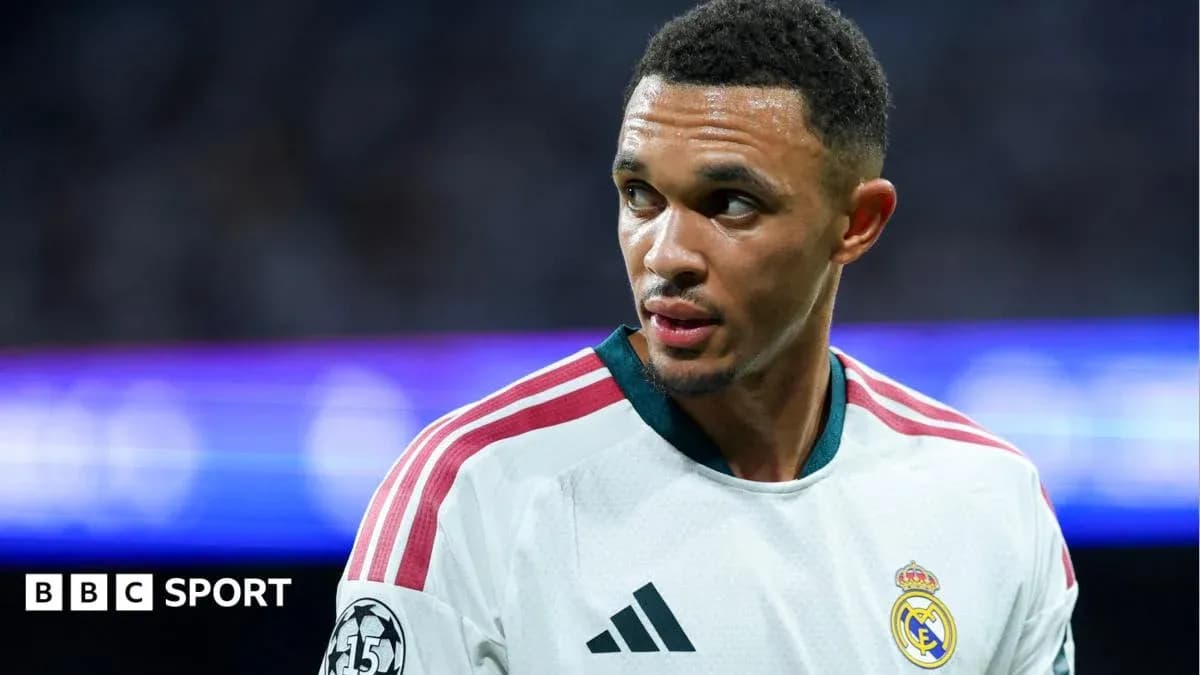
Gareth Southgate tried it at Euro 2024, then tore up the plan after two group games. Jurgen Klopp built an entire Liverpool system on his right-back stepping inside and dictating from those half-spaces. Now Jose Mourinho has had his turn, dropping him into the centre of Real Madrid’s midfield for a tight Champions League win over Inter Milan.
Different country, different shirt, same debate.
Mourinho’s one-night experiment
On paper, this looked like an opportunity. Alexander-Arnold, 27 now, still hasn’t nailed down the right-back spot at the Bernabeu after arriving last summer. A new role in the middle, in Europe, under Mourinho? It felt like a potential turning point.
The reality was more nuanced.
"He has played midfield with England and Liverpool... but he is not a midfielder," Mourinho said after the 2-1 victory, making his stance brutally clear.
The Portuguese coach praised the performance, not the idea. "He has played very well. He has interpreted what he needed to really well, tactically. Both him and Valverde have worked very well at this level."
So yes, Mourinho was "very grateful" for Alexander-Arnold’s work. No, this was not the start of some grand reinvention.
The selection was driven by necessity. Eduardo Camavinga, Arda Guler and Bernardo Silva were all suspended, stripping Real’s midfield of depth and forcing Mourinho to improvise. Alexander-Arnold stepped in alongside Federico Valverde, more emergency solution than long-term blueprint.
A mixed night in the middle
His performance mirrored the role: promising, but imperfect.
Alexander-Arnold created two chances and slung in more crosses than any other Real player. He tried to shape the game, drifting into pockets, looking for angles, doing what he has always done best — get on the ball and hurt teams with his delivery.
But the numbers told a harsher story. He failed to win a single tackle. His passing accuracy dipped to 83.3%, low by elite midfield standards in a game where control mattered.
When Inter pulled one back on 77 minutes, Mourinho turned to his bench. Alexander-Arnold went off. The whistles that followed cut through the Bernabeu air — a raw, restless sound. It was hard to pin them on one man; they felt more like a verdict on the team’s nervy display than on the Englishman alone.
This was the first time Alexander-Arnold and fellow right-back Denzel Dumfries had started a competitive game together. In pre-season against Fiorentina, Alexander-Arnold had played at right-back with Dumfries pushed further forward on the same flank. This time, their roles were split across the pitch: one in midfield, one on the teamsheet as the more natural defender.
The subtext is clear. Mourinho still hasn’t settled on a first-choice right-back. Just as Alexander-Arnold once had to scrap with Dani Carvajal for minutes, he is now locked in another duel, this time with Dumfries.
A full-back who thinks like a playmaker
Inside Real, though, the picture is not cold or dismissive. BBC Sport understands Mourinho has been impressed by Alexander-Arnold’s performances, his attitude and, crucially, his flexibility.
The coach sees him as a different kind of full-back, someone who can step into central zones and influence attacks from inside, not just from the touchline. His passing range, whipped crosses, through balls and set-piece quality still rank among the sharpest tools in his kit.
That is why this conversation keeps resurfacing. He looks like a midfielder. He often plays like one. Managers keep wondering if he can simply become one.
Southgate’s big Euro 2024 gamble suggested exactly that. England’s manager tried to remodel him as a central player on the biggest stage, only to abandon the idea after an uninspiring 1-1 draw with Denmark in which Alexander-Arnold was withdrawn before the hour.
Yet there is evidence it can work.
Back in June 2023, he wore the England number 10 shirt in a Euro qualifier in Malta. England won 4-0. Alexander-Arnold scored from midfield and looked at ease dictating play higher up the pitch.
"I haven't played it too much, but it feels comfortable," he told Channel 4 afterwards. "It feels natural, I will say that. It's somewhere I can see myself playing."
Southgate kept flirting with the idea for the next year, never fully committing, never fully convinced. Mourinho, it seems, is in the same place.
The cost of the switch
After the Inter game, Mourinho acknowledged the strain of the role on his player.
"He has lost some balls because it is not the same to play in this position compared to at right-back," he said. "The intensity of physical work is quite difficult. He has a different engine. He has given 100%. He left the pitch with nothing left to give."
That line matters. Alexander-Arnold’s engine is built for surges from deep, for stepping in and out of midfield zones, not for the constant 360-degree demands of a full-time central role. At right-back, he can see more of the pitch in front of him. In midfield, the game closes in.
And so the question lingers.
He is too gifted on the ball to be just another full-back. Too specialised as a full-back to be easily rebadged as a pure midfielder. Klopp bent a system to suit that contradiction. Southgate tried and walked away. Mourinho, for now, treats it as a useful emergency option.
The experiment isn’t dead. It just isn’t definitive. How long can a player this talented live between positions?