USMNT vs Germany: Tension and Goals Await in Chicago
The World Cup hasn’t started yet, but Mauricio Pochettino and Julian Nagelsmann already feel like they’re walking the tightrope.
On one side: fitness, freshness, and the need to protect key players. On the other: rhythm, chemistry, and the urge to let their stars run free under the Chicago lights.
USMNT: Pochettino Weighs Risk and Rhythm
The first big call for Pochettino comes at the back. Chris Richards arrived from Crystal Palace carrying ankle ligament damage, and the situation has deteriorated enough that an injury-enforced roster change before the World Cup opener is now on the table. What’s not in doubt: Richards will play no part at Soldier Field.
That absence strips the U.S. of a composed ball-playing center back and forces a rethink in a defense that already looked experimental against Senegal. There, Pochettino made a statement: he ripped up his outfield XI by halftime, changing all but one player. It was ruthless, but it told a story. He wants his first-choice group on the pitch together, and he wants them sharp.
The question now is how he sequences that. Does he lean again into something close to his strongest XI from the start, then flood the game with changes after the break? Or does he flip the script, give the supporting cast a long run, and unleash the presumed starters late for a final tune-up?
All signs point to the former. Pochettino has hinted at continuity, and several players look primed for promotion from the bench into the spotlight.
Folarin Balogun is one of them. The striker, who watched the first whistle against Senegal from the sidelines, offers a more ruthless edge in the box and a cleaner focal point than the alternatives. Weston McKennie is another. His presence alongside Tyler Adams in midfield gives the U.S. a more snarling, physical core and a better platform to release the front line.
There’s also a quiet but notable shift coming in goal. Matt Freese, the only goalkeeper not to see the field in the Senegal match, is expected to start. It’s his chance to plant a flag in a crowded depth chart, and he’ll face a German side that, rotated or not, rarely arrives without menace.
The projected U.S. XI leans into aggression and width in a 3-4-3:
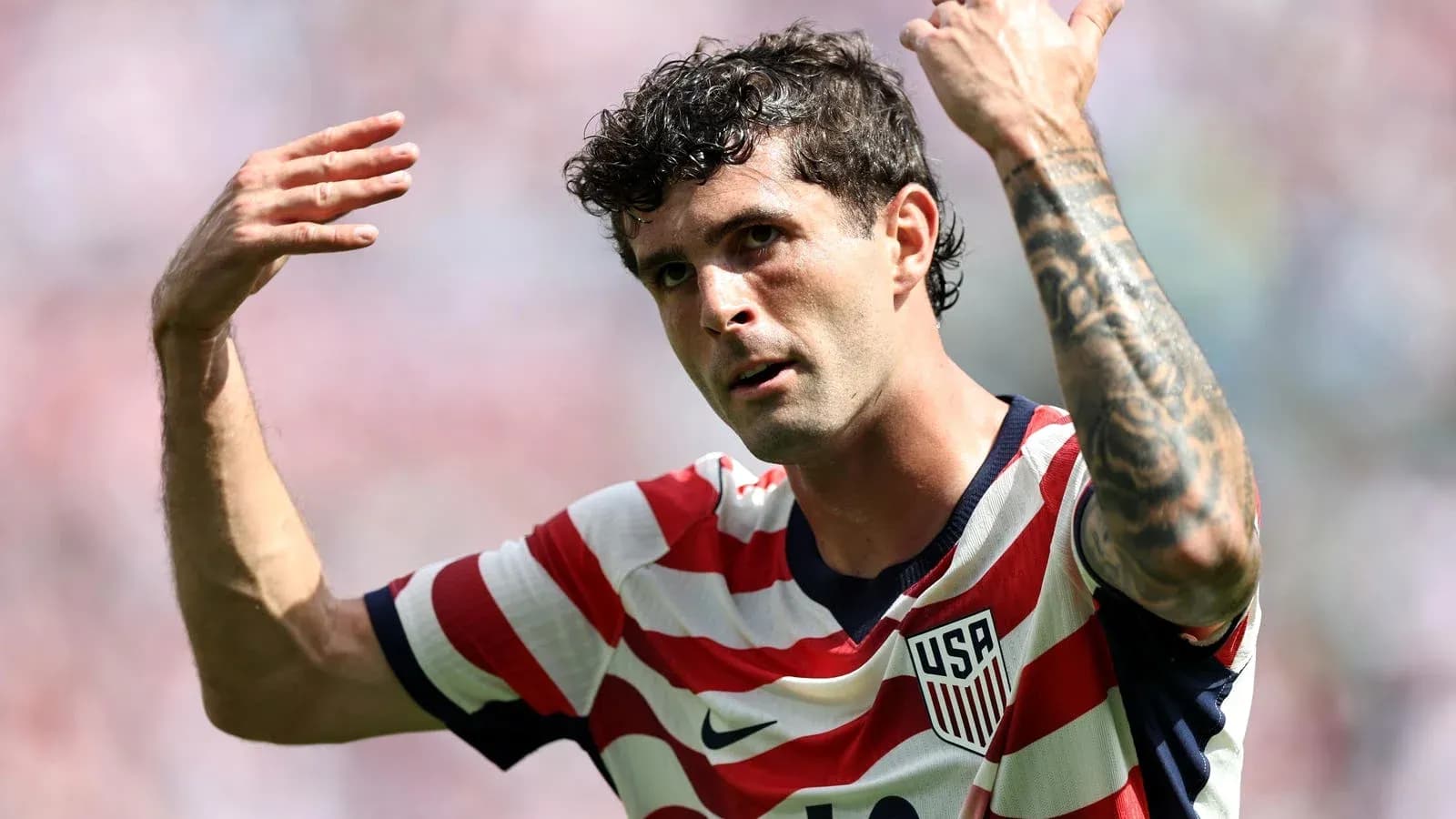
Matt Freese (GK); a back three of Tim Ream, Mark McKenzie, and Alex Freeman; Antonee Robinson and Sergiño Dest as flying wing-backs; Adams and McKennie anchoring the middle; Christian Pulisic and Gio Reyna flanking Balogun in attack.
That setup screams intent. It invites risk. It also promises space—exactly the sort of space Germany’s technicians love to exploit.
Germany: Nagelsmann Reloads After a Cruise
Germany’s sendoff in Mainz felt like a training ground exercise with a scoreboard. Finland were brushed aside 4–0, all four goals squeezed into a ruthless 29-minute burst between the 34th and 63rd minutes. Deniz Undav, fresh off a prolific Bundesliga season with Stuttgart, helped himself to a brace and continued his late-blooming rise into the national team picture.
That game, though, came at a cost to Nagelsmann’s rotation options. Most of that side went the full 90. Then came the transatlantic flight to the United States two days later. The logical response: heavy changes in Chicago.
Nagelsmann has rarely shied away from bold selections, and he has reasons to shuffle everywhere. In goal, the biggest name is the biggest doubt. Manuel Neuer, back out of international retirement for what would be a fifth World Cup, is carrying an injury concern and is unlikely to be risked in a friendly with bigger battles looming. That opens the door for Oliver Baumann to step in and command the box.
In front of him, the back four is expected to read: David Raum at left back, Nico Schlotterbeck and Waldemar Anton in central defense, and Joshua Kimmich sliding to right back. It’s a line that can build play cleanly but will be tested by the pace and direct running of Pulisic and Reyna in the channels.
Midfield is where the recalibration really starts. Leon Goretzka brings drive and power, while Pascal Groß, who watched from the bench against Finland, is tipped for significant minutes this time. Groß offers a more measured, cerebral rhythm, the kind of player who can slow a frantic friendly to his own tempo and pick the pass that tilts it.
Ahead of them sits a trio that blends artistry and incision. Florian Wirtz drifts between lines, Kai Havertz—now back in the fold after his late arrival due to Arsenal’s Champions League commitments—links midfield and attack, and Leroy Sané stretches defenses with his pace and directness. At the tip of the spear, Nick Woltemade is slated to lead the line, an intriguing option who will be eager to make his mark with competition for attacking places fierce.
Germany’s projected shape: a 4-2-3-1 with Baumann; Raum, Schlotterbeck, Anton, Kimmich; Goretzka and Groß; Wirtz, Havertz, Sané; Woltemade.
Names like these usually spell control. But this isn’t a full-strength, settled Germany. It’s a team in transition, under an intense, detail-obsessed manager, trying to knit together something coherent on the fly.
A Match Built for Chaos
Strip away the reputations and what remains is a shared instinct. Pochettino and Nagelsmann both lean toward front-foot football. Both trust their attackers. Both would rather chase a 4–3 win than grind out a 1–0 in second gear.
That mindset, combined with the personnel and the stakes—or lack of them—points in one direction: goals.
Chicago will add its own twist. Soldier Field is technically a home venue for the USMNT, but it won’t feel entirely American. The city’s deep German-American roots should ensure a noisy, split crowd. The U.S. won’t be walking into a hostile environment, but they also won’t be wrapped in the usual home comfort.
On paper, a full-strength Germany would be the favorite. The depth, the experience, the history—they all lean their way. But this is not that version. This is a rotated, jet-lagged side trying new combinations, facing an American team desperate to prove it can trade blows with heavyweight opposition.
Just as the Senegal game hinted, the U.S. are not likely to sit back. With Pulisic, Reyna, and Balogun on the field, they almost can’t. Germany, with Wirtz and Sané between the lines and Groß feeding them, will respond in kind. The midfield may not so much control the game as chase it.
In that kind of open contest, structure frays. Mistakes creep in. Defenders get dragged into uncomfortable spaces. And that’s where this game feels destined to be decided—or, perhaps, to be shared.
Prediction
Expect swings. Expect both managers to test their benches again once the hour mark hits. Expect moments where Germany’s pedigree shines, and others where the U.S. press and pace rip through their lines.
The more you weigh it up—the rotations, the travel, the managers’ instincts—the more one outcome keeps resurfacing.
USMNT 2, Germany 2. A scoreline that won’t settle any debates, but might just light a few more ahead of the World Cup.