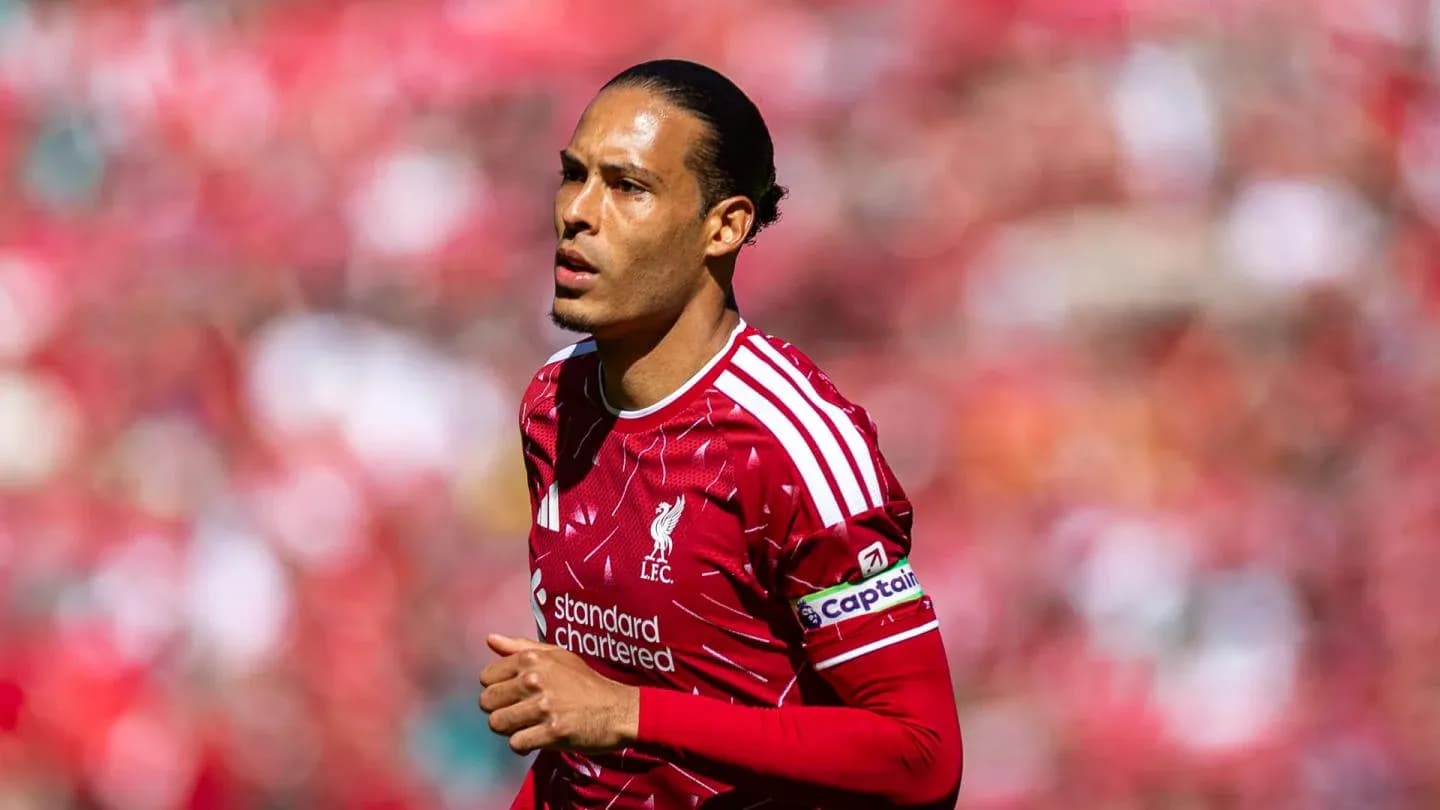
Virgil van Dijk: The Relentless Leader of Liverpool
Virgil van Dijk has spent a career making the extraordinary look routine. This season, he pushed that habit to its limit.
At 34, Liverpool’s captain became the only outfield player in the Premier League to play every single minute of his team’s 2025-26 campaign. Not a second off. Not a breather when games were won. Ninety minutes, week after week, in what was his eighth full season at Anfield and his third wearing the armband.
For a centre-back whose game leans on timing, power and authority, that level of availability is rare. At his age, it is almost unheard of.
The Dutchman, who turns 35 in July and is about to lead the Netherlands into a World Cup, shrugs at the notion that this is some kind of miracle. For him, it is obligation.
“Discipline, discipline and discipline!” he says in the latest edition of WALK ON, the club’s official eMagazine. The words snap out, as if he’s repeating a mantra he has lived by for years.
He talks about responsibility as naturally as other players talk about form. “I feel the responsibility to be there every time and also to perform every time,” he explains. Availability is not a bonus in his mind; it is the job.
There was one recent blemish. In 2024-25, he missed out on the full-90 record because he started on the bench against Brighton on the final day. That memory still lingers, not as regret, more as a reminder of the standard he sets for himself.
How He Keeps Going
So how does he keep going? Van Dijk doesn’t pretend there is a magic trick behind the curtain, but there is a routine, and he guards it fiercely.
He calls it “a lot of hard work behind the scenes” – the unglamorous hours that supporters never see. Recovery is treated as seriously as any match. “Recovering well, eating well, the right lifestyle in total, also physical therapy,” he says. Then he lets slip just enough to hint at the scale of the operation. Yoga. Specific work. A tailored regime built to keep a 6ft 4in defender moving with the same calm stride he had in his mid-20s.
“I can’t tell you the details,” he adds, and you believe him. This is a player who has rebuilt his body once already.
He has known the other side. One season at Liverpool was ravaged by injury, the year his knee gave way and the club had to imagine life without him. That experience could have shortened careers. Van Dijk used it as fuel.
“In the rest of the seasons I think I’ve played more than 40 matches,” he points out. The irony still amuses him. “And I think the most matches before this season have been played in the season after my knee injury. That’s quite remarkable. When I heard that I thought it was quite interesting.”
Remarkable is one word for it. Relentless is another.
He doesn’t hide what drives him. “It’s the best thing there is, playing matches,” he says. Everything else – the diet, the therapy, the yoga mats and ice baths – exists to serve that one addiction. “I do everything for that and I want to keep doing it at the highest level.”
That hunger now comes with a different perspective. Van Dijk looks around the Liverpool dressing room and sees a version of himself that no longer exists. He is the oldest player in the squad. The senior figure. The reference point.
“I’m in a situation where obviously I am the oldest in the team,” he says. It sounds strange coming from someone whose game still radiates control, not decline. “But for me, it doesn’t really change anything.”
It changes plenty for those watching him. Younger players study how he trains, how he recovers, how he carries himself in the quiet moments between games. Van Dijk wants that. “I just want to inspire – let other players see what I do in order to be playing the amount of games I’ve been playing and the consistency that I have,” he explains. The message is simple: this is what it takes. “It’s down to them as well to make that next step.”
His leadership did not arrive overnight. When he joined Liverpool eight-and-a-half years ago, he walked into a dressing room full of big personalities and established winners. Within six months, he had been named third captain. That early responsibility hardened his voice and sharpened his presence.
“That responsibility made me also the player that I am today – leading and being part of the group that has been so successful,” he reflects. Two league titles, 374 appearances and counting, and a catalogue of nights when he stood at the heart of it all, arms out, organising, demanding, calming.
“It has been a privilege as well,” he says.
Soon he will swap red for orange again, taking the Netherlands into a World Cup as their leader, before returning to Anfield to resume a role he has turned into an art form: the ever-present, ever-demanding guardian of Liverpool’s back line.
The minutes keep piling up. The question now is not whether he can handle them, but how long he can keep rewriting what longevity looks like for a modern centre-back.