Wolves vs Fulham: A Tactical Draw at Molineux
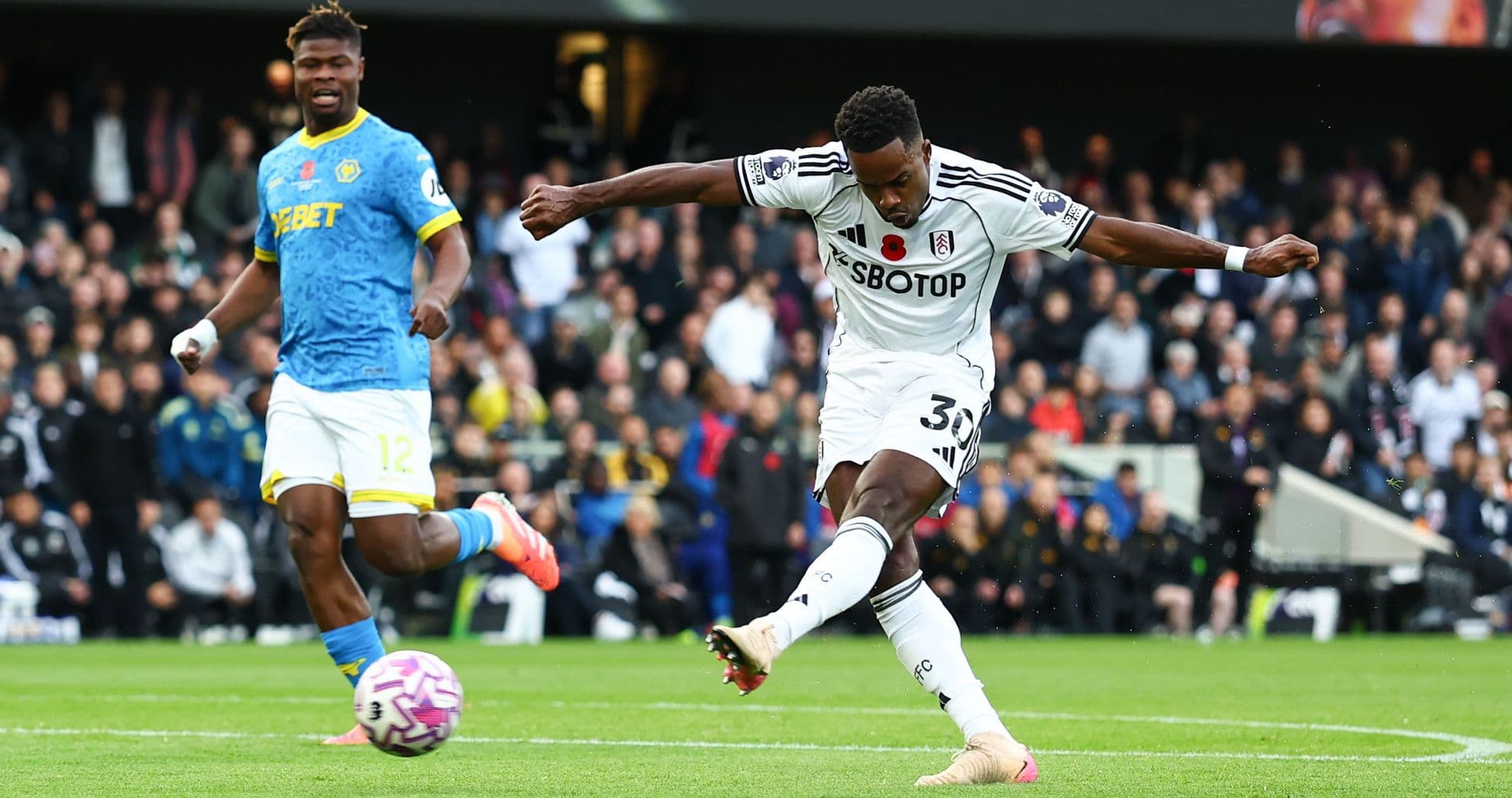
The afternoon at Molineux closed with a 1–1 draw, a result that felt as much like a character study as a scoreline. Following this result, bottom‑placed Wolves, marooned in 20th with 19 points and a goal difference of -41 (26 scored, 67 conceded overall), shared the points with a Fulham side sitting 13th on 49 points, their own campaign defined by a slimmer but still negative goal difference of -6 (45 for, 51 against overall). It was Round 37 of the Premier League season, but the narratives of these two clubs could not have been more different.
Wolves came into this one as a side used to suffering. Overall this campaign they have averaged just 0.7 goals for per game, conceding 1.8, and their home record – 3 wins, 5 draws, 11 defeats, 19 scored and 34 conceded – tells of a team that often competes but rarely controls. Yet Rob Edwards’ choice of a 4‑2‑3‑1 here, only the third time this shape has appeared in their league season, suggested a late attempt to reframe that identity: more structure at the back, more clarity between the double pivot and the attacking three.
The personnel underlined the shift. J. Sa anchored the side, with a back four of D. M. Wolfe, L. Krejci, S. Bueno and Y. Mosquera. Ahead of them, Andre and Joao Gomes formed a combative screen, while R. Gomes, M. Mane and Hwang Hee‑Chan operated behind lone forward A. Armstrong. For a club whose season has been scattered across back‑threes and emergency shapes, this was a relatively orthodox, almost conservative, selection.
Absences mattered. Wolves were without L. Chiwome and E. Gonzalez, both out with knee injuries, and S. Johnstone with a knock. While none are central attacking reference points, their absence compressed Edwards’ options, particularly in terms of rotating the front line or adjusting the build‑up from the back if the game tilted away from them.
Fulham, by contrast, arrived as a side used to oscillation rather than outright crisis. Overall they have scored 1.2 goals per game and conceded 1.4, with a pronounced split between a strong home attack (1.6 goals for per game at home) and a more hesitant one on their travels (0.9 away). Their away defensive record – 31 conceded in 19, an average of 1.6 – framed this as a contest where Wolves might finally find some joy in front of goal.
Marco Silva stayed loyal to Fulham’s season-long template: a 4‑2‑3‑1, the formation they have used in 34 league matches. B. Leno started in goal behind a back four of T. Castagne, I. Diop, C. Bassey and A. Robinson. The double pivot of S. Berge and S. Lukic provided ballast and progression, with O. Bobb, E. Smith Rowe and A. Iwobi supporting central striker Rodrigo Muniz.
Yet Fulham’s structure was also defined by who was missing. J. Andersen, sent off earlier in the campaign and now suspended, removed a ball‑playing pillar from the back line. His season numbers – high passing volume and defensive presence – have been central to Fulham’s ability to hold a medium block and step in front of direct balls. Without him, C. Bassey and I. Diop had to shoulder more responsibility in both aerial duels and first‑phase distribution. R. Sessegnon’s hamstring injury further limited Silva’s flexibility down the left, leaving A. Robinson with a heavy two‑way load.
Discipline was a shadow theme over the afternoon. Heading into this game, Wolves had taken the brunt of their yellow cards in the 46–60 minute window, where 28.21% of their cautions arrive, with a further 20.51% between 61–75 and 19.23% in the 76–90 range. In other words, their aggression spikes as legs tire. Red cards had also appeared in three distinct bands – 31–45, 46–60 and 61–75 minutes – underlining how risky their mid‑game pressing can be.
Fulham, meanwhile, spread their yellow cards more evenly but with a clear late‑game swell: 20.55% between 76–90 minutes and a remarkable 23.29% between 91–105, a reflection of how often they are forced to defend deep leads or chase lost positions. Their only league red card before this fixture came in the 46–60 minute window, reinforcing the danger zone immediately after half-time when their press is at its most ambitious.
Within that disciplinary landscape, individual profiles mattered. Andre entered as one of the Premier League’s most card‑prone midfielders this season, with 12 yellows in 34 appearances. His role here was to be both Wolves’ metronome and their enforcer: 1,285 passes overall at 91% accuracy show his composure, but 45 fouls committed and 78 tackles speak to the edge he brings. Alongside him, Joao Gomes, with 10 yellows, 108 tackles and 449 duels contested, is the embodiment of Wolves’ attritional midfield identity. Together, they formed a double pivot designed to disrupt Fulham’s rhythm, particularly in the central channels where S. Berge likes to stride forward.
At the back, Y. Mosquera’s profile offered a different kind of defensive insurance. With 14 blocked shots this season, he is a pure penalty‑box defender, the man who steps in front of efforts when the structure has already been breached. His duels – 268 contested, 154 won – and 27 interceptions positioned him as the last‑ditch shield against Rodrigo Muniz’s penalty‑area presence and the late runs of O. Bobb and E. Smith Rowe.
For Fulham, the attacking “hunter” in absentia was H. Wilson. Though he started on the bench here, his season numbers – 10 goals and 6 assists, 50 shots with 25 on target, and 38 key passes – defined him as the league’s 14th‑ranked attacking contributor by rating. His 7 yellow cards also hinted at the defensive work he is willing to do when Fulham defend from a mid‑block, tracking full-backs and contesting transitions.
In the engine room, S. Berge’s size and S. Lukic’s positional intelligence were tasked with navigating that Wolves double pivot. Their remit was to bypass Andre and Joao Gomes with vertical passes into E. Smith Rowe between the lines, or to find A. Iwobi in the half‑spaces, pulling Wolves’ full‑backs away from their centre‑backs. Without Andersen stepping in from the back, though, Berge had to drop deeper to help progression, occasionally leaving Lukic exposed against counters led by Hwang Hee‑Chan and R. Gomes.
Tactically, the draw reflected the numbers beneath the surface. Overall this campaign, Wolves’ attack has been one of the league’s bluntest, with 19 home goals in 19 matches (an average of 1.0 at Molineux). Fulham’s away defence, conceding 1.6 per game, offered opportunities but not a guarantee of a goal glut. Conversely, Fulham’s away attack, at 0.9 goals per game, met a Wolves defence that has leaked 1.8 overall and 1.8 at home, a combination that always made a low‑scoring contest likely.
Without explicit xG figures, the statistical prognosis leans on those season-long patterns. A Wolves side that has failed to score in 19 league matches overall up against an away attack that often struggles to reach 1.0 goal on their travels pointed towards a narrow margin either way or a draw. Fulham’s superior clean-sheet record (8 overall, 3 away) and Wolves’ fragility (only 4 clean sheets overall) suggested that if anyone edged the xG battle it would likely be the visitors, particularly through set‑pieces and second‑phase attacks.
Yet the 1–1 scoreline at Molineux told a more balanced story: Wolves, reshaped into a 4‑2‑3‑1 and driven by the combative axis of Andre and Joao Gomes, found just enough structure to match Fulham’s more polished, but travel‑weary, system. In a season defined by extremes at both ends of the table, this was a rare afternoon where the numbers, the tactics and the narrative all converged on parity.