World Cup 2026: FC Barcelona's Influence on the Tournament
The biggest World Cup in history is about to kick off across the United States, Mexico and Canada, and it carries a familiar shade of blue and red. This tournament will not just be a battle between nations; it will be a rolling showcase of FC Barcelona’s fingerprints on the modern game.
Everywhere you look, there is a Barça thread to pull.
Sixteen standard-bearers
Start with the present. Sixteen current Barça players, spread across eight national teams, have made it to the World Cup. That is not a footnote, it is a statement of influence.
For culers, it means the remote will barely get a rest. The stakes are national, but the stories are personal: club regulars stepping into global roles, trusted squad players fighting for minutes, youngsters testing themselves on the biggest stage. And that is only half the story.
Because once you look beyond the current squad, the field fills with familiar faces.
Messi, Neymar, and the old guard of greatness
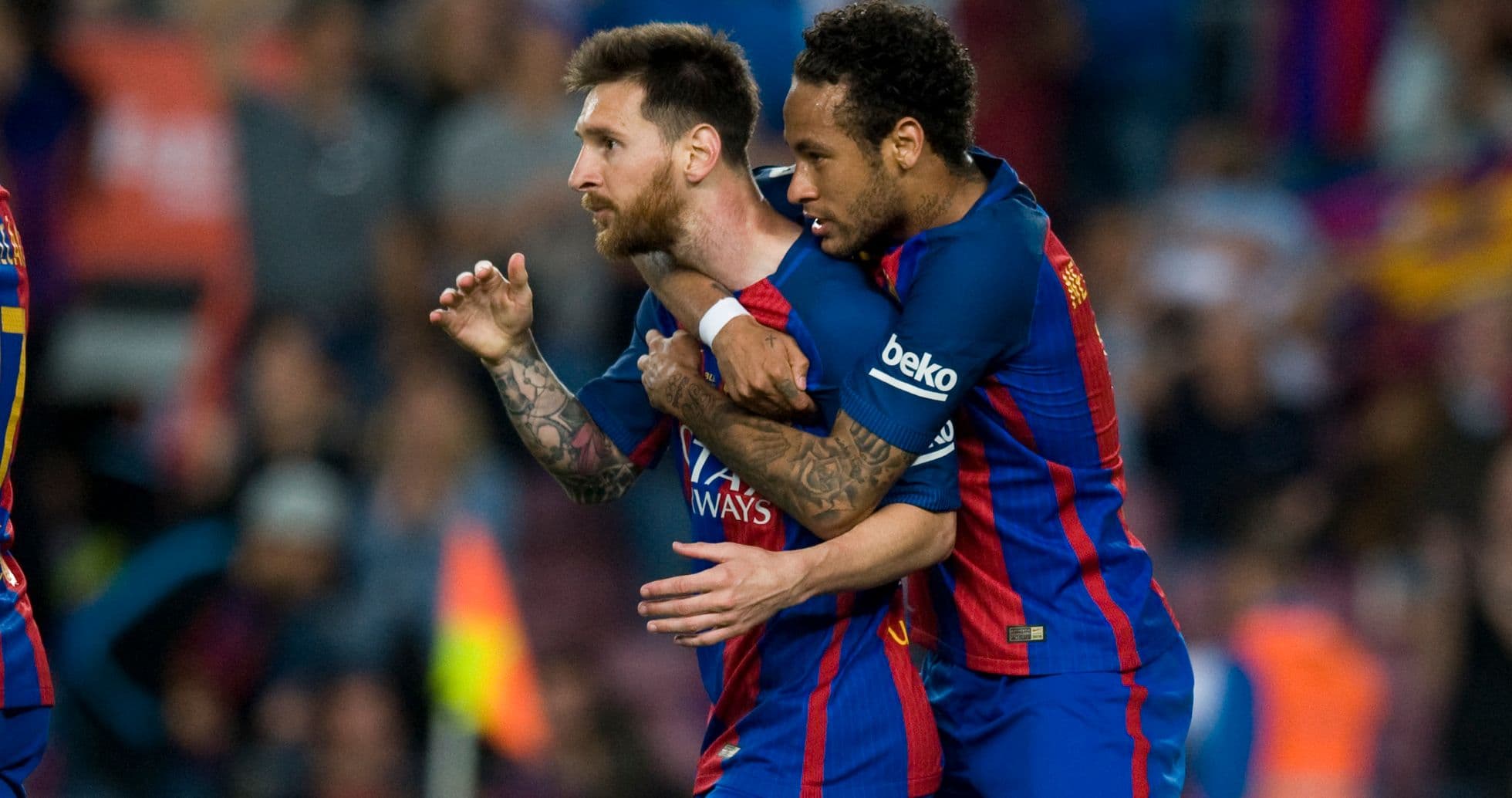
At the heart of it all stands Leo Messi. The man who lifted the trophy in 2022 now returns as defending champion with Argentina, still the central figure in a side built to repeat. His presence alone pulls the spotlight, but he is far from the only former Barça player shaping this World Cup.
France, runners-up last time out, lean on the current Ballon d’Or holder Ousmane Dembélé. The winger who once thrilled and frustrated at Camp Nou now leads a frontline packed with pace and menace. With him is Lucas Digne, another ex-Blaugrana, and Marcus Thuram, whose surname already carries history at the club. Marcus once trained at the FCB Escola while his father, Lilian Thuram, patrolled Barça’s back line. Now he arrives as a full international, writing his own chapter.
Portugal, as ever, bring talent and flair, and again Barça’s shadow stretches across their squad list. João Félix, Francisco Trincão and Nélson Semedo all carry Barcelona on their CVs, three very different careers, one shared reference point. Across from them in Group K stands Colombia, where former Barça defender Yerry Mina remains a towering presence at the back.
Elsewhere, Franck Kessié anchors Côte d’Ivoire, a key figure in a side that will not shy away from any opponent. For the United States, one of the host nations, Sergiño Dest is expected to lock down the right flank, his attacking instincts and defensive recovery vital in front of home crowds.
Neymar returns, Memphis leads
One of the tournament’s major storylines is Neymar’s return to Brazil’s squad, two and a half years after his last call-up. He will miss the opening match through injury, but even in absence, his name dominates the conversation. The Santos forward remains one of the most iconic figures in the competition, a player who still bends games and narratives around him.
On a different continent but with the same eye for goal, Memphis Depay arrives as one of Ronald Koeman’s main attacking weapons for the Netherlands. Now playing his club football in Brazil, Memphis carries the burden and the freedom of being a primary threat, his blend of power, technique and confidence central to the Dutch hopes.
Blaugrana on the touchline
The Barça imprint does not end when the players leave the pitch. It stands in the technical area too.
Ronald Koeman, the hero of Wembley ’92 and a former Barça coach, leads the Netherlands with the authority of a man who has lived the highest pressure both as player and manager. He is not alone. Julen Lopetegui, in charge of Qatar, and Thomas Christiansen, with Panama, bring their own Barça connections into national-team dugouts that once would never have imagined such links.
The club’s ideas, its methods, its way of seeing the game, now travel with them.
Morocco’s misfortune and promise
Not every story begins smoothly. Ez Abde, one of Morocco’s most in-form attacking options and another with Barça roots, will miss his team’s opening match through injury. His absence is a blow, yet Morocco still lean heavily on another La Masia product: centre-back Chadi Riad. Calm, composed and schooled in the positional demands of Barça’s academy, he is expected to play a prominent role for the North Africans.
From La Masia to the world
Riad is part of a much larger wave. La Masia’s influence runs deep through this World Cup.
Spain’s two left-backs, Marc Cucurella and Alejandro Grimaldo, both came through Barça’s academy, as did young winger Víctor Muñoz, currently recovering from injury but very much part of the national conversation. Their development in Barcelona’s system still shows in their understanding of space, their comfort on the ball, their decision-making under pressure.
Uruguay bring Santi Bueno to marshal their defence, another La Masia graduate who learned his trade in the same corridors as some of the game’s greats. Japan look to Take Kubo, a winger whose sharp feet and sharp mind were also honed in Barcelona’s youth ranks.
The list stretches further. Paraguay’s leading striker, Antonio Sanabria, once wore the Barça badge as a youth player. South Korea midfielder Seung-Ho Paik, long regarded as one of the brightest prospects in the academy, now carries his country’s colours on the sport’s grandest stage.
Different flags, different styles, one shared schooling.
A World Cup in Barça’s image
This World Cup is billed as the biggest ever. More teams, more matches, more stories. Yet for anyone who has followed FC Barcelona over the years, a familiar pattern emerges.
From the reigning champion in Messi to Neymar’s return, from Dembélé’s France to Koeman’s Netherlands, from La Masia full-backs in Spain to creative sparks in Japan and South Korea, the tournament is threaded with Blaugrana DNA.
You can follow your country. You can follow the stars. Or you can follow the club that quietly links them all.
In a World Cup bursting with colour and noise, Barça’s colours might just be the ones that never leave the screen.