World Cup Chaos: Storms, Celebrations, and Historic Moments
The World Cup rolled through North America on Sunday with the chaos turned up a notch: apocalyptic weather warnings in Philadelphia, political tension in Los Angeles, a flag confiscated in the name of FIFA protocol, and Mohamed Salah dancing in the streets of Vancouver after dragging Egypt into the history books.
And the football itself? Wild, uneven, compelling.
Storms threaten France–Iraq showdown
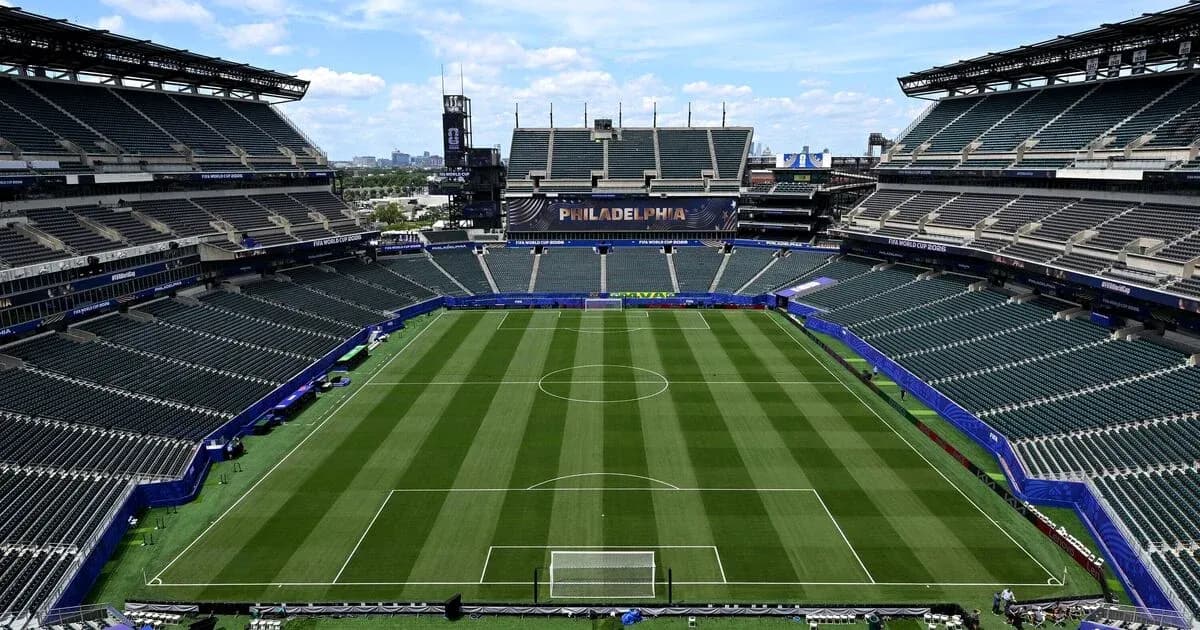
France’s late kick-off against Iraq in Philadelphia hangs under a darkening sky. Local forecasts are predicting severe thunderstorms over lengthy periods, with talk of “damaging winds, intense lightning, and a risk of isolated tornadoes”.
Under FIFA’s safety regulations, a single lightning strike within eight miles of the stadium stops everything. Players off. Fans moved to the concourses or emergency shelters. Then the clock starts: 30 minutes without another strike before anyone is allowed back towards the pitch.
“They'll start to evacuate the stadium to the main concourse and seek emergency shelter,” explained Lauren Lambrugo, chief operating officer of Philadelphia Soccer 2026. “And then it has to wait 30 minutes prior to them bringing everybody back on the field.”
If the storm sits over the city, France–Iraq could be delayed, fragmented, or even pushed back. On a day when the football has already felt unpredictable, the weather might yet write the most disruptive script.
Salah drags Egypt to history – then takes the party to the streets
In Vancouver, Egypt finally found their World Cup moment – and it belonged, inevitably, to Mohamed Salah.
New Zealand had the story in their hands at half-time. Finn Surman’s towering header, the kind you see on coaching clips about how to attack a corner, put them 1-0 up and 45 minutes from a first-ever World Cup win.
Egypt refused to accept another hard-luck tale. They came out after the break as if the tournament depended on it. Wave after wave. Pressure mounting.
Ziko cracked the game open just before the hour, levelling with a deserved equaliser after relentless Egyptian dominance. New Zealand, so composed in the first half, suddenly looked trapped in their own penalty area.
Then came Salah.
A neat one-two, a low, ruthless finish. His first goal of the tournament, the goal that flipped Egypt from anxious chasers into a team driving towards history. Trezeguet added a third, Egypt turning on the style while New Zealand unravelled, and the 3-1 scoreline sealed the Pharaohs’ first ever World Cup win.
The scenes did not stop at the final whistle. Footage emerged of Salah in Vancouver, singing and dancing in the streets, celebrating a landmark that has eluded generations of Egyptian sides. A superstar who has carried the weight of a nation, finally able to let it go for one night.
Cape Verde refuse to blink against Uruguay
In Miami, another underdog refused to bow to the established order.
Cape Verde, on their World Cup debut, stood toe-to-toe with Uruguay and walked away with a 2-2 draw that could yet reshape Group dynamics. It was not a smash-and-grab; it was a full-blooded contest.
Kevin Pina lit it up first. Around 30 yards out, he unleashed a free-kick that screamed into the net – a laser of a strike that left Uruguay stunned and the stadium buzzing.
Uruguay, wounded and under pressure after a stuttering start to the tournament, finally woke up. A ball into the box was nodded against the post, rebounding to Araujo, who threw himself at it and headed in for 1-1. Minutes later, Araujo turned provider, heading a deep cross back across the six-yard box for Canobbio to steer home. In a flash, Uruguay led 2-1 and the old order seemed restored.
Cape Verde did not fold.
Helio Varela came off the bench and needed just three minutes to punish Uruguay’s carelessness. With keeper Fernando Muslera stranded in no man’s land, Varela pounced on a mistake and rolled the ball into an empty net for 2-2. Another historic moment for a nation that refuses to be overawed by the stage.
They even threatened to steal all three points at the death. Uruguay, meanwhile, leave with more questions than answers. Marcelo Bielsa’s side have drawn both of their opening games, the camp reportedly fractured, and now face European champions Spain needing a performance, not just a result. Lose to Spain and see either Cape Verde or Saudi Arabia win, and Uruguay are staring at a likely early exit with only two points.
The injury list does not help. Bielsa has already ruled out Giorgian de Arrascaeta and Ronald Araujo for the final group match. Neither has played a minute so far, and both will remain unavailable until at least a potential round-of-32 tie – if Uruguay even get that far.
Spain reset their campaign, Yamal steps up
In Atlanta, Spain did what champions are supposed to do after a stumble. They responded.
After a flat 0-0 draw against Cape Verde, the European champions tore into Saudi Arabia and had the game effectively won inside 22 minutes. With Lamine Yamal restored to the starting XI, the entire tempo of their play changed.
Yamal tapped home the opener from close range after Mikel Oyarzabal swept a ball across the box. The teenager’s presence seemed to lift the entire side. Oyarzabal, criticised for his display in the opener, then took centre stage himself, scoring twice before the first hydration break and flipping his own narrative in the space of a blistering spell.
Spain eased off after the early blitz, but the gulf in class remained. A Marc Cucurella effort was turned into his own net by Hassan Al Tambakti for 4-0, the eighth own goal of these finals. A late Ferran Torres strike was ruled out for offside after a lengthy VAR check, but it barely mattered. Spain cruised, barely needing to get out of third gear after the interval.
They now have one foot in the knockouts. The mood, so tense after the Cape Verde stalemate, has shifted. The sight of Yamal celebrating his first World Cup goal – something he later described as “special” and the fulfilment of a childhood dream – only underlined the sense that Spain’s campaign is finally moving.
Belgium and Iran serve up frustration in Los Angeles
Not every game matched that intensity.
Belgium and Iran played out a goalless draw in Los Angeles that left Roy Keane, watching on ITV, branding the quality “rubbish”. His verdict matched the mood. Misplaced passes, slow decision-making, and a lack of conviction in the final third defined the evening.
Iran thought they had struck first when Mehdi Taremi found the net, only for VAR to rule the goal out for offside. Belgium had their moment late on, Maxim De Cuyper hitting a first-time effort straight at Alireza Beiranvand when he should have scored. A goalmouth scramble earlier in the second half saw three Belgian players swing at half-chances inside the six-yard box, only for Iran’s defenders to somehow keep the ball out.
Nathan Ngoy’s red card for denying Taremi a clear goalscoring opportunity – a last-man foul just past halfway, confirmed by VAR – left Belgium clinging on with ten men. The draw leaves both sides stuck on two points from two games in Group G, neither convincing, both under pressure heading into their final fixtures: Belgium face New Zealand, Iran meet Egypt.
Off the pitch, Iranian supporters again used the occasion to protest against the regime back home, as they had done before the New Zealand match. Inside the camp, Alireza Jahanbakhsh tried to steer the conversation back towards unity, insisting the team plays “for all the Iranians in Iran, outside Iran, with whatever ideology, whatever preferences they have,” and stressing that their job is to put their hearts on the pitch and make people happy.
England: injuries, curfews and a banned flag
England’s second group game, against Ghana in Boston, is already loaded with subplots.
On the pitch, Thomas Tuchel has decisions to make. Declan Rice remains a doubt after hobbling off in the opener against Croatia. Bukayo Saka, nursing an Achilles issue, followed his own programme on Saturday but returned to full training in a closed session in Kansas City on Sunday. The Arsenal winger insists the problem is under control, though Tuchel had previously hinted he might hold Saka back until the final group match against Panama.
Saka’s availability hands the England manager a welcome headache. A win over Ghana would send the Three Lions into the knockout stages and could be enough to secure top spot. With the margins fine and the schedule unforgiving, Tuchel must decide how much risk he can tolerate with one of his key players.
Off the pitch, the squad has been reminded of the discipline expected at a major tournament. Defender Dan Burn revealed that a strict curfew meant some players had to leave a concert early on a friends-and-family day, despite enjoying a night of country music and cowboy hats. It was a small glimpse into the controlled environment Tuchel has built around his group.
Supporters, meanwhile, have run into FIFA’s rulebook. An England flag featuring a submarine was barred from the opener against Croatia due to regulations prohibiting military imagery on flags. The incident prompted a tongue-in-cheek response from Barrow FC, who posted an image with the submarine blurred out, but underlined the governing body’s hard line on political and military symbols inside stadiums.
Doku’s dilemma and the fury it sparked
The World Cup rarely stays just about football.
Belgium winger Jeremy Doku, already absent from the Iran match with a chest infection, has been at the centre of a storm over his intention to leave the tournament early for the birth of his first child. Doku has been clear: if it were purely his choice, he would be there for the birth. He also acknowledged the realities of elite football, saying the federation understands and that “we’ll see what we can do.”
The reaction has been fierce in some quarters. French TV presenter France Pierron launched a scathing attack, calling the birth “a disgusting moment” where the father is “useless” and arguing that leaving a World Cup – a privilege hundreds of players dream of – would be wrong. She has since been suspended and apologised, but the comments lit a fuse.
Inside the game, sympathy has flowed the other way. England striker Ollie Watkins, a father of two, backed Doku’s stance unequivocally. “It only happens once, your first child,” he said. “Welcoming them into the world is a blessing, and you don't get that opportunity again.” Watkins added that long stretches away from family already define a footballer’s life and that Doku’s choice “is no one else’s business.”
The debate cuts to the heart of the modern game: how much of a player’s life belongs to football, and how much can they claim for themselves, even on the sport’s biggest stage?
Anthem boos, protests and the noise around the game
The political undercurrent of this World Cup grows louder by the day.
Iran’s national anthem was booed again for a second match, the sound echoing around the stadium as the players lined up. Jahanbakhsh, asked about the reaction, chose his words carefully. He spoke of good days and bad days for every team, stressed respect for all Iranians “with whatever ideology, whatever preferences they have”, and repeated that the squad’s duty is to perform, to play with heart and try to make people happy.
Outside the grounds, protesters have been blunt. One dissenting fan in Los Angeles, speaking to the Daily Mirror, insisted that the team “supports the regime” and “does not represent us”. Their message is clear: this is about far more than football, and the World Cup is a global platform they intend to use.
A tournament crackling with tension
From Salah’s street celebrations to Cape Verde’s fearless surge, from Spain’s reset to Uruguay’s unraveling, this World Cup day captured the full spectrum: joy, anxiety, politics, and the ever-present threat of chaos from forces no one can control – including the weather.
Now all eyes turn to Philadelphia’s sky and Boston’s pitch. Will the storms let France and Iraq play uninterrupted? Will England gamble on Saka and stride into the knockouts, or stumble into a final-day scrap?
The answers will shape more than just a group table.