World Cup Drama: England's Draw, Ronaldo's Return, and Scotland's Challenge
The World Cup has reached that awkward, nervy third-game stage. Legs are heavy, tempers shorter, margins thinner. Some nations are already through. Others are hanging on by their fingernails.
England sit somewhere in the middle: unbeaten, on course, but underwhelmed and under scrutiny after a goalless stalemate with Ghana in Boston that raised more questions than it answered.
Bellingham’s ‘second game fever’ and England’s reset
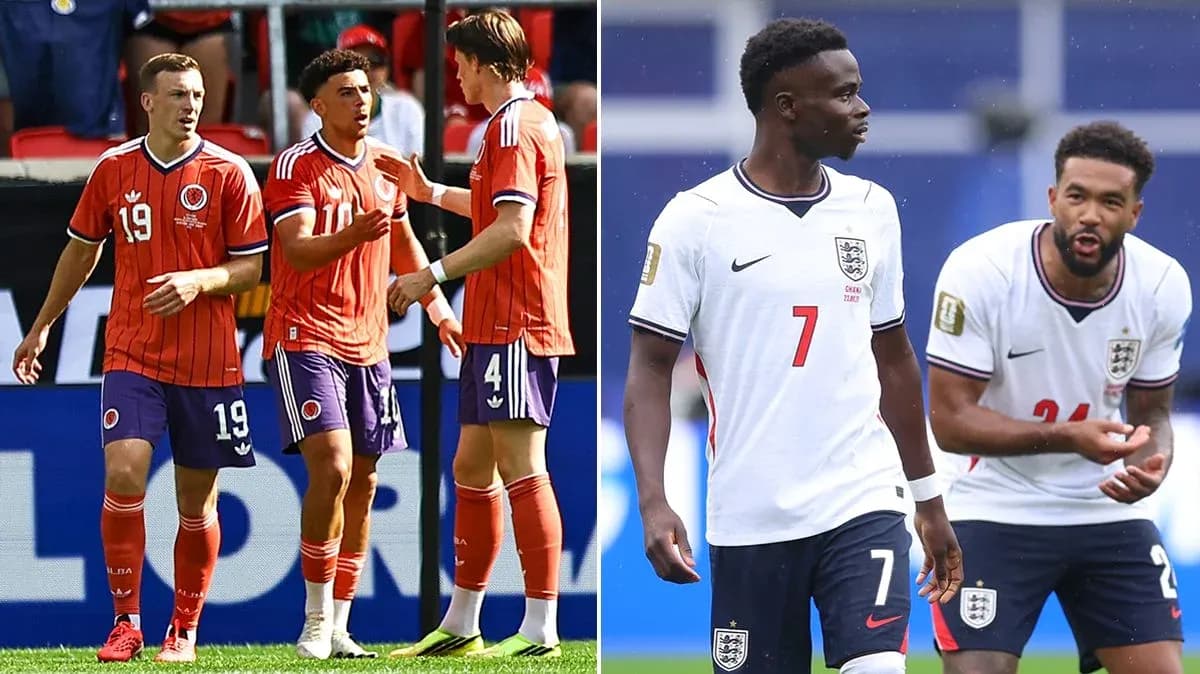
The 0-0 with Ghana didn’t cost England control of Group L, but it stripped away the early euphoria from the opening win over Croatia. The Three Lions could have booked their place in the last 32; instead, they trudged off with a point, a few knocks and a minor storm brewing around Jude Bellingham.
Man of the match on the night, Bellingham tried to frame the flat performance as part of the journey, labelling it “second game fever” – a familiar English affliction. Remarkably, it was the fourth straight draw in a second group game at a major tournament, stretching back to Euro 2020. The pattern is becoming a habit.
His message, though, was clear: England need to “roll with it” and move on. The focus is now on Panama on Saturday, where a win will secure top spot if they better Ghana’s result against Croatia. The aim is a reset, not a rethink.
The draw did not pass without controversy. Images of Bellingham covering his mouth while speaking to Jordan Ayew sparked uproar in Paraguay, where Miguel Almiron became the first player sent off at this World Cup for exactly that act during a heated clash with Turkey. Reports in Spain say the Paraguayan FA have lodged an official complaint with FIFA, questioning why Bellingham escaped punishment under the new rule that allows a red card for hiding a mouth during a confrontation.
FIFA’s stance is that Bellingham’s exchange was a friendly chat, not a flashpoint. Almiron’s, by contrast, followed a VAR review in a bad-tempered game. For now, England’s midfielder walks away unscathed, but the sense of inconsistency lingers.
Kane shrugs off miss – and the ‘dependency’ debate
The other image that defined England’s night was Harry Kane leaning back and blazing over from seven yards in stoppage time. The chance he usually buries. The one that would have turned a dull draw into a classic tournament grind-it-out win.
Kane, though, is refusing to dwell. The 32-year-old, who has already hit a brace against Croatia, brushed off the miss as part of a striker’s life, pointing out he has scored from far harder chances this year and will back himself to bury the next one. No self-pity, no drama – just a quiet insistence that the goals will come.
Talk that England rely too heavily on their captain has been pushed back from inside the camp. Thomas Tuchel has dismissed the idea, and Kane himself insists he doesn’t feel weighed down by expectation. Eberechi Eze echoed that view, arguing that the perception of over-reliance stems from Kane’s sheer output rather than a lack of alternatives.
Eze pointed to England’s “talent” and “creativity” across the squad, stressing that the mentality remains unchanged despite the draw. It is a long tournament, he said; you can’t ride every high or sink with every low.
Still, the numbers tell their own story: when Kane misfires, England often look blunt. That is the tension Tuchel must solve as the stakes rise.
Fitness fears and disciplinary tightrope
The goalless draw came at a cost. Declan Rice limped out late on and left the Boston Stadium with his leg heavily strapped. Reece James, only recently back from his troubles at Chelsea, completed the 90 minutes but will also be assessed.
Early indications suggest no long-term concern for Rice, but with England almost over the line, both he and James could be rested against Panama. Tuchel knows he cannot risk key pillars with the knockout rounds looming.
Rice has another issue to manage: a yellow card. His booking for a foul on Jerome Opoku was England’s first of the tournament. One more against Panama and he will miss the second-round tie. FIFA wipes single yellows after the group stage, but two cautions bring an automatic ban. Tuchel must decide whether to wrap his midfield anchor in cotton wool or trust him to walk the line.
Ronaldo’s response and Fernandes’ relief
While England spluttered, Cristiano Ronaldo roared back into the spotlight. Written off by some after a poor showing in Portugal’s opener against DR Congo, he responded with a brace in a ruthless 5-0 demolition of Uzbekistan.
The 39-year-old declared himself “back” afterwards, a familiar warning to those who have doubted him before. Bruno Fernandes, who created Ronaldo’s second, admitted it was a relief to see his captain scoring again. Ronaldo, he said, remains Portugal’s “go-to player in attack” and his goals still set the tone for the squad.
Portugal now face Colombia in Miami on Saturday with top spot in Group K on the line. For all the debates about his age and decline, Ronaldo has once again bent the narrative to his will. For how long, this World Cup will decide.
Scotland on a knife-edge before Brazil showdown
If England’s path feels controlled, Scotland’s is anything but. Steve Clarke’s side arrive in Miami for a gargantuan clash with Brazil knowing their World Cup hopes could soar or shatter in 90 minutes.
The laboured 1-0 win over Haiti raised concerns. The 1-0 defeat to Morocco deepened them. Scotland conceded inside 70 seconds to Ismael Saibari and never recovered, leaving them third in Group C and vulnerable.
Now comes the five-time world champions, coached by Carlo Ancelotti and rediscovering their rhythm after a 3-0 win over Haiti. Neymar, yet to feature at these finals because of a calf problem, is available again and “ready to play” after a strong week of training, according to Ancelotti. Whether he plays 45 minutes or the full match, his presence changes the mood.
Raphinha, injured against Haiti, misses out, but Brazil’s coach has sounded every warning about Scotland. He called them a team of “fighters”, highlighted the quality and experience of Scott McTominay and John McGinn, and insisted that “easy games at the World Cup were finished a long time ago”.
History offers Scotland little comfort. They have faced Brazil at the 1974, 1982, 1990 and 1998 finals without a single victory. Yet the Tartan Army has flooded Miami, turning beaches and bars into a sea of kilts, bagpipes and noise. Local police have praised their behaviour and the “unforgettable atmosphere” they have created.
On the pitch, the permutations are brutal in their simplicity. Beat Brazil and Scotland are through, with an outside chance of topping the group if Morocco slip up against Haiti. A draw, likely enough to reach four points, should secure a last-32 place as one of the best third-placed sides.
Even a narrow defeat might keep the dream alive. Lose by a single goal, as they did to Morocco, and Scotland would finish on three points with a goal difference of -1 – a total that has historically been enough to squeeze through, though it would leave them sweating on other results. A heavy loss, and the World Cup adventure almost certainly ends on South Beach.
The stakes stretch beyond tonight. If results fall a certain way, Scotland and England could collide in the round of 16 in Mexico City on July 6. For now, that remains a tantalising possibility rather than a fixed path, but it hangs over both nations as they prepare for their final group games.
Hydration breaks, storms and scheduling shadows
Away from the goals and the jeopardy, FIFA president Gianni Infantino has been discussing hydration breaks and their potential life beyond this World Cup, as organisers grapple with heat, humidity and player welfare.
Weather has already left its mark. France’s clash with Iraq became a four-hour slog after severe storms forced a long delay. Because it was a second group game, the disruption mattered little in terms of integrity. The fear is what happens if a decisive final-round fixture is hit by lightning or heavy rain.
Since the infamous “Disgrace of Gijón” in 1982, when West Germany and Austria were accused of playing out a mutually beneficial 1-0 to eliminate Algeria, FIFA has scheduled final group matches to kick off simultaneously. Article 12.4 of the tournament regulations enshrines that principle – with one crucial caveat: exceptions can be made in cases of force majeure.
There is no special protocol for summer storms. If a key game is delayed while its group rival goes ahead as planned, the spectre of manipulation will loom again. For now, it remains a theoretical problem, but the weather forecasts are being read almost as closely as the group tables.
Germany relentless, Argentina ruthless
Elsewhere among the heavyweights, Germany are refusing to ease off. Already through to the knockouts, Julian Nagelsmann’s side face Ecuador next and midfielder Nadiem Amiri has promised they will treat it “like a final”. Momentum, he argued, is too precious to squander. With German fans packing stadiums and millions more watching at home, there will be no experimental stroll.
Argentina are taking a similarly ruthless view. Lionel Scaloni’s team have already won Group J and secured a last-32 tie in Miami, but Jordan will not be granted an easy ride in Dallas. Lionel Messi, with five goals in two games and leading the Golden Boot race, has told his coach he wants to play at least 45 minutes. Scaloni is likely to rotate heavily, with the likes of Giuliano Simeone, Valentín Barco and José Manuel López in line for starts, yet Messi’s hunger ensures Argentina’s edge remains sharp.
Cristian Romero, nursing a muscle problem, is expected to be out until the last 16 at the earliest. Argentina will return to a sweltering Dallas on Friday, where temperatures are forecast to hit 100F. Hydration breaks may not just be a talking point there; they could be a necessity.
Off the pitch: prices, policing and a ‘witch doctor’
Beyond the touchline, the World Cup’s swirl of subplots continues. Former UK prime minister Gordon Brown has demanded an inquiry into what he calls “extortionate” ticket prices, claiming ordinary families are being “priced out” of the game and accusing FIFA of “fleecing” fans. He highlighted the cost of final tickets, saying they are 30 to 40 times higher than those for the Euro final in Germany, and argued that football “at its best” cannot exist if real supporters are locked out.
On the other side of the Atlantic, UK police have been quick to praise England and Scotland fans for their conduct in the United States. Around 30,000 England supporters descended on Boston for the Ghana game, with no arrests of British nationals reported. Chief Constable Mark Roberts described their behaviour as “excellent”, echoing the positive scenes in Dallas, while local authorities have been equally complimentary of the Tartan Army’s carnival in Boston and Miami.
There has even been room for the bizarre. Ghanaian “witch doctor” Nana Kwaku Bonsam claimed credit for stopping Kane from scoring against the Black Stars, boasting of a spell to shackle the England captain. Now, with Ghana’s job done against England, he says he has “released” Kane ahead of the Panama clash and calls himself “the most powerful spiritualist in the whole world”. Superstition meets superstardom, and football, as ever, sits comfortably in between.
USA jolted by quake, Pulisic ready, Potter bites back
In California, the USA’s final group game build-up came with an unexpected jolt. A preliminary 5.6 magnitude earthquake struck Mendocino County on Wednesday morning, its tremors felt as far as Sacramento. There is no tsunami warning, and the match against Turkey at Los Angeles Stadium will go ahead, but it underlined how volatile this World Cup can feel on and off the pitch.
On the team front, Christian Pulisic offered a blunt, one-word update on his fitness – “yes” – when asked if he would be ready to face Turkey after missing the win over Australia with a knock. With Mauricio Pochettino’s side already through and Turkey out, it is a chance for the USA to fine-tune rather than fret.
Graham Potter, meanwhile, is fighting fires of his own with Sweden. A 5-0 opening win over Tunisia was followed by a brutal 5-1 beating by the Netherlands, with captain Isak Hien blamed for three of the goals. Potter has hit back at critics, insisting he “loves” Hien and will keep picking him, calling the backlash a “blame game” and taking responsibility himself. Sweden face a crunch clash with Japan in Dallas, their campaign suddenly on edge.
Simultaneous kick-offs and Scotland’s date with destiny
Scotland’s showdown with Brazil kicks off at 11pm (BST) in Miami, the same time as Morocco vs Haiti. That is no coincidence. After Gijón 1982, FIFA locked in simultaneous final group fixtures to prevent teams playing to a known result. The rule still stands, even as weather threatens to disrupt the neat symmetry.
If Scotland pull off the upset of the tournament and beat Brazil, they could even top Group C if Morocco fail to win. A draw should be enough. A narrow defeat might still do. The margins are fine, the possibilities vast.
Back in England’s camp, the equation is simpler: beat Panama, manage the minutes, keep the yellow cards in check, and move on. Declan Rice cannot afford another booking. Kane wants his next chance. Bellingham wants “second game fever” to be nothing more than a line in a story that ends well.
The World Cup, though, rarely follows the script. Will England’s composure hold? Will Scotland’s fight be enough against Neymar and Brazil? And in a tournament where storms, new rules and old ghosts all lurk in the background, who blinks first?