World Cup Group Stage Drama: Key Matches and Stakes
The World Cup’s group stage is heading for its final bend, and Friday feels like the moment when everything tightens. Twelve hours, six cities, three groups, and a stack of nations trying to keep their tournament alive.
Some are chasing first place. Others are clinging to the last rungs of qualification. All of them know there is almost no margin left.
A day built for drama
The schedule is relentless.
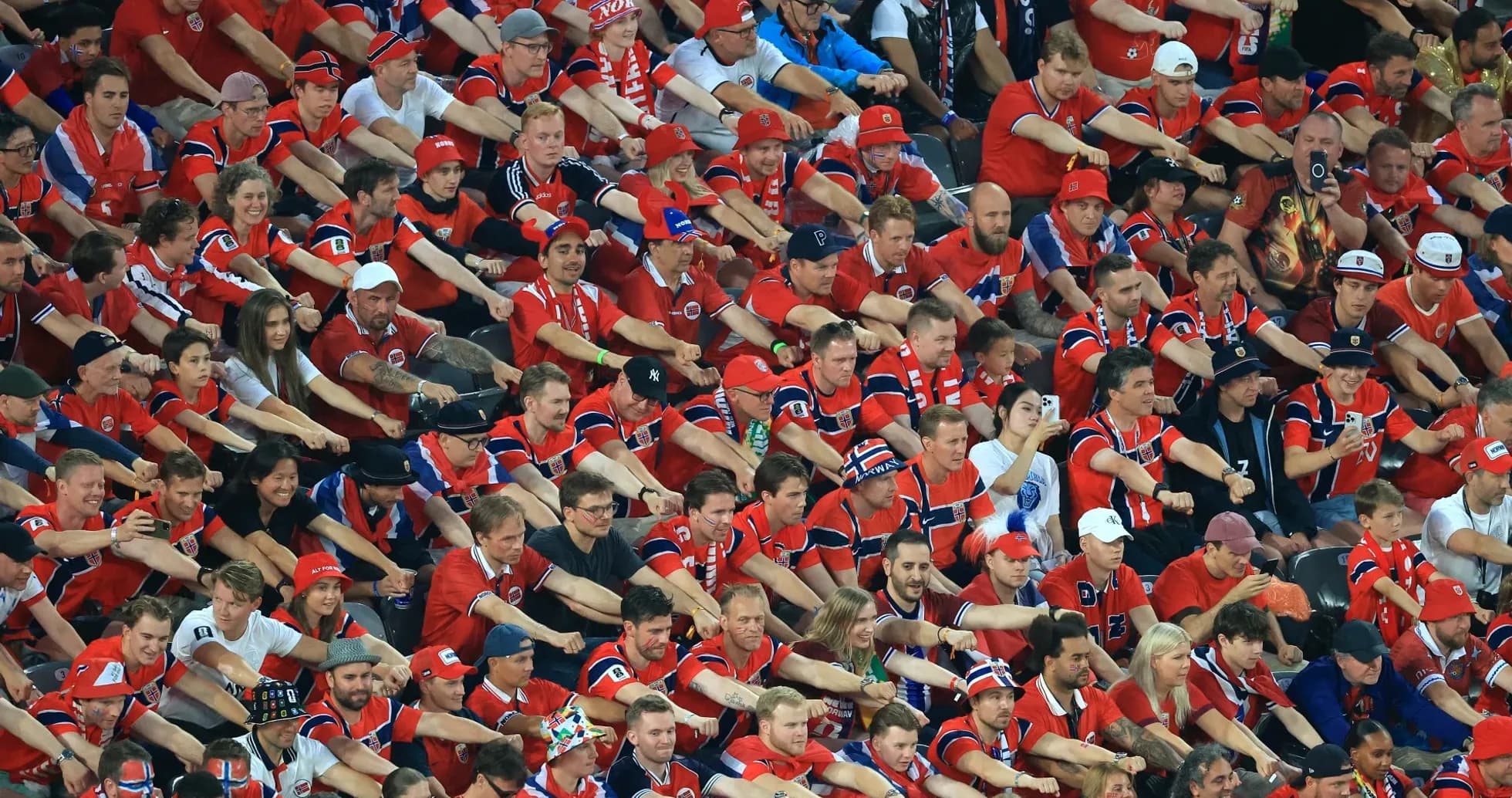
Norway face France in Boston at 3pm EDT, with Group I’s top spot on the line. At the same time in Toronto, Senegal meet Iraq, one side trying to stay on course for the knockouts, the other fighting to extend a faint hope.
The evening brings a different kind of tension. Cape Verde and Saudi Arabia collide in Houston at 7pm CDT, a straight shootout for survival in Group H. In Guadalajara, Uruguay and Spain renew a World Cup rivalry that has been dormant for more than three decades. Later still, Egypt face Iran in Seattle and New Zealand take on Belgium in Vancouver, both matches loaded with consequence for Group G.
By the time the West Coast goes to sleep, the last 32 will be a lot clearer. Or a lot messier.
France, Norway and a fight for first
Norway versus France is not just another group game. It’s a reset of an old European duel with real stakes.
The last time they met, France ran riot in a 4-0 friendly win back in 2014. This will be their 16th meeting, but only the latest chapter in a lopsided competitive history. Norway have beaten France just twice in official matches, and not since a European Championship qualifier in 1987.
The numbers are even harsher when you zoom out. Norway are still hunting their first World Cup victory over European opposition. Five attempts, no wins: two draws, three defeats. France, by contrast, have turned European clashes on this stage into a habit of control, winning their last five World Cup games against teams from their own continent.
Opta’s supercomputer leans heavily towards Les Bleus. France are given a 59.4 percent chance of victory. A draw, rated at 20.6 percent, would be enough for them to seal top spot in Group I. Norway sit at 20 percent to claim the win and flip the script.
First place is the prize. The margins are thin. The history is not.
Senegal in control, Iraq on the brink
Across the border in Toronto, Senegal and Iraq meet for the first time at a World Cup. The records tell you why one side walks in with shoulders back.
Senegal have never lost to Asian opposition at this tournament. They drew with Japan in 2018, then beat hosts Qatar in 2022. Iraq, meanwhile, have never even faced an African team on this stage.
The supercomputer treats this like a mismatch. Senegal are handed a 77.2 percent chance of victory, Iraq just 8.6 percent, with the draw at 14.2 percent.
The stakes sharpen those numbers. Senegal cannot top Group I anymore, but they still hold a 72.2 percent chance of reaching the last 32. Iraq are hanging by a thread, their progression odds down at 1.1 percent. They need a result, and they need help.
One side is playing to protect a path. The other is playing to keep a dream alive.
Cape Verde and Saudi Arabia walk the tightrope
In Houston, Cape Verde and Saudi Arabia meet in a fixture that feels almost like a playoff in disguise.
It’s a first World Cup encounter between the two. Saudi Arabia arrive with a solid record against African teams at this level: just one defeat in five, with two wins and two draws. Cape Verde bring something else—momentum and opportunity in a debut on this stage.
The data can’t quite separate them. Cape Verde are given a narrow edge at 40.8 percent to win. Saudi Arabia sit at 33.9 percent. The draw, at 25.3 percent, looms large.
Behind those probabilities lie two very different paths. Cape Verde have a 66.7 percent chance of reaching the last 32. Saudi Arabia’s hopes are at 33.3 percent. Both know that one moment, one mistake, one flash of quality could tilt an entire campaign.
Uruguay and Spain, rivalry renewed
Uruguay and Spain know each other in World Cups, even if the memories are sepia-toned now.
They last met on this stage at Italia ’90, grinding out a goalless draw in the group phase. Before that, in 1950, they shared a 2-2 thriller in the final round of a tournament Uruguay would ultimately conquer.
Since then, football has changed, Spain have become European champions again, and Uruguay have rebuilt and reimagined themselves more than once. But the fixture still carries weight.
Opta’s simulations reflect Spain’s status. In 25,000 pre-match runs, Spain win 62.4 percent of the time. Uruguay come out on top in 15.7 percent, with a draw in 21.9 percent.
Spain are expected to dictate. Uruguay are expected to resist. History suggests it may not be that simple.
Egypt, Iran and a clash of streaks
Seattle gets a match layered with history, even if the World Cup chapter is brand new.
Egypt and Iran have met only once before, at the 2000 LG Cup in Tehran. That night finished 1-1, Egypt winning 8-7 on penalties. Hossam Hassan, now Egypt’s coach, scored. Ali Daei, the Iranian legend, equalised. Those names still echo.
This time, the stakes are higher and the context sharper. Iran arrive unbeaten against African sides at World Cups: a win over Morocco in 2018, draws with Angola in 2006 and Nigeria in 2014. Egypt, backed by that slim historical edge and a coach who has lived this fixture, carry their own belief.
Opta tilts slightly toward the Pharaohs. Egypt are given a 42.9 percent chance of victory. A draw sits at 32.2 percent, Iran’s win probability at 24.9 percent.
One team defends a spotless continental record. The other tries to write a new World Cup story of its own.
Belgium heavy favourites, New Zealand stubborn as ever
In Vancouver, New Zealand and Belgium meet for the first time. On paper, it looks like a mismatch. On World Cup grass, New Zealand tend to be awkward company.
Their last two games against European sides at this tournament, both in 2010, ended in draws—against Slovakia and then Italy. They left that World Cup unbeaten, a quirky footnote in the history of the competition.
Belgium carry a different kind of curiosity into this one. They could become the first European team since their own 1998 side to draw all three group matches at a World Cup.
The supercomputer doesn’t expect that narrative to repeat. Belgium are overwhelming favourites, with an 80.3 percent chance of victory. A draw is given 11.8 percent. New Zealand win in just 7.9 percent of simulations.
The numbers point one way. New Zealand’s history of stubbornness points another.
The table: who’s safe, who’s sweating
By Friday morning, six groups are done. Groups G to L are still sorting themselves out, with 13 places in the Round of 32 still available.
Mexico stand alone as the only team to navigate the group phase with a perfect record so far, nine points from nine. Already through are Mexico, South Africa, Switzerland, Canada, Bosnia and Herzegovina, Brazil, Morocco, USA, Australia, Germany, Ivory Coast, Ecuador, Netherlands, Japan, Sweden, France and Norway.
Today’s drama focuses on three groups:
- Group G: Egypt lead on 4 points. Iran and Belgium sit on 2. New Zealand are on 1. Every game matters.
- Group H: Spain are top with 4 points. Uruguay and Cape Verde trail with 2 each. First place and survival are both in play.
- Group I: France and Norway are already through, but the group’s summit is still undecided.
Groups J, K and L will close out on Saturday. For now, the board remains crowded, and the exits are not yet full.
Late drama, African surge and a World Cup that won’t sit still
The group stage has not just been about permutations and percentages. It has been about moments that refuse to fade.
In Group D, Turkiye and the United States played out a 3-2 thriller at SoFi Stadium that meant nothing on paper and everything in the stands. The US had already locked up top spot. Turkiye were out. Yet almost 70,000 fans watched a game decided by a 98th-minute Turkish winner, the kind of strike that lives on in memory long after the brackets move on.
Mauricio Pochettino used the dead rubber to rotate heavily, making nine changes and handing seven players their first World Cup starts. The tempo never dropped. Pride, and a stage this big, were motivation enough.
Across the tournament, African teams are pushing toward a landmark. Ten qualified for this expanded 48-team World Cup. As many as eight could still reach the knockouts.
Morocco and South Africa are already in. Ivory Coast have also booked their spot in the Round of 32. Egypt, Algeria, DR Congo, Ghana and Cape Verde enter their final group matches knowing qualification remains in their own hands.
It is not yet a golden generation. But it is something close to a golden opportunity.
Mexico perfect, Netherlands paint a city orange
In Mexico, the mood is different: not anxious, but buoyant.
At the Azteca, the cohosts completed a flawless Group A campaign with a 3-0 win over Czechia. They had already secured top spot before kickoff. They chose to finish with a flourish.
After a quiet first half, Mateo Chavez broke the deadlock. Julian Quinones, scoring his second goal of the tournament, doubled the lead. Substitute Alvaro Fidalgo added a third. Czechia’s hopes of reaching the Round of 32 died with it. Mexico moved on with maximum points and the look of a team that believes it can go deep.
Farther north, the Netherlands turned Kansas City into a travelling home match. Local reports put more than 35,000 Dutch fans in the famous Oranje Fanwalk, starting in the Power & Light District and rolling through the city behind the iconic orange bus.
They sang, they waved flags, they pulled in locals and neutrals until downtown became a block of orange noise heading toward the FIFA Fan Fest. It was one of the biggest fan marches of the tournament so far, a reminder that sometimes the spectacle in the streets rivals the one on the pitch.
A president in two places, a world split by borders
Not every storyline has been about goals or crowds.
On one surreal night, FIFA President Gianni Infantino appeared on the big screens at two different matches at once—Ecuador vs Germany and Curacao vs Ivory Coast—despite the games being played in different cities at the same time. Cameras cut to him in both stadiums. Social media erupted. Fans joked that he had cracked the code of being everywhere at once in a tournament spread across the US, Canada and Mexico.
While those clips bounced around the internet, the football itself was brutal and decisive. Ecuador stunned Germany 2-1. Ivory Coast beat Curacao 2-0 to reach the Round of 32. On a night of confusion off the pitch, the results on it were razor sharp.
Beneath the spectacle, deeper questions have been simmering. On “The Take”, journalist Boima Tucker described a World Cup caught between its message of global unity and the reality of increasingly restrictive borders.
Travelling across host cities, he found Moroccan and Senegalese fans in New York, Cape Verdean communities in Massachusetts, and thousands of Ghanaians packing a watch party in Toronto. He spoke of the joy of seeing people celebrate their teams in their own neighbourhoods, the way the tournament seeps into daily life far from the stadiums.
At the same time, he pointed to the hurdles many have faced just to be here. Iran’s national team have been based in Tijuana, crossing into the US only for matches. Officials, relatives, and supporters have struggled with visas. Those complications do not stay at immigration desks; they follow players onto the pitch.
Tucker framed it as part of a wider global inequality: a world that sells the dream of free movement through sport, yet restricts it in practice. High-profile cases get attention. Systemic change remains elusive.
And yet, inside that contradiction, football still finds ways to pull people together. Tucker described immigrant communities celebrating side by side, strangers learning each other’s songs and flags, borders briefly blurred by a shared ninety minutes.
He hopes this World Cup will be remembered for those crossings—across ethnic lines, national identities, class divides. For the rare moments when people could mingle and see each other differently.
The question now is whether the closing weeks of this tournament will deepen that feeling, or remind everyone how quickly those lines snap back into place once the final whistle blows.