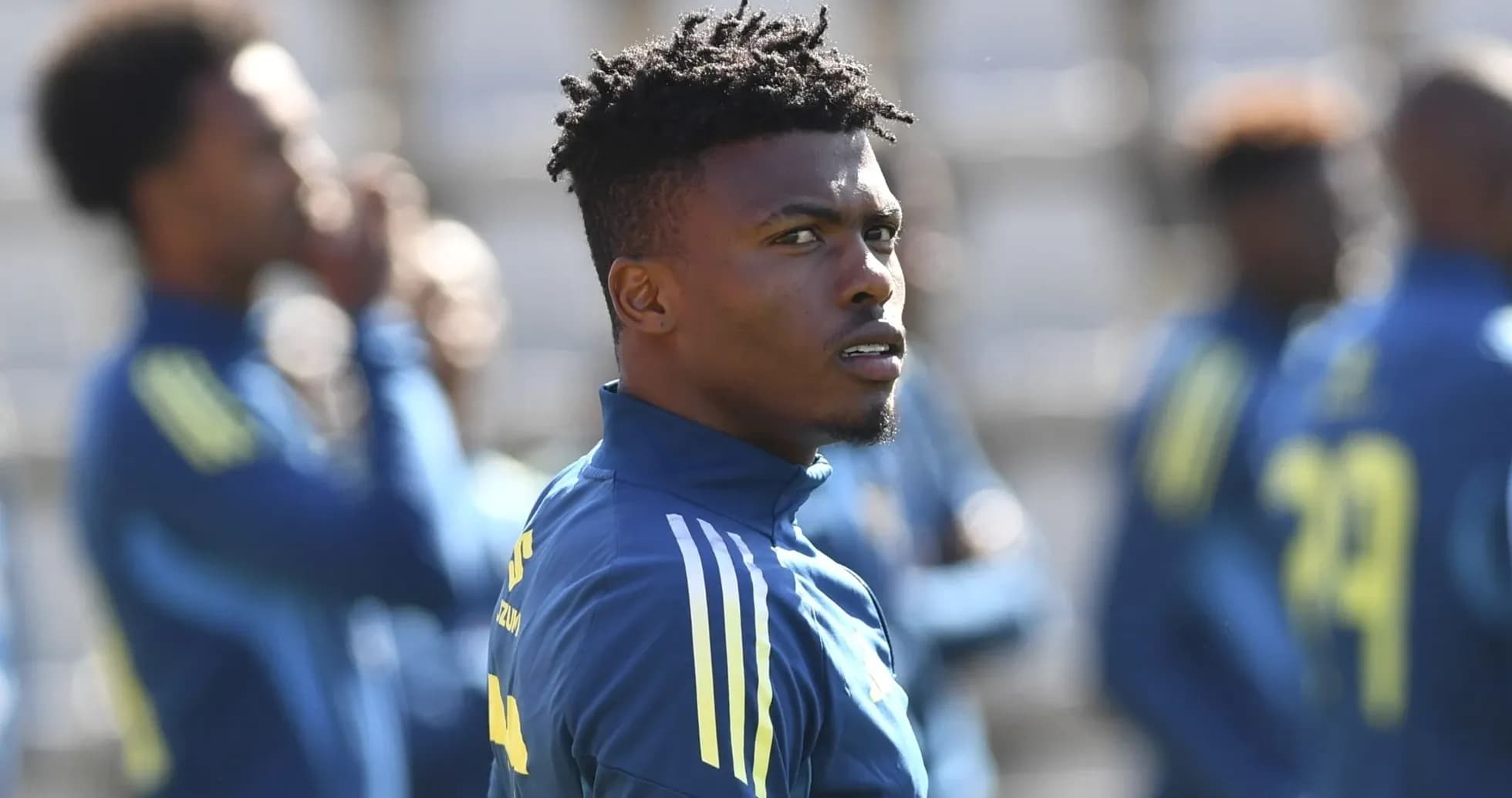
Abdeslam Ouaddou on Orlando Pirates' Legacy and Neo Rapoo's Rise
Abdeslam Ouaddou didn’t talk like a man preparing for just another season. He spoke like a guardian of a tradition.
Sitting in front of the cameras on Tuesday, the Orlando Pirates head coach went well beyond formations and fitness. He went straight to the heart of what he believes the Soweto giants are: not just a club, but a social engine for South African football.
Pirates as a platform, not just a badge
"I think you know better than me the club of Orlando Pirates," he began, almost deferential to the institution he has walked into.
What followed was a reminder of why Pirates carry such emotional weight across the country. Ouaddou painted a picture of scouts driving far from Johannesburg, into villages where the spotlight rarely reaches, and returning with raw talent that the club then shapes for the global stage.
"They are very involved in the social matter and what I like is, they give the platform to local players," he said. "Sometimes they can find a player in the village and it's the beauty of football and they make them grow, grow, grow until they send them abroad."
For him, names like Relebohile Mofokeng and Mbekezeli Mbokazi are not just success stories. They are the living proof of a philosophy.
"For me, the story of [Relebohile] Mofokeng, the story of [Mbekezeli] Mbokazi and the story of other players to be at the World Cup and to see them playing at such a high level. This is the story of Pirates, and they continue like that."
The message was clear: this is a club that measures itself not only in trophies, but in lives changed.
Rapoo steps into the spotlight
Into that tradition now walks Neo Rapoo.
The young left-back, signed from Siwelele FC and shaped in the SuperSport United development system, has wasted no time making himself heard in pre-season. Gruelling sessions, heavy legs, tactical demands — and yet Rapoo has stood out.
He is not walking into a vacancy. He is walking into a fight. Deon Hotto and Nkosikhona Ndaba are his direct competition for that left flank, two players with their own ambitions and reputations. But on the training pitches, Rapoo has shown the blend of technical quality and physical intensity that Ouaddou’s system demands.
"Rapoo is part of this process, like the other players, young players," the coach said. Then he widened the lens again. "I think you have to understand Pirates is a family. I felt this feeling the first day that I signed for that club and from the board inside the club you can see this kindness. They take care about you, and they want you to be successful, whoever came in the club."
In that family, Rapoo is not just another youngster. He is being earmarked as one of the next big steps in the club’s production line.
A rare dressing-room culture
The way Ouaddou tells it, what happens in the Pirates dressing room is not normal by professional standards.
He played 17 years in Europe and Africa. He has seen enough to know how senior players can react when a bright young full-back arrives and starts turning heads. Often, the veterans close ranks, protect their places, and make the new boy feel like an intruder.
At Pirates, he insists, the dynamic is different.
"The senior players, they have this legacy," he said. "They have this legacy and they are honest people. Because I’ve been playing football for 17 years and I can tell you that sometimes it not the case because when there are new players coming, they are coming, to take positions."
That is the reality of elite football. But this is where he draws the contrast.
"But here, the senior players, they're fighting to keep their position, which is good for me. And in the same times, they welcome them in the club and they help them to set them in the club."
Competition without hostility. Pressure without poison. It is a delicate balance, and one he believes is driving the club’s development.
So when he looks at Rapoo and Ndaba, he does not just see two young full-backs. He sees future international players being shaped in the right environment.
"Rapoo is one of them," he added. "I see him really the next with the Nkosinkhona [Ndaba] the next international players."
Built for the modern game
The admiration is not just emotional. It is tactical.
Ouaddou’s game model demands a lot from his full-backs. They must run, and then run again. They must defend, then explode into the final third. They must combine, cross, and contribute on the scoresheet. In an era where defenders are judged as much on their attacking output as their positioning, Rapoo and Ndaba tick the right boxes.
"They are full of quality, in terms of capacity to repeat efforts, and if you see our game model it's very demanding," he explained. "They're able to combine in the last third. They're playing high. They're able to score, they're able to give you a fantastic cross."
Then comes the detail that separates Rapoo.
"The particularity of Rapoo is somebody who is able to be efficient in the set pieces," Ouaddou said. In a season where Pirates are expected to compete on four fronts, those marginal gains matter. A well-delivered corner in a tight cup tie. A free-kick swung onto a teammate’s head in a congested league schedule. These are the moments that tilt campaigns.
With a calendar packed with fixtures, rotation will not be a luxury, it will be a necessity. High-energy full-backs who can maintain intensity from August to the final stretch could define how far Pirates go.
"So, I think he will bring his competences to our group, as you know we have a lot of games. I'm sure he will be successful and overall, he is a top man and very professional," Ouaddou concluded.
From village pitches to set-piece routines at a Soweto giant, Neo Rapoo now steps into a story that has already carried Mofokeng and Mbokazi to the World Cup. The question is no longer whether Pirates can find the next one. It is how high this next generation will climb.