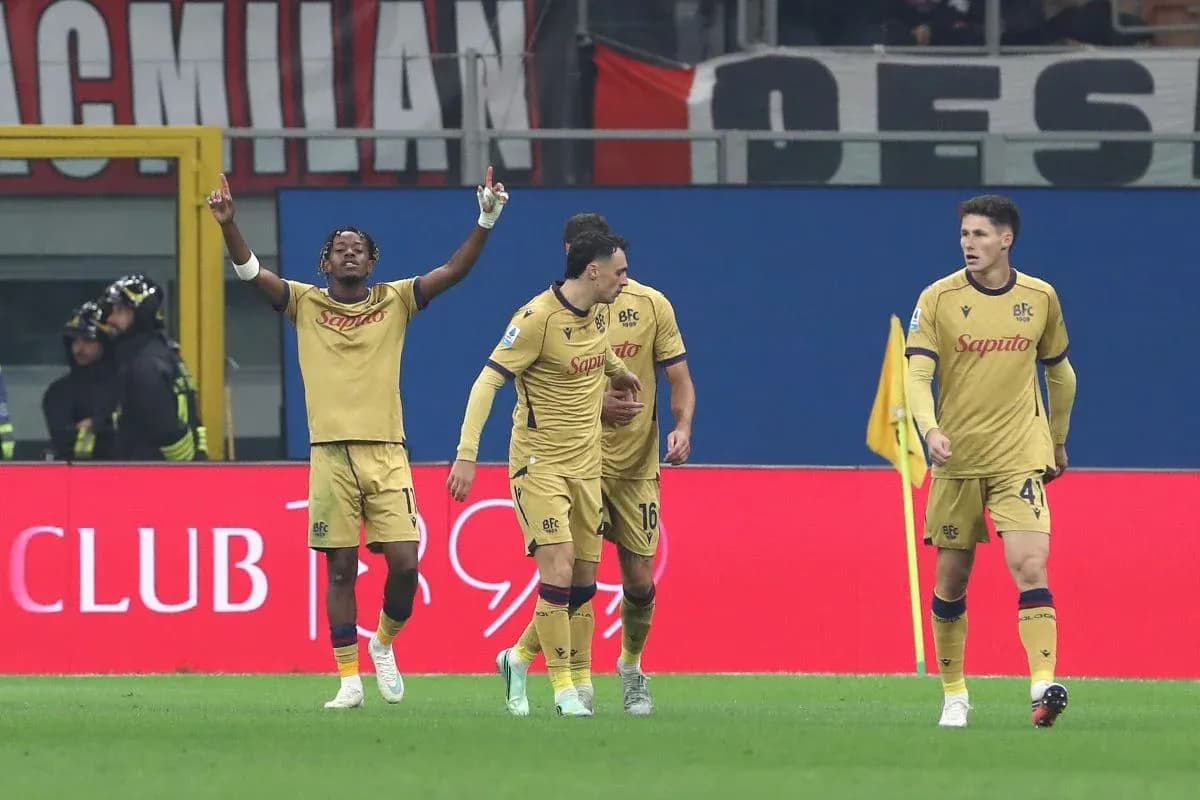
AC Milan's 4-2 Defeat to Bologna: A Tactical Analysis
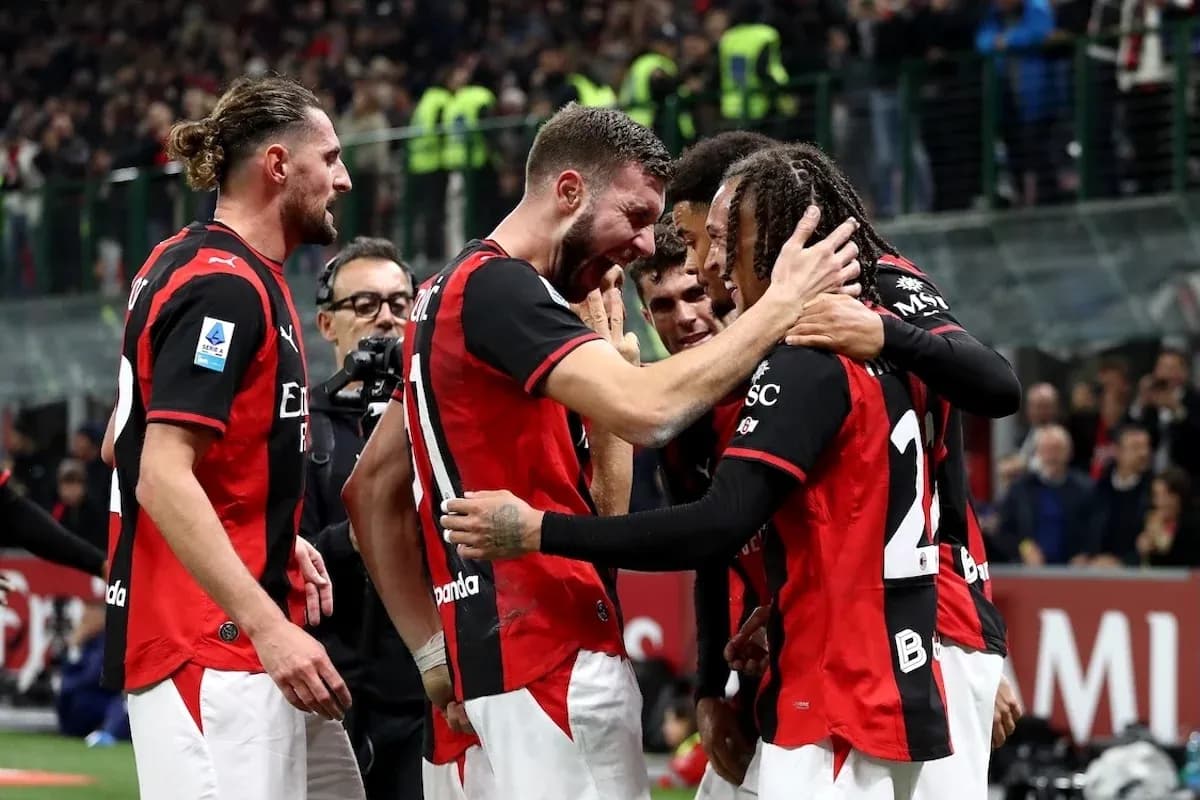
Under the lights of San Siro, this was supposed to be a statement evening for a reshaped AC Milan. Instead, a 4-2 home defeat to Bologna turned into a brutal reminder of how thin the margins are in Serie A – and how fragile Milan’s new structure can look when the balance tilts.
I. The Big Picture – A tale of two structures
Heading into this game, the table painted Milan as a side on the rise. Fifth in Serie A with 18 points from 9 matches, their overall goal difference of 7 was the product of 18 goals scored and 11 conceded. At home they had been assertive: 10 goals for and 6 against across 4 matches, averaging 2.5 goals scored and 1.5 conceded at San Siro. Bologna arrived in 11th with 11 points from 9 games, their overall goal difference exactly balanced at 0, built on 12 goals for and 12 against. On their travels, though, they had been dangerous: 3 away wins from 5, with 8 goals scored and 5 conceded, an away scoring average of 1.6.
On paper, this looked like a classic clash of Milan’s home firepower against Bologna’s increasingly confident away punch. The final score – 2-4 to Bologna – flipped the script. Milan’s season-long attacking profile held up (they still average 2.0 goals per game overall), but their defensive line, already conceding 1.2 per match in total, was ripped open by a visiting side that has quietly found a way to travel with conviction.
Ruben Amorim’s choice of a 4-2-3-1 was bold but revealing. With M. Maignan behind a back four of P. Estupiñán, S. Pavlović, K. De Winter and F. Tomori, Milan looked physically imposing yet relatively new as a unit. The double pivot of Y. Musah and A. Jashari was tasked with both building and shielding, while an attacking band of O. Hutchinson, A. Cissé and D. Bartesaghi supported Gonçalo Ramos as the lone forward.
Raffaele Palladino, by contrast, leaned into Bologna’s identity as a flexible, pressing side in a 3-4-3. Ł. Skorupski was protected by a back three of A. Theate, N. Casale and M. Darmian, with N. Zortea and R. Alhassane stretching the flanks from midfield. Inside, L. Ferguson and T. Pobega formed a combative central pair, feeding a front three of F. Bernardeschi, J. Odgaard and S. Mbangula.
II. Tactical voids – Injuries and absences reshape the contest
Milan’s squad sheet carried the scars of a bruising early season. S. Chukwueze (hip), M. Gabbia (thigh), M. Gila (ankle), R. Loftus-Cheek (thigh), D. Moreira (thigh), A. Rabiot (calf) and A. Saelemaekers (ankle) were all listed as missing for this fixture. That list is not just long; it cuts directly through Milan’s spine and creativity.
Rabiot’s absence was particularly seismic. With 4 goals and 3 assists in Serie A, and a 7.43 average rating, he has been both Milan’s leading scorer and a top-tier creator in the league. His 324 completed passes with 87% accuracy, plus 8 key passes, usually provide vertical thrust and calm progression from midfield. Without him, Amorim turned to the youthful energy of Musah and Jashari, but the trade-off was obvious: more legs, less control.
Loftus-Cheek’s power between the lines and Chukwueze’s direct wide threat were also missing, forcing Milan to rely on the relative inexperience of Hutchinson and Cissé in the advanced roles. The bench, rich in names like L. Modrić and C. Pulišić, hinted at options, but the starting structure lacked the proven Serie A rhythm that Rabiot and Loftus-Cheek bring.
Bologna, too, were not at full strength. L. De Silvestri (muscle), J. Enem (Achilles), E. Holm (thigh), R. Orsolini (thigh) and R. Piccoli (hamstring) were all out. Orsolini’s absence removed a proven Serie A goal threat from the right, and De Silvestri’s experience would have been valuable against Milan’s wide rotations. Yet Palladino’s squad depth, especially with players like Juan Miranda and N. Cambiaghi available on the bench, allowed Bologna to maintain their structural identity.
Disciplinary trends also framed the tactical risk. Milan’s yellow-card distribution this season shows a late-game spike: 26.67% of their bookings come in the 76-90 minute window, with another 20.00% in both the 31-45 and 46-60 ranges. Bologna, meanwhile, see 35.29% of their cautions between 31-45 minutes and 23.53% from 76-90. In other words, both sides tend to live on the edge around half-time and in the closing stages – precisely the phases where this match turned wild.
III. Key matchups – Hunter vs Shield, Engine Room battles
The most intriguing “Hunter vs Shield” duel revolved less around a single striker and more around Milan’s collective attack against Bologna’s away resilience. Milan’s home scoring rate of 2.5 per game met a Bologna defence that, on their travels, had conceded just 1.0 per match. Palladino’s back three, with Theate’s aggression, Casale’s aerial presence and Darmian’s positional nous, was built to absorb central pressure and force Milan wide.
For Milan, A. Cissé arrived as one of Serie A’s emerging attackers, with 4 goals from 6 appearances and 10 shots (5 on target). His ability to drift between the lines and attack half-spaces was meant to unsettle Bologna’s outer centre-backs. But without Rabiot’s passes threading him into advantageous zones, Cissé was often forced to receive deeper or wider, reducing his penalty-box presence.
In the “Engine Room” zone, the contrast was stark. Milan’s Musah and Jashari are energetic ball carriers, but Bologna’s pairing of Ferguson and Pobega brought a blend of physicality and timing that repeatedly broke up Milan’s rhythm. Ferguson’s all-round profile – 14 tackles, 7 interceptions and 40 duels contested this season – underpins Bologna’s ability to spring transitions. Each Milan turnover in central zones fed Bernardeschi and Odgaard, whose movement between the lines dragged Pavlović and De Winter into awkward decisions.
Pavlović himself is emblematic of Milan’s defensive paradox. With 22 tackles, 2 successful blocks and 6 interceptions in the league, plus 703 passes at 91% accuracy, he is both stopper and deep playmaker. But his disciplinary line is thin: 3 yellow cards already this season, and he also appears among the league’s top red-card profiles. Against Bologna’s mobile front three, his aggression had to be perfectly timed; instead, the collective structure around him wobbled, leaving even his interventions exposed.
On the Bologna side, T. Heggem’s profile – 6 blocked shots and 8 interceptions – underlines how Palladino’s defensive unit thrives on last-ditch interventions. Even from the bench, his presence symbolised a team comfortable defending deep phases if the game state demanded it.
IV. Statistical prognosis – What this result tells us
Following this result, the numbers around both teams sharpen in meaning. Milan’s overall scoring remains strong at 2.0 goals per match, but conceding 4 at home in a single night drags their defensive narrative toward vulnerability, particularly against sides that can transition quickly and exploit structural gaps. Their penalty record this season is another warning sign of fine margins: 2 penalties awarded, only 1 scored and 1 missed, a 50.00% conversion rate that underlines a lack of ruthlessness in key moments.
Bologna, by contrast, continue to punch above the perception of a mid-table side when they travel. On their travels they average 1.6 goals scored and 1.0 conceded, and the 4-goal haul at San Siro fits a pattern of an away team that embraces risk but defends with clarity once the block is set. Their overall balance of 12 goals for and 12 against still reads neutral, yet performances like this suggest an underlying confidence that outstrips a goal difference of 0.
If we map the season-long trends onto a predictive frame, Milan remain a high-xG, high-variance side: capable of overwhelming opponents at home but exposed when their midfield control is compromised and their defensive line is dragged into open-field duels. Bologna project as an efficient, structurally coherent unit whose away defensive solidity and transition threat can tilt matches even in hostile venues.
In tactical terms, the prognosis is clear. Milan must restore their midfield hierarchy – above all by reintegrating Rabiot and Loftus-Cheek when fit – and tighten the distances between their back four and double pivot. Bologna, meanwhile, have found a template: a flexible 3-4-3 that leverages Ferguson’s engine, Bernardeschi’s craft and a disciplined back three to turn difficult away fixtures into opportunities rather than ordeals.