AC Milan Triumphs Over Inter in Derby della Madonnina
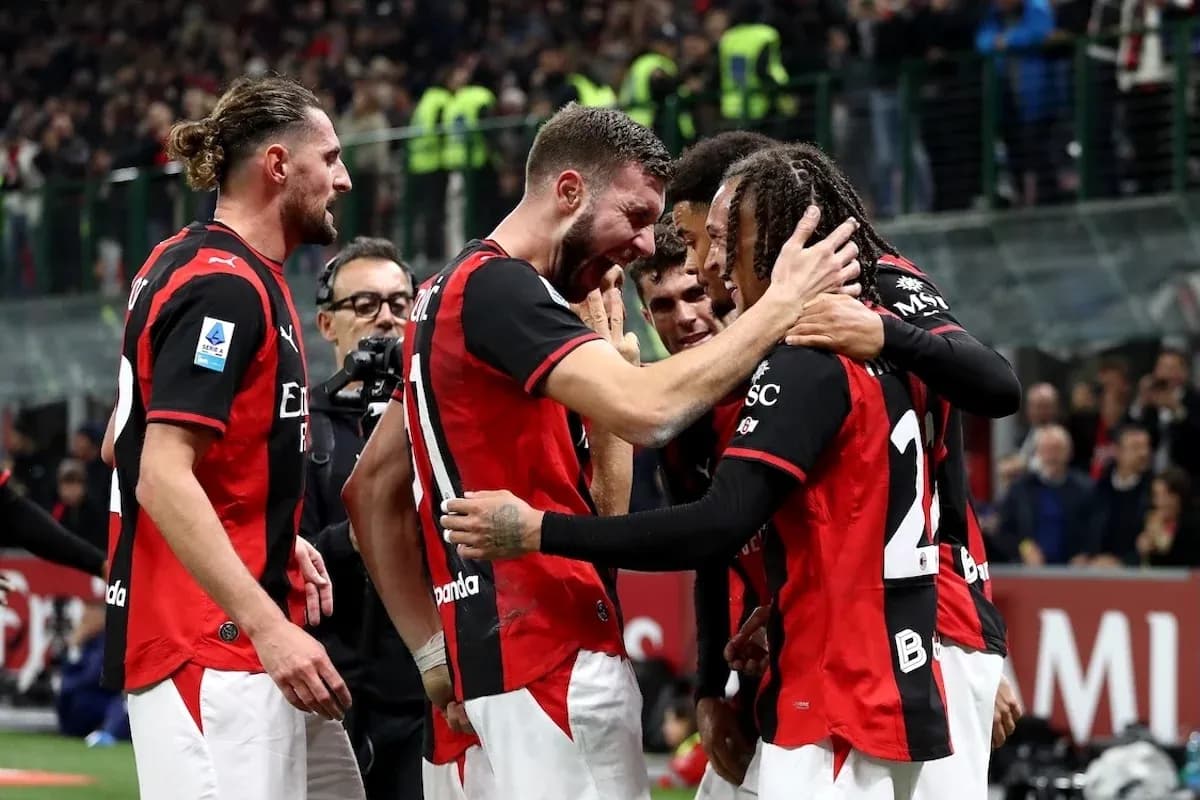
Under the San Siro lights, this Derby della Madonnina belonged to Ruben Amorim’s AC Milan. In a Serie A “Regular Season - 10” clash that felt like a statement of intent, Milan dismantled Inter 3–1, mirroring the half‑time and full‑time scorelines and reshaping the narrative between a side chasing the Champions League places and one that arrived as title contenders.
Heading into this game, the table framed the stakes clearly. Inter were 2nd on 25 points, with a total goal difference of +13 (26 scored, 13 conceded), and a perfect home record underpinning their title credentials. Milan, 5th on 21 points with a total goal difference of +9 (21 scored, 12 conceded), were already one of the division’s most balanced outfits: 6 wins, 3 draws, 1 defeat in total, and only 1 loss at San Siro all season. On their travels, Inter had been efficient if less explosive, winning 3 of 5 away with 9 goals scored and 6 conceded. Milan at home, by contrast, had averaged 2.6 goals for and 1.4 against, a profile that hinted this derby could be decided by how bravely Amorim’s side embraced their attacking DNA.
They did so with conviction, and they did it in a mirror. Both managers rolled out a 3‑4‑2‑1, but the shapes carried very different personalities.
For Milan, Mike Maignan anchored a back three of K. De Winter, Mario Gila and S. Pavlović. Ahead of them, a hard‑running band of four—Diego Moreira wide right, Luka Modrić and Y. Musah inside, S. Bocoum on the left—gave the structure its elasticity. In the half‑spaces, A. Rabiot and C. Pulišić floated behind Gonçalo Ramos, the lone striker on paper but the pressing trigger in practice.
Inter matched the line of three—Y. Bisseck, M. Akanji, A. Bastoni—shielded by a midfield four of D. Spence, N. Barella, H. Çalhanoğlu and Carlos Augusto. A. Diouf and P. Sučić operated as advanced midfielders behind M. Thuram, whose blend of power and movement has already produced 5 league goals and 2 assists this season.
The first tactical void was written on the teamsheet. Milan entered the derby without S. Chukwueze (hip injury), M. Gabbia (thigh), R. Loftus‑Cheek (thigh), A. Saelemaekers (ankle) and F. Tomori (muscle). That stripped Amorim of a natural right‑sided winger, a ball‑carrying midfielder and a key centre‑back, forcing him to lean heavily on De Winter and Pavlović as the pillars of his defensive line.
Inter’s absences were just as significant. C. Jones, Luis Henrique, L. Martinez, B. Pavard and J. Stones all missed out, removing a first‑choice striker, a senior right‑sided centre‑back and another elite ball‑playing defender from C. Chivu’s options. Without Lautaro Martínez, Thuram became both finisher and focal point; without Pavard and Stones, the back three lost some of its composure under pressure.
Milan’s plan was to turn those absences into pressure points. In possession, Bocoum and Moreira pushed high and wide, pinning Spence and Carlos Augusto deep. Modrić and Musah rotated cleverly, often dragging Çalhanoğlu away from his preferred screening lane and opening channels for Rabiot and Pulišić to arrive between the lines. Rabiot, already on 5 goals and 3 assists in Serie A, played like a roaming 8.5: late into the box, early into the press, always available as the extra man.
Inter’s own structure was supposed to lean on control. Çalhanoğlu dropping to form a temporary back four in build‑up, Barella and Diouf providing vertical thrust, Sučić drifting into pockets to link with Thuram. Yet Milan’s high central block—anchored by Pavlović stepping aggressively into Thuram’s zone and De Winter covering depth—constantly disrupted that rhythm. De Winter’s season numbers underline his importance: 649 total passes at 94% accuracy, 16 tackles, 4 successful shot blocks, 13 interceptions. He defended the space, not just the man.
Discipline had been a quiet subplot before kick‑off. Milan’s season card profile showed a tendency toward volatility after the interval: 29.41% of their total yellow cards arriving between 46–60 minutes, and 23.53% in the 76–90 window. Inter’s own yellow‑card peak sat in that same 46–60 band at 35.71%. Yet in this derby, Milan managed the emotional spikes better. Pavlović and De Winter, both already on 3 yellows in the league, walked the line without crossing it, while the midfield’s intelligent pressing angles reduced the need for desperate fouls.
The decisive “Hunter vs Shield” duel came where the data had predicted tension: Milan’s multi‑threat attack against Inter’s away defence. On their travels this season, Inter had conceded 6 goals in 5 matches, an average of 1.2 per game, solid but not impregnable. Milan at home had averaged 2.6 goals scored and had failed to score in exactly 0 home fixtures. Once Rabiot and Moreira began to overload the left‑half space around Bisseck and Spence, that shield cracked.
Moreira’s emergence as a creative spearhead added another layer. With 4 goals and 3 assists in just 396 league minutes, and an 88% pass accuracy, he gave Milan a directness that Inter struggled to track. When he and Pulišić inverted, Ramos could occupy both Akanji and Bastoni, leaving the far‑side wing‑back isolated. Milan’s third goal felt like the natural consequence of those repeating patterns rather than a break in the script.
In the “Engine Room” duel, Rabiot and Modrić outmanoeuvred Çalhanoğlu and Barella. Rabiot’s season line—5 goals, 3 assists, 356 passes with 8 key passes—translated into a derby performance that combined vertical passing with second‑ball aggression. Diouf, Inter’s own creative hub with 4 assists and 18 key passes, found himself pushed deeper and wider than he likes, forced to help Carlos Augusto contain Moreira instead of dictating play between the lines.
From a statistical prognosis perspective, the outcome fits the season arcs. Milan’s total attacking profile—2.1 goals scored on average, only 1.2 conceded, and 3 clean sheets—was always compatible with upsetting a high‑flying rival, especially at San Siro. Inter’s total scoring power of 2.6 goals per game met a defensive unit anchored by a De Winter‑Pavlović axis that has rarely been breached heavily; Milan’s heaviest home defeat in Serie A so far was 2–4, an outlier rather than a trend.
Layer in the penalty narratives and the risk picture becomes clearer. Milan had taken 2 penalties in total this season, scoring 1 and missing 1; that 50.00% conversion rate underlined the danger of relying on spot‑kicks. Inter, by contrast, had scored both of their total penalties for a 100.00% record. By winning the territorial and chance‑creation battle in open play, Milan effectively removed that Inter edge from the equation.
Following this result, Milan’s 3–1 win does more than close the points gap; it validates Amorim’s structural gamble. A 3‑4‑2‑1 built around aggressive wing‑backs, a double creator line of Rabiot and Pulišić, and a commanding back three has just outplayed a title contender running a similar base shape. For Inter and Chivu, the lesson is stark: without Lautaro Martínez and their full defensive arsenal, their away solidity can be bent and broken by a side with Milan’s intensity and tactical clarity.