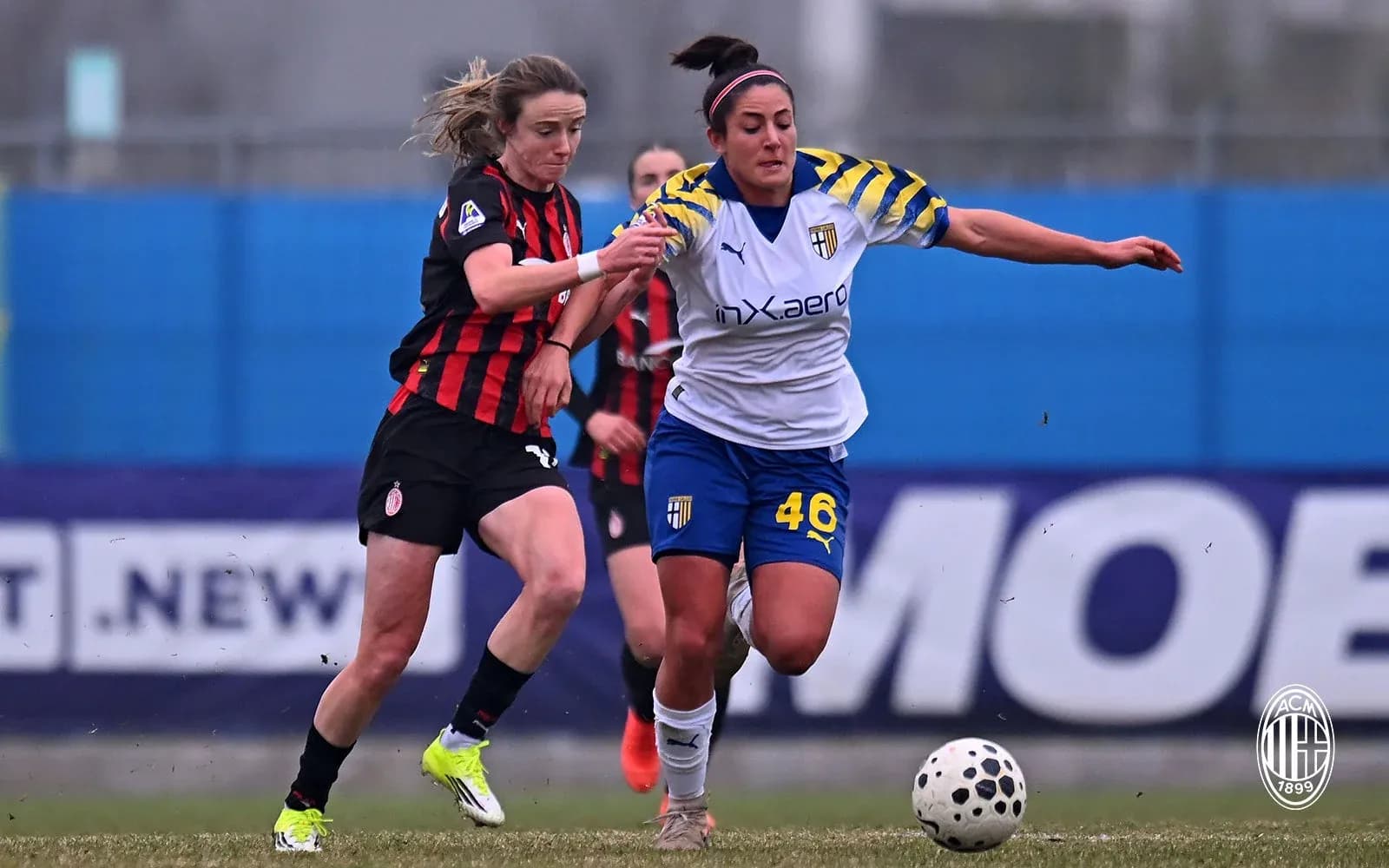
AC Milan W Triumphs Over Parma W 3–1 in Serie A Women
Under a bright Milanese morning at Centro Sportivo Peppino Vismara, AC Milan W and Parma W stepped into a fixture that felt like a crossroads rather than just “Regular Season - 21” in Serie A Women. By the final whistle, Suzanne Bakker’s side had imposed their will in a 3–1 win, a scoreline that neatly echoed the broader trajectories of these two seasons: Milan consolidating as an upwardly mobile mid-table power, Parma still fighting to turn stubborn resilience into real security.
Heading into this game, the table already framed the narrative. Milan were 6th with 32 points, their overall goal difference of 6 a precise reflection of a team that scores more than it concedes: 31 goals for and 25 against across 21 league matches. At home they had been quietly efficient, with 5 wins from 11, 18 goals scored and 15 conceded, averaging 1.6 goals for and 1.4 against at Vismara. Parma arrived in 10th on 16 points, their overall goal difference a worrying -13, built from 15 goals scored and 28 conceded. On their travels, the story was even starker: 11 away games, no wins, 5 draws, 6 defeats, only 2 goals scored and 14 conceded, for a meagre away scoring average of 0.2.
Within that context, the 1–1 balance at half-time felt like Parma punching above their away numbers, but the full-time 3–1 told the truer tale of the tactical landscape. Bakker’s XI was anchored by L. Giuliani in goal, a back line featuring E. Koivisto and M. Keijzer, with the latter bringing the edge of a defender who has already seen red once this season and is used to defending on the front foot. In midfield, G. Arrigoni and M. Mascarello offered control and bite, while C. Grimshaw pushed higher, linking with S. Stokic, T. Kyvag and the dangerous C. Dompig.
On the opposite bench, Giovanni Valenti leaned into Parma’s familiar three-at-the-back DNA, even if the exact shape was not listed. D. Cox and C. Ambrosi were central defensive presences, with M. Uffren and C. Prugna tasked with carrying the ball out and giving some verticality to a side that has too often lacked punch. G. Distefano and A. Kerr offered movement up front, with M. Copetti behind them as the last line of resistance.
The tactical voids in this match were less about absentees – there were no official missing-player notes – and more about psychological and disciplinary baggage. Milan came in with a season-long card profile that screams late tension: 31.58% of their yellow cards arrive between 76–90 minutes, and their red cards are spread evenly across 46–60, 61–75 and 76–90, each window accounting for 33.33% of their total reds. Parma’s own discipline trends are similar: 29.17% of their yellows also come in that 76–90 zone, and their only red of the season has fallen there as well, a full 100.00% of their red-card incidents.
In a game that was level at the break, those patterns mattered. The second half was always likely to be about who could maintain structure as fatigue and emotion rose. Milan, used to playing on the front foot at home, leaned into their attacking identity. Overall this campaign they average 1.5 goals per match and only fail to score in 7 of 21 games; Parma, by contrast, have failed to score in 11 of 21, and on their travels they have blanked in 9 of 11. Once Milan pushed the tempo after the restart, the probability curve was never in doubt.
The “Hunter vs Shield” duel was embodied by K. van Dooren, even if she began this match on the bench. With 5 goals in the league, 18 shots and 12 on target, she is Milan’s most efficient finisher on the numbers, and her presence in the squad sheet alone forced Parma to respect the space between their lines. Against a defence that concedes 1.3 goals per game overall and 1.3 away, the mere possibility of van Dooren arriving late from midfield shaped how deep Parma’s back three were willing to sit. That, in turn, opened lanes for players like Dompig and Kyvag to attack more directly.
On the other side, Parma’s best “Shield” in midfield is Uffren. Her 32 tackles, 3 blocked shots and 34 interceptions this season, alongside 512 completed passes at 82% accuracy, mark her as the heartbeat of Valenti’s structure. But the numbers also reveal the cost of that aggression: 24 fouls committed, 7 yellow cards and even a missed penalty. In a match where Milan’s midfield trio of Mascarello, Arrigoni and Grimshaw can circulate possession – the latter two combining for over 600 passes in the league – Uffren was always going to be stretched horizontally. Once Milan’s third goal went in, the strain on her zone became visible in the gaps Parma could no longer close.
The “Engine Room” battle was perhaps the most decisive. Grimshaw’s season line – 2 assists, 11 key passes, 10 successful dribbles – paints a picture of a midfielder who can both carry and create. Up against Uffren and Prugna, she repeatedly found pockets between Parma’s midfield and defence, drawing fouls and forcing positional adjustments that unbalanced Parma’s block. Around her, Mascarello’s more understated profile – 368 passes, 15 key passes, 13 tackles and 4 yellow cards – provided the metronome and the snarl. Together they tilted the pitch in Milan’s favour.
Following this result, the statistical prognosis for both sides hardens rather than changes. Milan’s overall goal difference of 6, built from 31 scored and 25 conceded, is consistent with a side whose xG profile would lean positive: they create enough, concede some, but usually emerge on the right side of margins, especially at home where they already had 3 clean sheets and a best win of 3–0. Parma’s -13 goal difference, with only 2 away goals in 11 attempts, underlines an attack that simply does not travel. Even with 4 away clean sheets, the inability to turn draws into wins keeps them anchored near the bottom.
In narrative terms, this 3–1 is less a twist than a confirmation. Milan look like a side whose squad depth – from van Dooren’s scoring to Dompig’s edge and Keijzer’s aggression – can sustain a push to solidify the upper half of the table. Parma, meanwhile, remain a team built on grit and individual industry – Uffren’s numbers, Distefano’s 2 assists and 16 key passes, Cox’s defensive work – but without the attacking certainty to change their destiny away from home. At Vismara, that structural imbalance finally told, and the scoreboard simply wrote in numbers what the season’s data had been whispering all along.