Aitana Bonmatí Returns to Training: Barcelona's Quadruple Chase
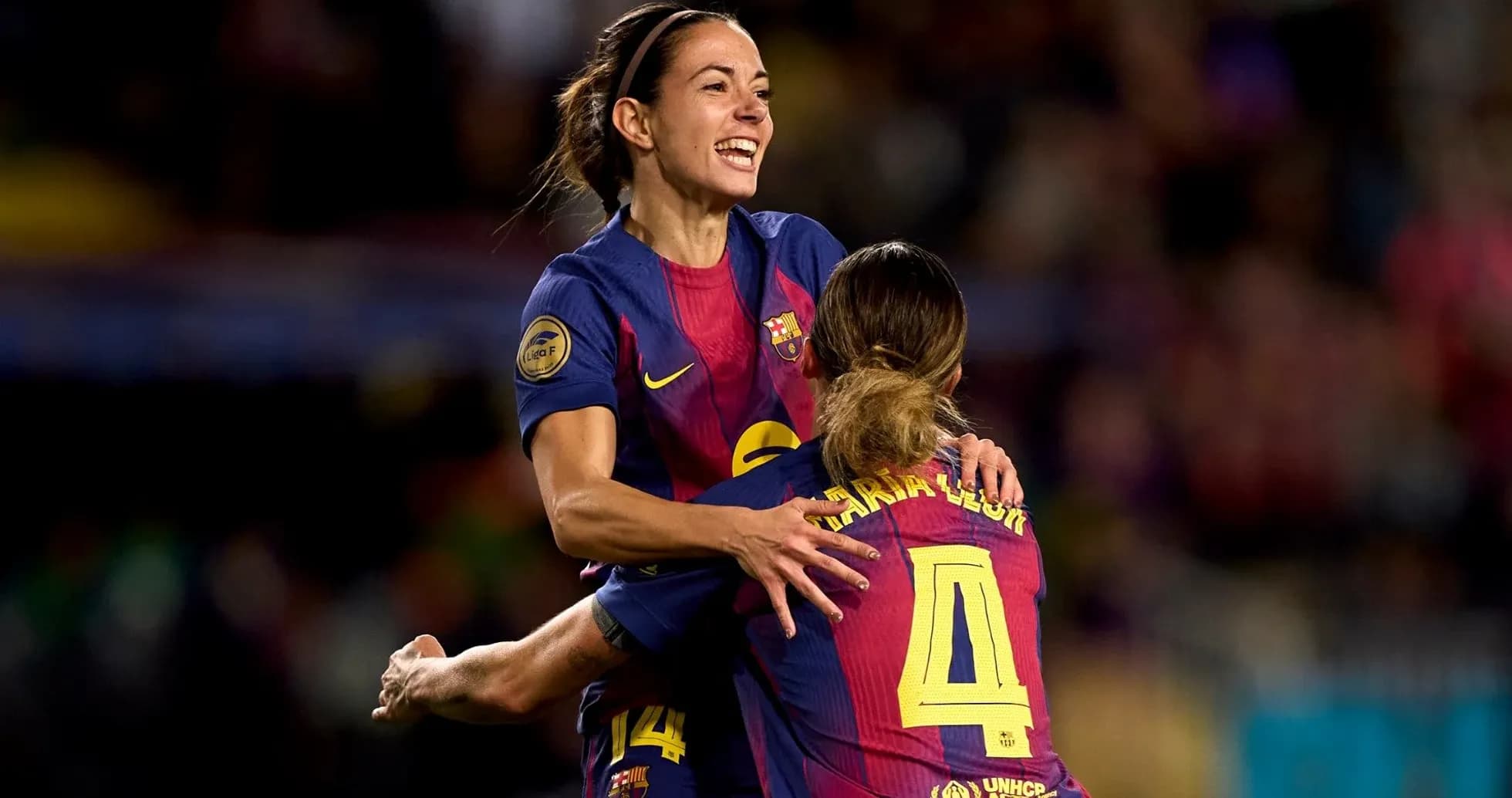
Aitana Bonmatí walked back into full training this week and Barcelona made sure the world noticed.
The club pushed out the images on Monday evening: boots laced, bib on, the Ballon d'Or winner back in the middle of the rondos after a broken leg in a Spain session in late November had ripped her out of the season. This wasn’t a quiet return. It felt like a statement.
She spoke to the dressing room before stepping fully back in.
"I'm a little nervous. It's like my first day at school after the summer," she joked, standing in front of a squad that knows injuries far too well. She reminded them she’d tried to find positives in the long months out, that the time had actually been “very good” for her, then cut straight to the point: there’s a month and a half left, big targets still on the table, and she wants to help drag them over the line. “I think we'll make it. So, thank you, and let's keep going."
Barca’s season under strain
That Barcelona are still chasing a quadruple despite Bonmatí spending most of the campaign in rehab says plenty about the level of this team. They’ve already banked the Supercopa de España in January and a seventh straight league title last month. The Copa de la Reina final awaits. So do the Champions League semi‑finals against Bayern Munich, with the first leg this weekend.
All of that has been done with a treatment room that has rarely been empty.
Bonmatí’s layoff was the headline, but hardly the only one. Mapi León, one of the best centre-backs in the game. Patri Guijarro, the heartbeat in midfield. Laia Aleixandri, brought in from Manchester City in the summer. All have missed significant chunks of the season. In a year when financial restrictions meant Barça couldn’t pad out the squad as usual, every absence cut a little deeper.
The load on those who remained went up. So did the risk.
Esmee Brugts, still only 22 and now in her third season since arriving from PSV Eindhoven, didn’t sugar-coat the shock when Bonmatí went down.
"Losing Aitana was really a shock to us," she said this week. "I was really sad to hear about this news, knowing that she's such an important player for us. She always steps up in those big games. Knowing her, she always wants to play every game, so to know that she would be out for a long time was a really sad moment."
Then came the reality of a thinner squad and a relentless calendar.
"It also maybe is explainable that it happened because we have maybe more games and fewer players, which is a lot of load to the players. I've been injured also and there have been more examples like that," Brugts admitted. The cost of success is often measured in muscle strains and stress fractures.
Yet out of that strain came opportunity. With senior names sidelined, the door swung open for youth.
Young shoulders, heavy responsibility
La Masia has done what La Masia always seems to do: supply answers.
Clara Serrajordi and Aicha Camara have stepped into the gaps. Sydney Schertenleib and Vicky López, signed as teenagers from elsewhere, have grown quickly under the weight of real minutes in real games. Around them, the established stars have carried the charge. Alexia Putellas, Ewa Pajor and Claudia Pina have kept the attack crackling, masking the absences behind them.
"But also, whenever we are with fewer players, maybe we have more chances for the younger girls to step up and I think they did really great," Brugts said. That’s been the story of the season: injuries forcing risk, risk accelerating development.
Even so, nobody inside that dressing room pretends this team is better without its leaders.
"In the end, we are always stronger when everybody is available," Brugts added. "So I'm happy that Aitana is back in training now and those big games coming up with everybody fit is what we want."
The run‑in and the big question
Bonmatí’s return now changes the temperature of the run‑in. Barcelona already have two trophies in their pocket, but the next two are the ones that define eras. The Copa de la Reina. The Champions League. A second quadruple in three years is suddenly back in play, and the player who has won the last three Ballons d'Or is re‑entering the scene just as the stakes spike.
The obvious question hangs over the semi‑final against Bayern: will she be on the pitch in Munich on Saturday?
Right now, there is no clear answer. Bonmatí has only just rejoined full team sessions. The medical timeline, the rhythm she still needs to regain, the balance between risk and reward — all of that will be weighed carefully in the next few days.
What is clear is her intent. She believes she can influence these final weeks, even if the minutes have to be managed and the impact comes in bursts rather than 90‑minute masterclasses.
Barcelona have survived without her. With her easing back into the heart of things, chasing a quadruple and another European crown, the real question is no longer how they coped in her absence — it’s how high they can climb now she’s back.