Alex Freeman's Rapid Rise at Villarreal: A New Chapter Begins
The rumors had been circling for months. Clips from the Gold Cup, the buzz on social media, the whispers linking Alex Freeman to Europe. Everyone could see where this might be heading.
No one, least of all Freeman, expected it to happen this fast.
A move that came early – and got real
Villarreal did not plan to move in January. They were watching, tracking, filing away notes on a 21-year-old defender still learning his craft at Orlando City. Then Juan Foyth ruptured his Achilles and the boardroom calculus changed overnight.
They needed cover. They also saw an opening.
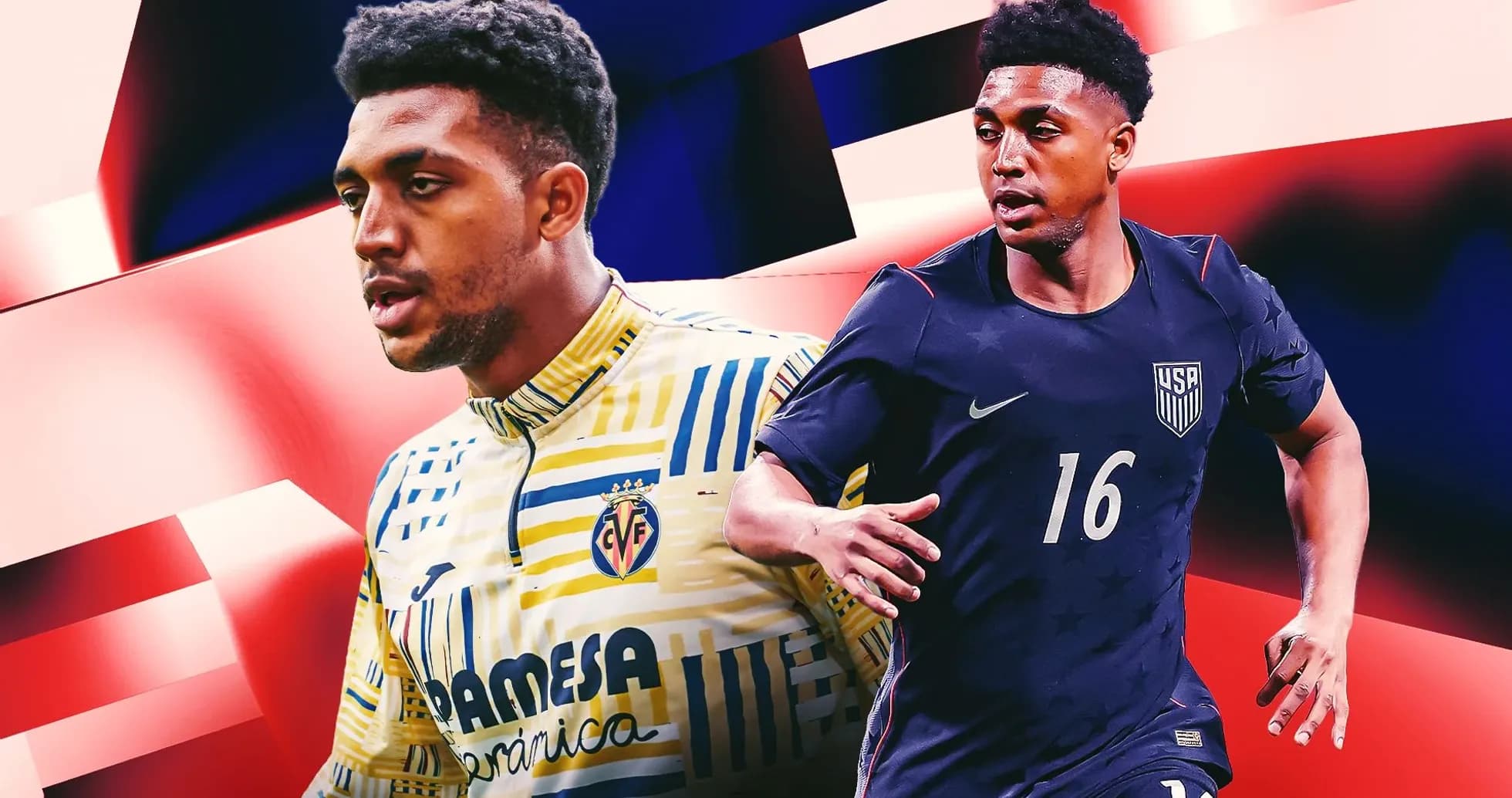
Instead of waiting for summer, Villarreal pulled the trigger and handed Freeman a six-year contract – not a short-term patch, not a speculative loan, but a statement. This was a club telling a young defender: you’re part of what comes next.
"It's kind of like 'Wow!' They put that confidence in me knowing that they want me to stay," Freeman says. "They want me long-term, right? To show that commitment to me is very special."
He wanted to visualize it, not just scroll through the rumors. He pictured the badge, the stadium, the tempo of La Liga. Then, suddenly, it stopped being a daydream and became a flight itinerary.
The transfer process hit him like a sprint.
He had to speed-pack. Barely said goodbye to old teammates. Landed in Spain and, within 48 hours, he was already on the road with his new club, heading to Osasuna. A month and a half in a hotel, living out of a suitcase, his life boiled down to a simple loop: train, go back, PS5, sleep, grab food when he could.
Everything else? On hold. Everyone around him? A little stunned by how quickly it all happened.
First steps in yellow
Freeman officially signed on January 28. By February 9, he had his debut – off the bench against Espanyol. The days in between blurred into one long rush of paperwork, training sessions and jet lag.
He had a feeling it might come quickly. He had hope. But nothing prepared him for stepping out at home in Villarreal colors, into a wall of whistles and noise that swallowed every thought.
"It's a really big stadium, and it's always packed no matter what day," he says. "It's a very good atmosphere over there. People are very welcoming... There's also this aspect of them being very passionate about the sport. It's a little more pressure. It's more demanding, but the fans are also behind you all the time."
Since then, the minutes have been limited. Five appearances, 58 minutes total. Villarreal are not rushing this. They see a raw defender with huge upside, but also a player who, a year ago, was only just making his first start for Orlando City.
The gap from MLS to La Liga is not theoretical to Freeman. He feels it every time the ball zips past him in training.
"How fast the play is, it's ridiculous," he says. "You have no time on the ball. When I first got there, I'd never seen anything like that in my life. It's the fastest pace I've ever played at."
For some, that kind of shock can plant doubts. Freeman leans on his recent past instead.
Last summer, in his first international match, he was thrown straight into the deep end against Arda Guler and Kenan Yildiz. By the fall, he was starting for the USMNT and scoring twice against Uruguay. Each time the bar moved, he cleared it.
So this isn’t a crisis. It’s the next rung on a ladder he’s been climbing for a year.
Growing up, quickly
The football is only half the story. The rest is life.
Freeman has moved far from home. No more kid treatment, as he puts it. No more safety net. He has to grow up, on and off the pitch, and he knows it.
"When you go to places like this, you're always going to have, not doubts, but questions," he says. "It's about putting yourself first and risking yourself, right? Not only do you want to be a better player, but a better person."
He chose Villarreal for that reason as much as any other. This is a club with a reputation for polishing talent, for taking promising players and sharpening them technically and tactically.
"Football-wise, this is one of the things I need in my game. I need to take it up a notch and be more technical," he says. "If I had to choose a club, I would choose this club in this country because it's somewhere where I can take my next step."
He calls it the right move. Not just to prove he belongs – he believes he’s done that before – but to really test himself in an environment that will not slow down for him.
The off-field adjustment has been helped by familiarity with warm weather. A Florida kid is not going to be shocked by Spanish sunshine. But Vila-real is its own world.
The food grabbed him first. Paella, seafood, cheap prices. Streets full, people dressed sharp, a city that seems to prioritize enjoying life. In the last few weeks, the chaos has settled: he has a house, a car, his family has visited. The basics are in place. Things click.
Inside the dressing room, he hasn’t been left to figure it out alone. Former MLS names and current Canada internationals Tajon Buchanan and Tani Oluwaseyi have helped him settle. Renato Veiga has been a steady presence. Thomas Partey and Nicolas Pepe, with their Premier League English, give him familiar voices in a foreign environment.
Spanish, though, remains a challenge. He’s learning, slowly, knowing that a long stay at Villarreal will demand more than just pointing and guessing.
"It's a good journey that I really need," he says. "Not knowing Spanish as much makes it harder because you don't know the language, but for me, it's been good. The group of guys has been so welcoming. Spanish life is also good. There's a lot I can explore."
Exploring can wait. The World Cup cannot.
A World Cup gamble
Freeman’s timing carried risk. Leaving mid-season, months before a World Cup, meant stepping out of a comfortable starting role and into a fight for minutes. He bet on himself, on the long-term value of La Liga over the short-term safety of guaranteed starts.
An adjustment period was inevitable. The danger is that it coincides with the most competitive roster battle of his life.
USMNT boss Mauricio Pochettino, though, has taken a broader view.
"I want the players to play at their best in the team," Pochettino said in March. "Maybe you say Gio Reyna or Alex Freeman, they are not playing too much right now, but it's different. If you give your best and after you don't get gametime, if that happens, okay. What I don't want is to not give your best, and then you don't get time."
Freeman has heard the message. The real work right now is not in front of cameras. It’s in the training sessions, in the weight room, in the lonely hours where only coaches and teammates are watching.
"One of the things I want to achieve is just to be my best self," he says. "There are so many things that I can improve on. Over these next few months, that's the goal: try to be happy. I'm going to continue to practice hard, continue to do the stuff off the field to make sure I get that chance, but there is a next step: performing every weekend in La Liga. That's the goal for me."
The checklist of the last year looks surreal on paper: international debut, goals against Uruguay, a move to Spain, a long-term deal with Villarreal, a World Cup on the horizon. Each target reached seems to reveal three more.
He can barely process it.
"I'm hyped about a lot of stuff," he says. "It's really hard to even talk about what's exciting because I can barely take it all in. Come back to me in June, and hopefully there's even more to be hyped about. Six months [later], things are different. Three months [later], things are different. Nothing is ever settling."
Neither is he. At 21, with La Liga in front of him and a World Cup year unfolding, Alex Freeman is moving at the same speed as the game he’s trying to master – fast, unforgiving, and full of possibility.