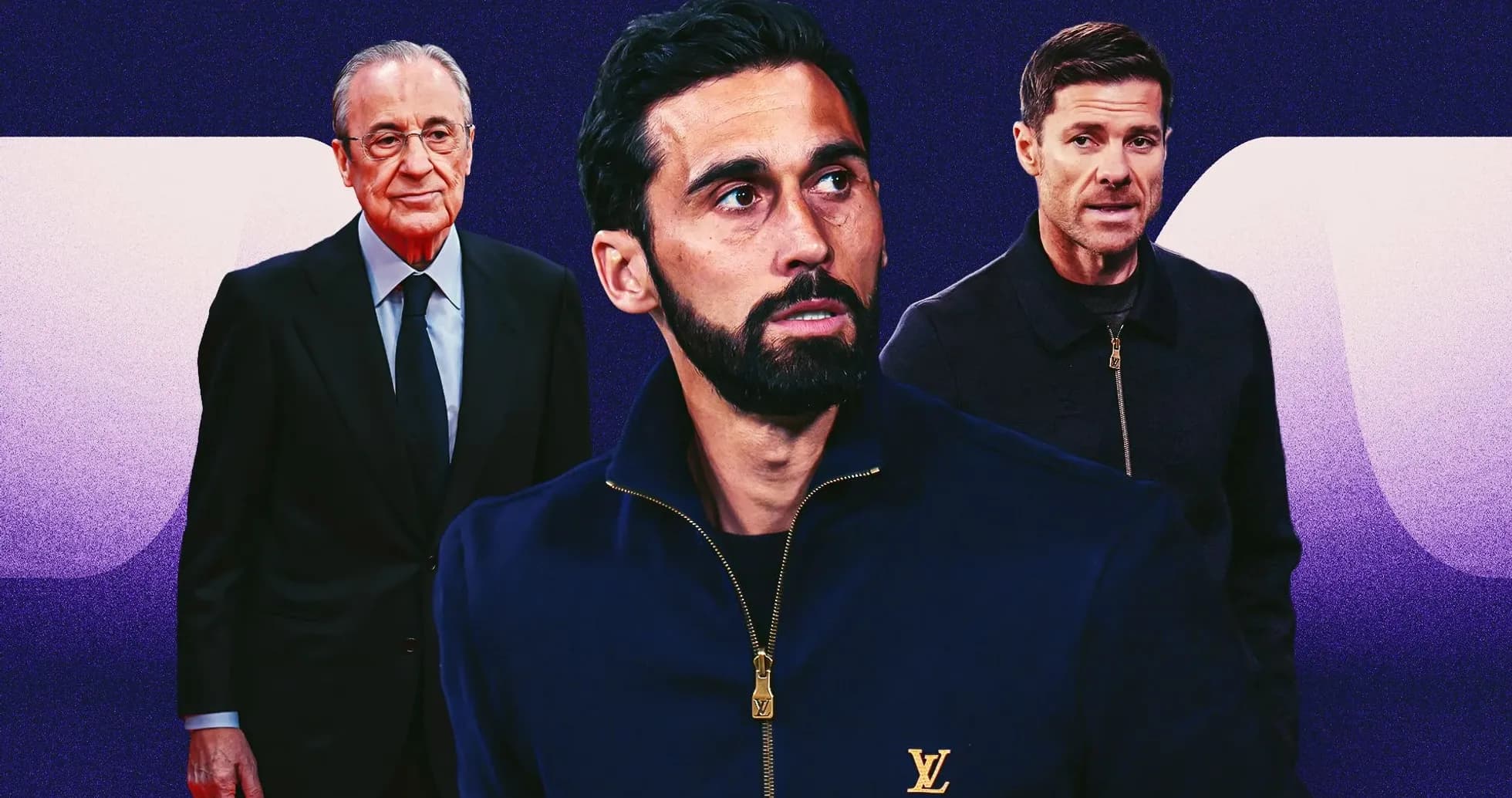
Álvaro Arbeloa's Challenging Start as Real Madrid Coach
Alonso had barely eased his car out of its space at Valdebebas when Álvaro Arbeloa reversed straight into it. A small, clumsy collision that felt like a metaphor for what followed. Everything on January 12 moved at that sort of speed and awkwardness.
Alonso had been living on borrowed time for weeks. The atmosphere was toxic, the football flat, the relationship with Vinicius Jr frayed, the Bernabéu restless. Still, when the axe finally fell, it felt brutal. No drawn-out soap opera, no rolling “tic tac” drama on late-night TV. Just a cold, stripped-back club statement: Alvaro Arbeloa would be the new first-team coach.
No unveiling gala. No long-term project talk. No romance.
For a club that had just staggered through a melodramatic end to Alonso’s reign, maybe that was exactly what it needed. A clean cut. No emotion, no theatre, no illusion of a grand plan. Arbeloa, a former player steeped in the club’s history but not in the myth-making, fit that tone perfectly.
His first press conference lasted minutes, not hours. No sweeping tactical lectures. No personal manifesto. Just a familiar Real Madrid refrain, delivered with the certainty of someone who has lived it.
“This club is about winning, winning, and winning again,” he said. Trophies, history, dressing-room values, the obligation to excite fans and fill cabinets. It was the greatest hits album of Madridismo, played straight. If Arbeloa felt anything deeper, he kept it hidden.
What he did not offer was clarity about his own future. Was this a caretaker gig? A trial run? A bridge to the next superstar coach? No one really knew. When pressed, Arbeloa simply anchored himself to the badge.
“I’ve been at this club for 20 years, and I’ll be here as long as Real Madrid want me to be. This is my home, and it always will be.”
It sounded like loyalty. It also sounded like a man who understood that his fate lay entirely in other hands.
His start could hardly have gone worse. Arbeloa promised to trust the academy talent he had nurtured at La Fábrica, and the Copa del Rey tie against second-tier Albacete looked like the perfect soft landing. He handed out four debuts. It ended in a 3-2 defeat, sealed by a 94th-minute goal that sucked the air out of the project before it had even begun.
The league offered no relief. Over the last three months, Madrid have not so much fallen as quietly slid out of the title race. They sit nine points behind Barcelona. Even if they win El Clásico next month, the numbers and the performances suggest a team running out of road rather than one ready to surge back.
On the surface, the comparison with Alonso is unforgiving. From the Club World Cup to early January, Alonso’s Madrid played 34 games: 24 wins, six defeats. Not a disaster, but not enough at a club that treats anything less than relentless perfection as failure. Losses to PSG, Liverpool, Atletico Madrid, Celta Vigo, Barcelona and Manchester City built the case against him. Celta at home hurt. Anfield stung. The Supercopa defeat to Barça left bruises that never quite healed.
Still, most of those opponents could match or surpass Madrid’s quality. Arbeloa’s record has been more erratic and, in some ways, more alarming. Twenty games, 13 wins, six losses, one draw. A lower win percentage, and defeats scattered across the spectrum: Bayern, Mallorca, Getafe, Osasuna, Benfica, Albacete. Heavyweights and mid-table scrappers alike.
The divergence between the two coaches is not just in results, but in philosophy.
Alonso, until his final days, remained a systems coach. He bent his structure to accommodate Vinicius Jr and Kylian Mbappé, but he never abandoned the idea of collective responsibility. Defensive work rate, positional discipline, a controlled tempo – this was his doctrine. Every player had a defined task. Execution was non-negotiable. That rigidity, in the end, helped cost him his job.
Arbeloa arrived with a similar reputation from the academy. At La Fábrica he was a 4-3-3 purist, building teams that wanted the ball but moved it with speed. His sides played through the thirds with ambition yet kept a recognisable structure. He helped shape tempo-setters like Thiago Pitarch, now in the first team, and earned praise for it.
Then, almost as soon as he sat in the big chair, he walked away from those ideas.
The 4-3-3 gave way to a flat, muddled 4-4-2 – the same tactical limbo that had previously dragged Carlo Ancelotti into trouble. Arbeloa, in effect, made a calculation that many Madrid coaches before him have reached: this team is less about intricate systems and more about managing egos, instincts and moments. Get the stars roughly aligned, give them some guidelines, and trust their individual brilliance to do the rest.
It has produced flashes. It has not produced consistency.
Madrid now often look languid, short of invention, stuck in repetitive patterns that opponents have learned to dismantle. Sit deep, crowd Vinicius, break with pace. The formula is simple, and it works too often. Mbappé’s recent cold spell in front of goal has not helped, but the problem runs deeper. This Madrid side feels predictable. Worse, it feels beatable.
The Bayern defeat underlined that. In last week’s 2-1 loss, the German champions sliced through them with worrying ease. For an hour, Bayern were on a different level, and the scoreline flattered Madrid. They should have been three or four down. That they are still alive in the tie owes much to Vinicius’ right foot and Jude Bellingham’s relentless running.
And yet, this script is painfully familiar.
Real Madrid have made a habit of walking into Champions League nights underprepared, outgunned on paper, and somehow finding a way through. Their aura in Europe can be exaggerated, but there is no denying the pattern: belief, defiance, and a near-religious reverence for the badge have dragged them through ties they had no business winning.
How else do you explain Joselu suddenly morphing into a Harry Kane-style No.9 in key moments? Or Thibaut Courtois producing a Champions League final performance against Liverpool in 2022 that felt closer to a force of nature than a goalkeeping display? Or Rodrygo, who rarely scores headers, popping up with one against Manchester City because the occasion demanded it?
The Bayern tie fits that lineage. On paper, Madrid are second-best in defence, midfield and attack. Arbeloa has already admitted they must be better “all over the pitch” than they were in the first leg. He knows the scale of the task. He also knows this is exactly the kind of chaos from which Madrid have historically drawn strength.
The timing is stark. Vinicius and Mbappé both laboured in Friday’s draw with Girona, shadows of their usual selves. The league is slipping away, domestic cups are gone, and Bayern are in full flow with Harry Kane driving their charge and staking a serious claim for the Ballon d’Or.
What better, or harsher, stage for Arbeloa?
He has leaned hard into the club’s mythology. He speaks of “belief”, of “remontadas”, of comfort under the hottest lights. He is the vibes coach who has parked his own principles to let the talent breathe. In doing so, he has followed a well-worn Real Madrid Champions League playbook.
The difference is that his predecessors carried weighty CVs. Ancelotti, even when doubted, could point to decades of elite success. Others before him had titles, campaigns, evidence. Arbeloa has none of that. He has been dropped into the role without a clear contract horizon, armed with little more than his knowledge of the club and the trust of those upstairs.
It is a brutal demand to make of any coach: conjure a miracle to justify your existence. But Madrid has never pretended to be fair.
This, then, is his night. His tie. His shot at a remontada that can turn a caretaker spell into something more permanent. If Bayern roll through the Bernabéu and the season ends with a whimper, the logic for change will be overwhelming.
If Madrid find one more impossible European performance, if the badge bends the odds again, the club will have a different question to answer: is Arbeloa just a stopgap, or has he earned the right to shape what comes next?