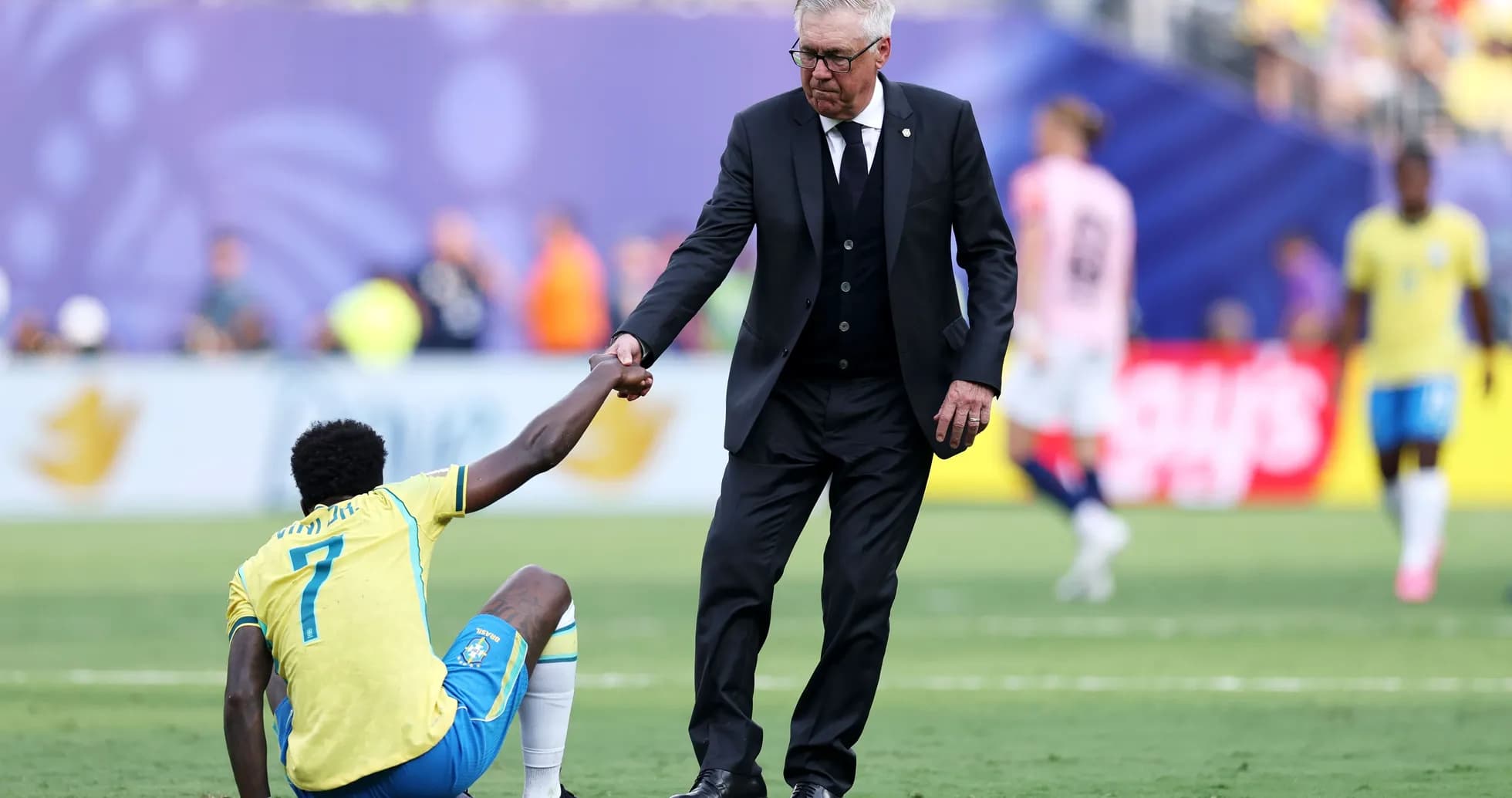
Ancelotti Reflects on Brazil's World Cup Exit: The Water Break Moment
Carlo Ancelotti has lived enough nights in football to know that tournaments rarely turn on the obvious moments. For Brazil’s 2026 World Cup exit, he keeps coming back to one that barely registers on the highlights: a second-half water break against Norway.
Brazil were out in the round of 16, beaten 2-1. Another World Cup gone, the wait stretching back to 2002. For Ancelotti, the story of that defeat is written in a brief pause that, in his mind, broke the rhythm of a game his team had under control.
“We lost the World Cup during the water break against Norway,” he reflected, speaking to ESPN. “Because the team was in control of the flow of the match until that moment.”
Up to then, he felt Brazil were where they needed to be. Norway had the ball, yes, and plenty of it in their own half, but the Italian saw a match that was unfolding according to plan. Norway had done something similar against England, he pointed out: “They controlled the match, but in the end, they could have beaten England.”
The problem, in his eyes, was not Norway’s possession. It was his own read of the situation when play stopped.
“Perhaps my mistake was here, when I thought the team had lost control of the match when that was not the case,” he admitted.
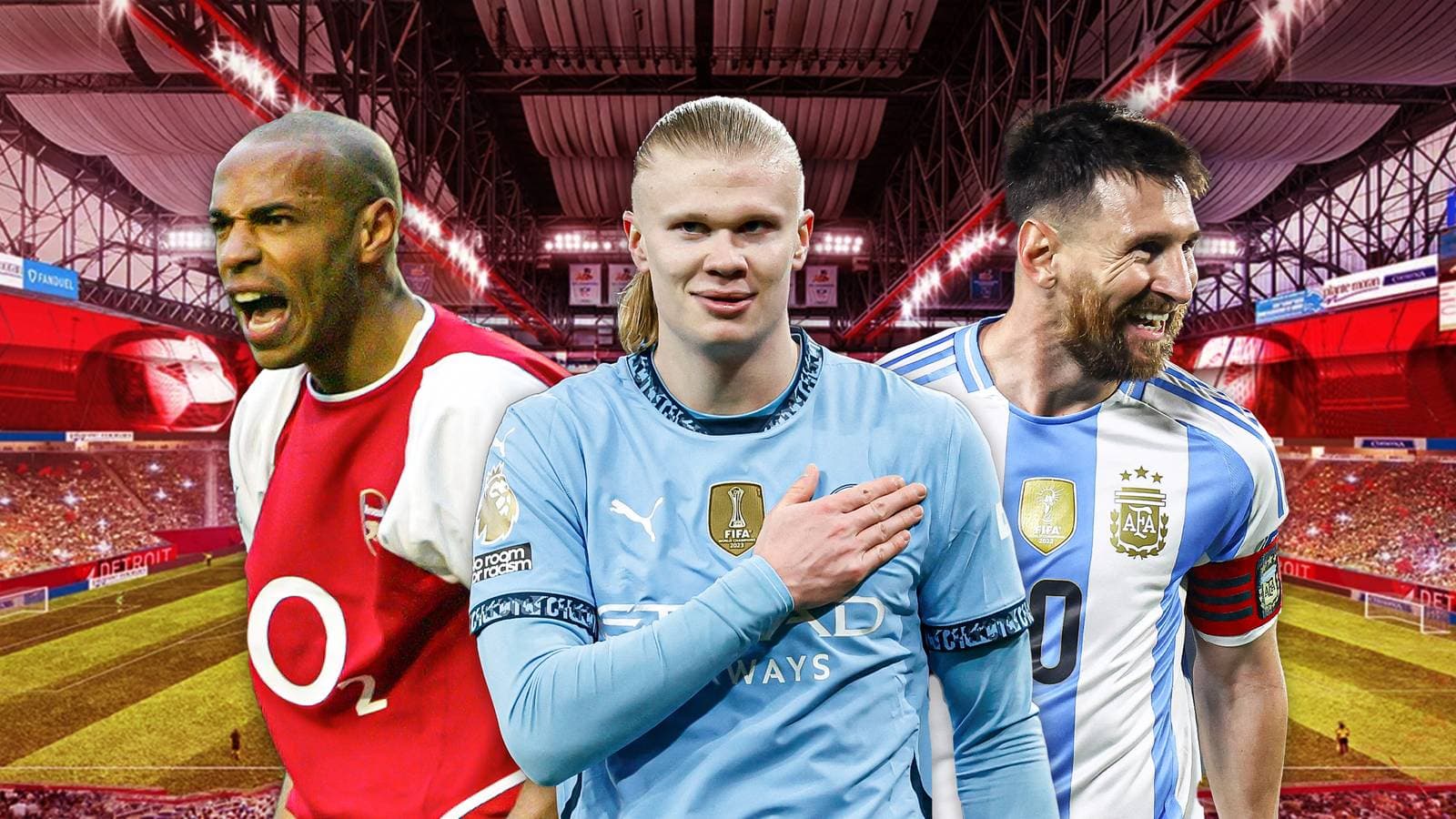
Convinced his side were slipping, he changed the line-up. The reshuffle was followed by the moment that killed Brazil: Erling Haaland’s goal deep in the second half.
In a World Cup knockout game, conceding in the 75th minute is usually a sentence, not a setback. Ancelotti knows that. “When they score a goal against you in the thirtieth minute of the second half, it is very difficult to recover,” he said. “But we did have a chance to recover.”
His reflection on the tournament is not all regret. Over the wider arc of his first year in charge, Ancelotti sounded satisfied with the structure and preparation of the Seleção.
“In general, I think the work done over a year was excellent,” he said. “Logistically, the Brazilian team was very well organised in terms of the hotel, the stadium and the training ground. I think the players’ performance throughout the year was positive. I also think the 26 players who were called up were the most suitable to be there.”
The plan, though, did not survive the realities of a long season. Injuries bit hard in the months leading up to the World Cup and during it.
“The plan drawn up last year changed slightly because of injuries,” he explained. “We suffered many injuries in the period between March and the World Cup: Militão was injured, and Rodrygo, then Estêvão, and Wesley was injured before the World Cup, and during the World Cup, Raphinha was injured. So the plan changed a little.”
If the water break became the turning point in his mind, the late introduction of Neymar became the lightning rod for everyone else. Ancelotti’s decision to bring on the forward in the closing stages drew fierce criticism, with many arguing it “upset the balance” of the team.
He rejects that completely.
“No,” he said firmly. “When Neymar came on at that moment, I took off Ryan and brought on Endrick as a right winger, thinking that Neymar was capable of creating a goal, or showing his skills at that moment, in the 70th minute. That is what I intended to do against Japan.”
The Japan reference offers a glimpse into his broader tactical thinking. Against Japan, Brazil were comfortable, dominant, and facing a side that threatened only on the counter.
“Why did I bring on Gabriel Martinelli against Japan?” he continued. “Because the team was completely in control of the match. Japan relied only on counter-attacks. The aim was not to score a goal, rather I was thinking of bringing on Neymar in extra time against Japan.”
The idea was clear: use Neymar as a decisive weapon when the game stretched and legs tired. Against Norway, though, the script changed. The control he felt slipping pushed him into acting earlier than he had planned.
“I brought Neymar on a little early to regain control of the match,” he admitted. It was a manager’s instinct in a high-wire moment, not a pre-packaged plan. “You also have to think about the decisions you have to take... I heard Thomas Tuchel say he came in for heavy criticism, and the truth is that you have to make a very difficult decision. It is a moment full of tension, and you do not always get it right.”
He refuses to place Neymar in the dock. For Ancelotti, the forward did what was asked of him, and his introduction, in itself, was not the problem.
“I think Neymar should have been brought on, he had to come on at that moment because he was performing well, trained well, and prepared well,” he said. “I liked his sporting spirit. I think he helped the team. But, with him coming on, there was no need to change the structure of the team.”
That last line hangs in the air. The veteran coach is not blaming the star, nor the referee, nor fate. He is circling back to his own choices: the tweak in shape, the misread during a water break, the decision to chase control that might already have been there.
For Brazil, the wait for a sixth star goes on. For Ancelotti, the question now is simple and brutal: how many more water breaks does a World Cup giant get before patience runs dry?