Andoni Iraola's Plan to Fix Liverpool's Set-Piece Woes
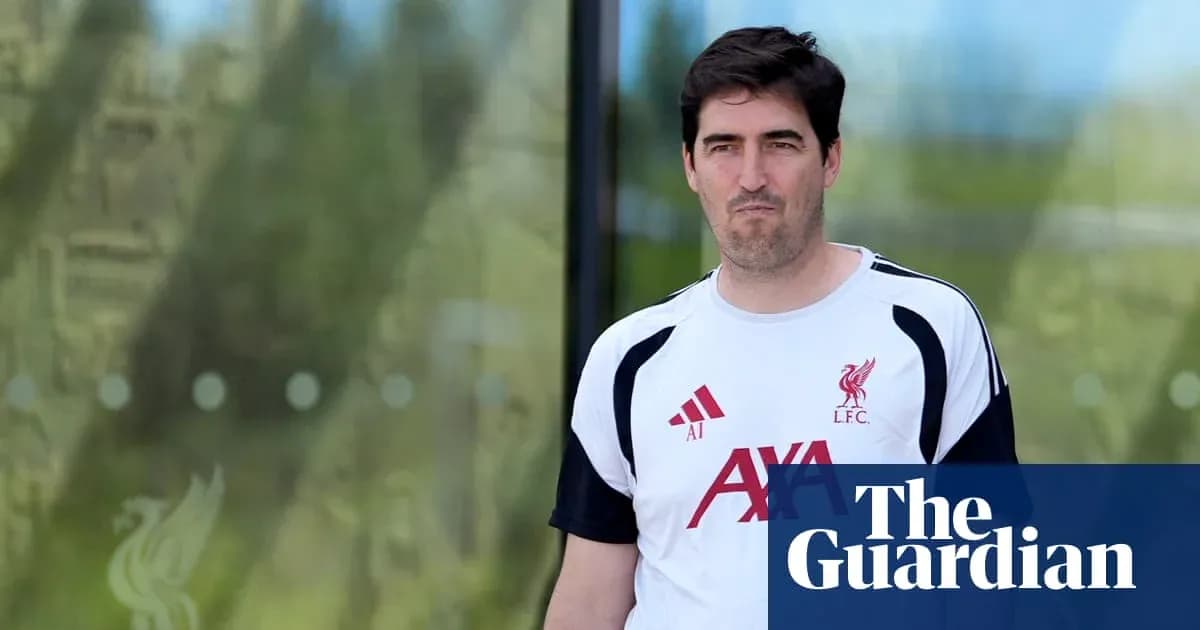
Andoni Iraola did not arrive at Liverpool alone. He walked into Anfield with a plan, a problem to fix, and a backroom team he trusts as much as any player he will send onto the pitch.
The problem is clear. Set pieces hurt Liverpool last season. Badly.
Only Bournemouth, Crystal Palace and Leeds conceded more goals from dead-ball situations than Liverpool’s 23 in what turned out to be Arne Slot’s final campaign, a season that still brought a title but exposed a soft underbelly. For a club that once suffocated opponents with control and detail, that number stings.
Iraola knows it cannot continue.
A trusted core from Bournemouth
The Spaniard has wasted no time reshaping the staff behind the scenes. Several familiar faces from his Bournemouth spell have followed him north: Tommy Elphick and Shaun Cooper as first‑team coaches, Pablo de la Torre as assistant, and Alejandro Rosalen as first‑team goalkeeping coach after five years at Napoli.
These are not cosmetic appointments. They are the spine of his operation.
“For me, it was important they came with me,” Iraola said as he prepared for his first game in charge, a pre-season friendly against Sunderland in Nashville on Saturday. De la Torre, officially a physical coach, has been by his side since AEK Larnaca and again at Rayo Vallecano. Titles mean little here; trust is everything.
“So, for me, he is much more than a physical coach really. He is an assistant and we know each other very well,” Iraola explained. The language there matters. This is a manager surrounding himself with people who understand not just his drills, but his instincts.
The story of how Elphick and Cooper entered his inner circle underlines that point. Iraola arrived at Bournemouth expecting to be joined by his long-time assistant Iñigo Pérez, only for a work permit issue to derail the move. It could have left him exposed in a new league, in a new culture.
Instead, it opened the door.
“I was very lucky with Tommy and Shaun when I arrived at Bournemouth,” he admitted. Pérez has since landed on his feet at Villarreal – “Maybe we play him in the Champions League,” Iraola added – but the enforced reshuffle gave him two coaches who quickly became indispensable.
With Elphick and Cooper embedded, he felt no need to replace Pérez. They gave him something different: a direct line into English football’s habits and dressing rooms.
“They were very prepared, they were very helpful for me in terms of understanding the English culture, the mentality of the players, what they were used to, what they like in training, even the small details that maybe in Spain are different,” Iraola said.
Elphick’s playing career – Aston Villa, Bournemouth, Brighton, Huddersfield – adds another layer. He has lived the Championship grind and the Premier League glare. He knows the quirks of English centres-forwards and the rhythm of the winter schedule. That matters when you are trying to change habits on the training ground.
“They can be in a closer position to the players. They can feel more identified,” Iraola said of Elphick and Cooper. “I am a little bit older. Some of the players maybe didn’t know I was a player.” There is no ego there, just a clear understanding of roles. The manager sets the direction; his staff bridge the gap.
Set pieces: a clear mandate
That gap is most obvious at dead balls. Liverpool’s attacking football still dazzled last season, but corners and free-kicks against them became moments of anxiety rather than routine clearances. Iraola has turned that weakness into a job description.
“Tommy does defensive set plays, Shaun does more offensive, more creative ones,” he outlined. Simple division. Clear responsibility. No hiding place.
The pressure finally told last season as opponents began to target Liverpool’s vulnerability from restarts. Iraola wants those same moments to become a weapon at both ends of the pitch.
He has not torn everything up. Inside the club, there is already expertise he values. Set-piece analyst Lewis Mahoney, who impressed in the second half of last season, remains a key figure.
“We are working very well here with the set-piece analyst [Lewis Mahoney], who was very good in the second half of last season. He is already with the club, so they are working on some stuff,” Iraola said. The phrase “some stuff” may sound vague, but it hints at a process already underway on the training pitches at Kirkby: new blocks, different runs, alternative deliveries, refined positioning.
What ties it all together is a shared football language. “They are very good coaches,” Iraola said of his staff. “We kind of understand the game similarly and they have different roles in the coaching staff, they help with set pieces also. That’s the reason I continued with them.”
First glimpse in Nashville
The first public glimpse of this new structure comes in Nashville, where Sunderland provide the opposition but, in truth, are only part of the backdrop. The real story lies in the small details: who organises the defensive line at corners, who barks instructions from the touchline, how players react to set-piece routines that will have been drilled again and again in recent weeks.
Pre-season friendlies rarely tell the full story of a new era. They do, however, reveal priorities. With Iraola, one of them is already written in bold: Liverpool will not allow 23 set-piece goals again without a fight.
He has his staff. He has his plan. Now the dead balls that once unnerved Anfield must become the moments that define this new Liverpool.