Andoni Iraola's High-Octane Revolution at Liverpool
Andoni Iraola walks into Anfield with a promise and a warning: the volume is about to go back up.
Liverpool’s new manager arrives with a reputation for relentless, high-octane football, a style that echoes the club’s recent glory years but comes with his own sharp edges. This isn’t nostalgia. It’s a reboot.
Rock and roll, remixed
Iraola’s game is built on noise and chaos: a high press, a high line, and a demand that every player runs, hunts, and bites. The blueprint is expected to be a 4-2-3-1, as reported by Planet Football, but the details will look different from last season’s more measured approach.
The idea is simple enough. The execution will be brutal.
Defence on the front foot
At the back, the refresh is immediate. Jeremy Jacquet, newly arrived from Rennes, is not being eased in. He is being accelerated. His athleticism and recovery pace fit the aggressive defensive line Iraola wants, the kind that squeezes the pitch and dares opponents to go long.
Alongside him, Virgil van Dijk remains the organiser and reference point, but the dynamic around him shifts. The recent loan signing of Ronald Araujo adds hardened experience and another defender comfortable living 40 yards from his own goal. Under Iraola, centre-backs don’t just defend space; they patrol it.
On the left, Milos Kerkez steps into a season that could define his Liverpool career. He knows this manager. Iraola coaxed some of his best football out of him at Bournemouth, and that familiarity matters. Now, in his second campaign at Anfield, Kerkez has the platform and the system to surge forward, attack space, and turn that flank into a runway.
Guela Doue on the opposite side offers balance to the full-back picture, another piece tailored to a system that asks defenders to be sprinters, not spectators.
Midfield as the engine room
If the back line sets the trap, the midfield and attack spring it.
Ryan Gravenberch and Dominik Szoboszlai are expected to sit at the heart of the 4-2-3-1, but “sit” is misleading. They will move, press, and chase in waves. Szoboszlai, in particular, looks made for this. His elite pressing numbers and work rate turn him into the tone-setter, the player who triggers the press and then joins the attack in his preferred advanced role.
In front of them, Florian Wirtz is primed to become the creative accelerant. His work without the ball is as important as his craft with it. Iraola’s football demands that the No. 10 doesn’t just float between the lines; he shuts passing lanes, harries holding midfielders, and then punishes any loose touch.
The pressure is constant. The idea is to suffocate, then strike.
Isak to lead the charge
Up top, Alexander Isak will be asked to do more than finish. He will lead the line in every sense: pressing centre-backs, curving his runs to force play one way, and then attacking the box when Liverpool win it back high.
For a striker of his quality, this system can be a gift. Chances come faster, defenders make more mistakes, and the game is played closer to goal. Iraola’s commitment to intelligent pressing could be exactly what Isak needs to rediscover his most ruthless form in front of the Kop.
Youth, width, and one major target
Out wide, the picture is still being painted.
Rio Ngumoha is one of the youngsters Iraola will look to nurture, a symbol of the manager’s willingness to trust youth if they can live with the physical and tactical demands. In a system this intense, academy products don’t get minutes as a gesture. They earn them.
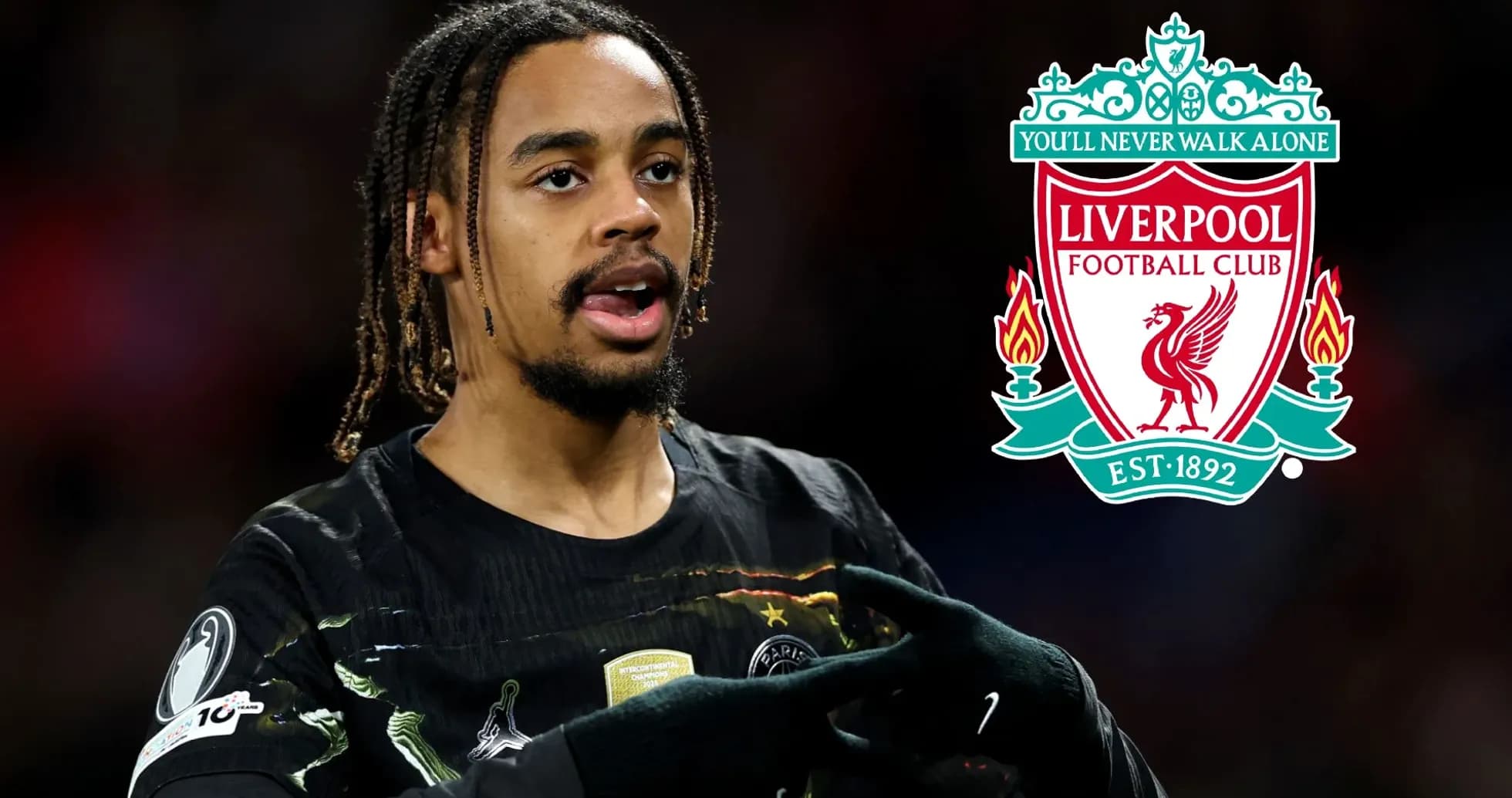
On the transfer front, the club’s gaze remains fixed on the wings. Bradley Barcola of PSG is a primary target, a name that keeps circling around the conversation. If Liverpool can land him, they don’t just add depth. They add a winger built for this brand of football: dynamic, direct, and dangerous in transition.
Should Barcola arrive, he would slot straight into that right side of the 4-2-3-1, giving Iraola the kind of wide threat that can stretch defences and open the central corridors for Wirtz and Isak.
The XI taking shape
For now, the outline of Iraola’s Liverpool is clear. A 4-2-3-1 that could, on paper, line up as:
Alisson; Guela Doue, Jeremy Jacquet, Virgil van Dijk, Milos Kerkez; Ryan Gravenberch, Dominik Szoboszlai; Florian Wirtz, Rio Ngumoha, Bradley Barcola; Alexander Isak.
It’s a side built to run, to press, and to play on the edge. The squad is still evolving, the market still open, but the direction is unmistakable.
Liverpool are not easing into a new era. They are sprinting into it. The only question now is whether the rest of the league can keep up with the noise.