Andrew Stalbow's Bid to Transform a Relegated Football Club
Andrew Stalbow is not promising a Hollywood fairy tale. He made that clear from the outset.
"I'm not Ryan Reynolds money, nor is my investor group," he said. But his offer to take over as chairman comes with something this relegated club desperately needs: fresh capital, global backing and a clear plan to drag it out of decline.
Both the club's board and its supporters' society have recommended the sale to a group led by Stalbow, co-founder and CEO of a mobile entertainment company. On completion, he would step into the chairman’s role and inherit a proud, battered institution that has just been reminded how unforgiving football can be.
Relegation has bitten hard. The last campaign exposed the limits of survival on goodwill alone.
"This past season, with relegation, has shown just how hard that has become without outside investment, and we're lucky to have had a number of benefactors... without whom this club could not have survived," Stalbow said.
The numbers behind his bid are stark and serious. He has raised £6m from around 50 investors, a patchwork of backing that stretches across almost every continent. Among those putting money in is Curt Smith, co-founder of the band Tears for Fears, adding a touch of pop royalty to a project rooted firmly in the realities of lower-league football.
"Many, many people have worked tirelessly over the years to keep this club viable," Stalbow acknowledged. His message carried a note of gratitude, but also a blunt recognition: effort alone is no longer enough.
The ambition is unapologetically upward. Stalbow is not talking about merely stabilising the club. He is talking about climbing.
He wants the team in the Football League.
"It's actually the second biggest town or city in England that hasn't made it to the Football League yet," he said, a statistic that cuts to the heart of the frustration around the place. This is a community that feels it has outgrown its status. The infrastructure, the fanbase, the history – all of it, in Stalbow’s eyes, is waiting to be aligned with a more professional, more ambitious operation.
He is not pretending he can script the results.
"I obviously can't control what happens in 90 minutes on match day," he admitted. The pitch will always be a place of chaos and uncertainty. His promise lies in everything around it.
"We want to give the players the best chance of success and ultimately over the next few years, build out the infrastructure at the club that makes the club football league ready."
That phrase – “football league ready” – is where his project lives. Training facilities, staffing, recruitment, commercial growth, matchday experience: the unglamorous, essential layers that separate clubs that rise from those that simply endure.
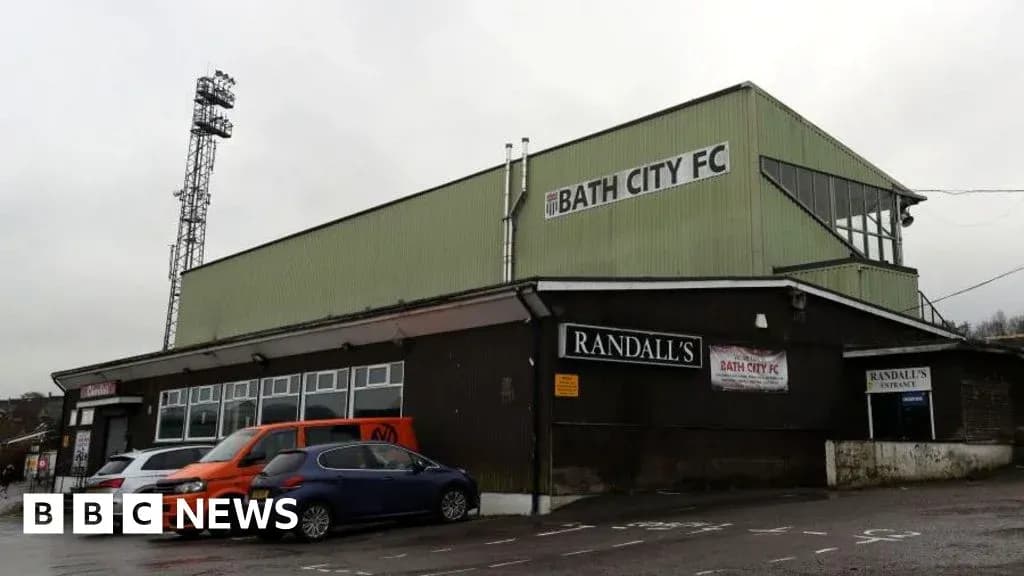
At the centre of it all stands the stadium. Old, atmospheric, heavy with memory.
"It's an amazing stadium full of heritage, but it needs a lot of investment," Stalbow said. The ground is both an asset and a warning. It tells the story of what the club has been, and what it risks becoming if the money and modernisation never arrive.
The proposed takeover, then, is more than a change of name on the chairman’s door. It is a test of whether a historic club, bruised by relegation and stretched by years of firefighting, can finally swap survival mode for genuine ambition – and whether £6m and a global cast of backers can turn a sleeping town into a Football League force at last.