Anglian Combination Delays New Season Due to Drought
The Anglian Combination was supposed to be shaking off the rust next weekend. Instead, it’s bracing for more of the same: blistering heat, bone-dry turf and a calendar suddenly ripped up.
One of England’s biggest amateur competitions, the 85‑team league spanning Norfolk and Suffolk, has taken the rare step of delaying the start of its 2026/27 season after weeks of record drought left pitches “rock hard” and unsafe.
Season kicked into touch by the weather
The campaign was due to kick off next weekend. By Friday, after an urgent board meeting, the league accepted what many clubs had already seen – and felt – in pre-season: the grass has gone, the moisture has gone, and the margin for injury has shrunk to almost nothing.
The board voted unanimously to postpone the start of the season until 29 August, confirming the decision in a statement sent to all clubs, players and officials. It followed a pre-season in which numerous friendlies were cancelled outright, and those that did go ahead produced “many injuries” on surfaces more like car parks than pitches.
League chair Dale Brown set out the stark logic.
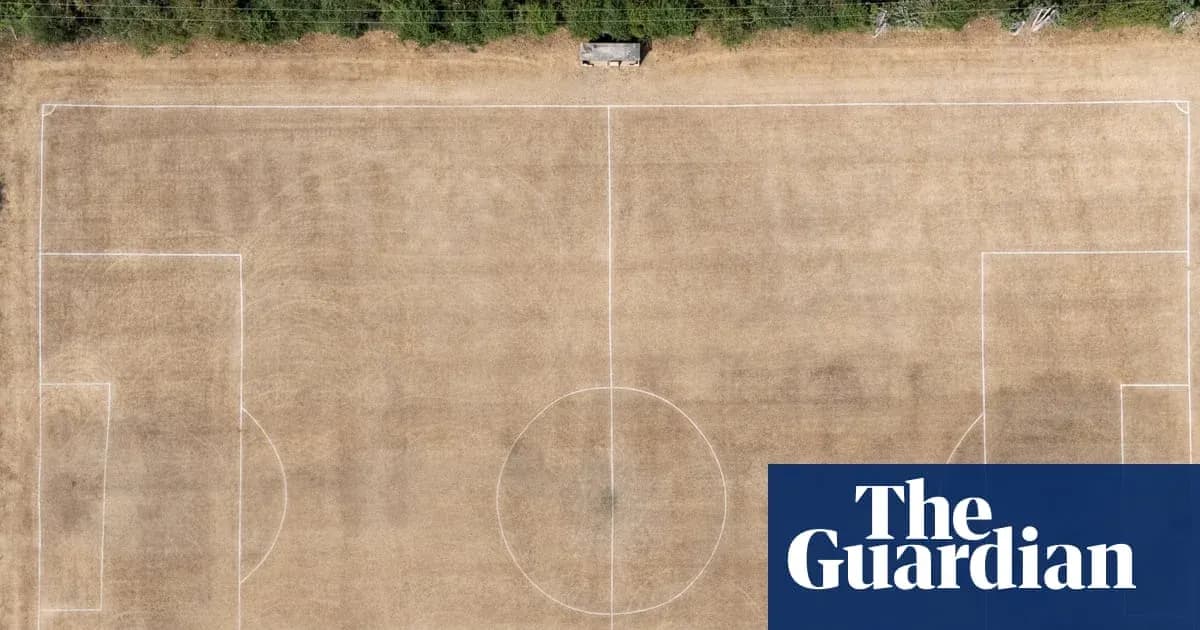
The decision, he said, was driven by player and matchday welfare “in what has been the driest and hottest July since records began in 1836”. With most clubs playing on grass, “the ground conditions are extremely dry and pitches rock hard”.
He admitted it was a call that would divide opinion. “This was a very difficult decision to reach and one that will not please all clubs,” Brown said, conscious that some sides will have planned, budgeted and trained around the original start date.
Football meets a changing climate
This isn’t a one-off hot spell. It’s the culmination of a brutal run of weather that has left much of England and Wales visibly scorched.
Record temperatures hit in May and June. July then went down as the driest on record. By last month, a formal drought had been declared across half of England, with water companies rolling out hosepipe bans to protect dwindling supplies.
In Norfolk and Suffolk, Anglian Water’s ban has been in force since 11 July. The impact is written across the region from the air: parks and community sports fields bleached brown, cracked and lifeless. The few exceptions stand out – golf courses, some sports clubs and private schools still able to water their turf under controversial exemptions.
For grassroots football, that contrast cuts deep. While elite pitches are cosseted by irrigation systems and grounds teams, the Anglian Combination’s clubs rely on the weather and a volunteer with a mower. When the rain stops, so does the game.
No relief in sight
Anyone hoping the skies would bail them out before the rescheduled kick-off faces another grim forecast.
The Met Office expects another heatwave next week, with temperatures in parts of East Anglia and south-east England set to climb to 36C by Thursday. Humidity is likely to rise, but there is little sign of the sustained rainfall needed to soften the ground.
So the league waits. Coaches rejig training schedules. Players face an extra few weeks of conditioning on whatever surfaces they can find that don’t feel like concrete.
A local decision, a wider warning
The Football Association does not keep central records of how many leagues have been forced into similar postponements because of the drought. It has left such calls to individual competitions and county FAs, making the Anglian Combination’s stance a local decision – but hardly an isolated problem.
Across the country, amateur and grassroots football is colliding head-on with a climate that no longer behaves like the fixture lists expect. The Anglian Combination has chosen caution, accepting a delayed start over the risk of more “many injuries” on unplayable pitches.
When 29 August comes around, the question will be simple and unforgiving: will the ground finally give a little, or will the weather dictate the season before a ball has even been properly kicked?