Antoine Griezmann's Last Chance for Champions League Glory
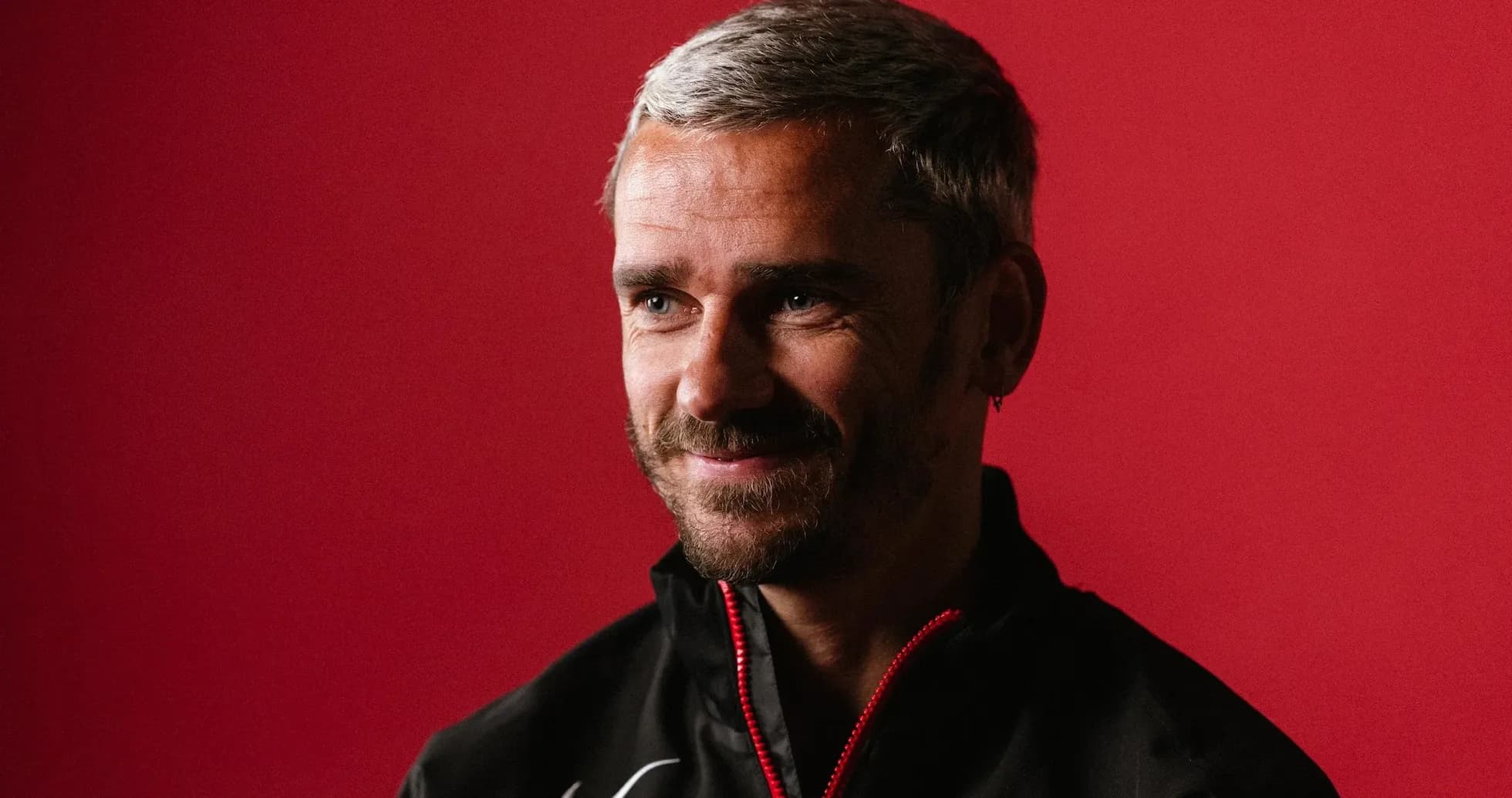
Antoine Griezmann is leaving Atlético Madrid the way great players should: with something still on the line and a wound still to heal.
This summer, after nearly 500 games and more than 200 goals across two spells, the Frenchman will swap the Calderón and Metropolitano roar for the Florida heat of Orlando City in Major League Soccer. Before he goes, he has unfinished business in the competition that has defined both his brilliance and his regrets: the UEFA Champions League.
At 35, he has at least two more nights guaranteed on this stage, three if Atlético can get past Arsenal in the semi-final. For a player who has built a career on timing, this feels like his last big swing at the trophy that keeps him awake when conversations turn nostalgic.
From La Real boy to Atleti icon
Griezmann’s story in this competition started far from Madrid. He made his Champions League debut with Real Sociedad in 2013, becoming the fourth Frenchman to reach 100 appearances in the tournament over the course of his career. By then, he was already woven into the fabric of La Real, having arrived at 14 and broken into the senior team in 2009.
Leaving San Sebastián in 2014 was not a simple career move for him; it was a rupture.
“They opened their doors to me at what was a difficult time for me when I was 14,” he recalls of Real Sociedad. He had promised himself he would never feel the same way about another club.
Then Atlético happened.
He walked into a club that mirrored his own contradictions: elegance and graft, flair and suffering. The connection was instant and disarming.
“When I joined, I felt the same feeling twice over,” he says. “The word would be something way beyond love. Love for the club’s colours, the club’s badge and love for football, because the fans love football, and love for hard work – I think that’s why I quickly bonded with the club and its fans.”
It showed. In his first Liga season in red and white, Griezmann exploded: 22 league goals, level with Neymar and behind only the era’s monsters. He lifted the Spanish Super Cup and helped drive Atleti to the Champions League quarter-finals. The league took note, Europe took note, and by the following season he was officially recognised as the standout player in Spain, finishing third in the 2016 Ballon d'Or.
Milan, the miss and the scar that never closed
The peak – and the pain – arrived in 2015/16. Griezmann started all 13 of Atlético’s Champions League matches, scoring seven times, dragging Diego Simeone’s side to a final in Milan that felt like destiny. It was the culmination of Simeone’s iron collective and Griezmann’s rising genius.
Then came Real Madrid. Then came the shoot-out. Before that, came the moment that still follows him into every conversation about Europe.
At 1-0 down early in the second half, Griezmann stepped up to take a penalty. He hit the bar. Atlético would eventually haul themselves to 1-1, only to lose on penalties. The trophy slipped away, again, to their city rivals.
“It’s not something I think about every day, but whenever we talk about the Champions League with friends or team-mates, that moment always comes up, 2016, the penalty,” he admits.
That miss has never truly left him. It lives in the pauses when he talks about the competition, in the way he frames this season’s campaign. The wound is still open, but he has turned it into fuel.
“It would heal a very deep wound,” he says of finally lifting the trophy. “The only way to get over it would be to win it this year.”
A partnership forged in sweat and steel
If Griezmann’s Atleti story is a love letter, Diego Simeone’s name is written on every page. The Argentinian has been on the touchline for every major turn in the Frenchman’s rojiblanco life: his arrival in 2014, his transformation into a world-class forward, his departure to Barcelona in 2019, and his return in 2021.
Simeone took the wiry, electric winger from San Sebastián and sharpened him into a relentless, two-way forward. Then, in the second spell, he did something just as important: he helped Griezmann age.
The 35-year-old who now dictates games for Atlético is no longer the pure runner of his early days. He moves between the lines, picks passes, sets pressing traps, and chooses his moments.
“I think ultimately he’s given me everything and I’ve given him everything,” Griezmann says. “I enjoy and have enjoyed having him. I know that beyond my career I’ll have a friend in him, a former coach and we’ll always be really close.”
Together, they have already lifted the UEFA Europa League and UEFA Super Cup in 2018. The Champions League remains the glaring gap in a shared CV built on sweat, structure and suffering.
The creator, not just the finisher
Griezmann’s role in this latest European push underlines how his game has evolved. He has started alongside Julián Álvarez in each of Atlético’s last four Champions League knockout matches, operating as the brain of the attack rather than simply the finisher.
Against Tottenham in the round of 16, his touch and vision produced one of the standout moments of the campaign: a sublime assist that sliced open the defence and left Álvarez with the easy part. It was the kind of action that says more about his footballing soul than any goal tally.
“I think I prefer a nice assist rather than being just one-on-one with the goalkeeper,” he admits. “I’m more of a one-touch or two-touch player, not very flashy, but I try to create time for my team-mates and surprise the opponent. That’s what happened against Tottenham.”
He has become the player who decides when the move accelerates, when the press triggers, when the stadium rises. The numbers still matter, but the nuance matters more.
One last shot at the wound
So here he is: 35 years old, over 200 Atlético goals behind him, a ticket booked to MLS, and at least two more Champions League games in front of him. Ninety-six appearances in the competition for Atleti so far, with the chance to push that towards three figures in the club’s shirt if they can get past Arsenal.
This is not a farewell tour padded with nostalgia. It is a sprint to close a circle.
If he leaves with that “very deep wound” still open, he will walk away as an Atlético legend regardless, a player who gave the club his prime and then some. But if he leaves with the Champions League trophy finally in his hands, in red and white, under Simeone, after Milan and the penalty and all those years of almost?
That would not just end a career chapter. It would rewrite it.