Iran's World Cup Journey Amid Political Turmoil and Injury Setbacks
Iran’s road to the FIFA World Cup has been anything but straightforward. Yet as the noise of geopolitics rumbles in the background, Team Melli are quietly — and firmly — getting on with the job.
A new kit, a familiar ambition
On Monday, Iran’s official Instagram account broke the first real glimpse of tournament mode. Short clips showed players under studio lights, posing and turning in what is clearly the new home kit for the World Cup. No grand unveiling yet, no glossy commercial, but enough to send a clear message: Iran are preparing to play.
Several key names featured in the posts. First-choice goalkeeper Alireza Safar Beiranvand and winger Milad Mohammadi were among those wearing the fresh strip, a visual confirmation that the core of the squad is in camp and focused.
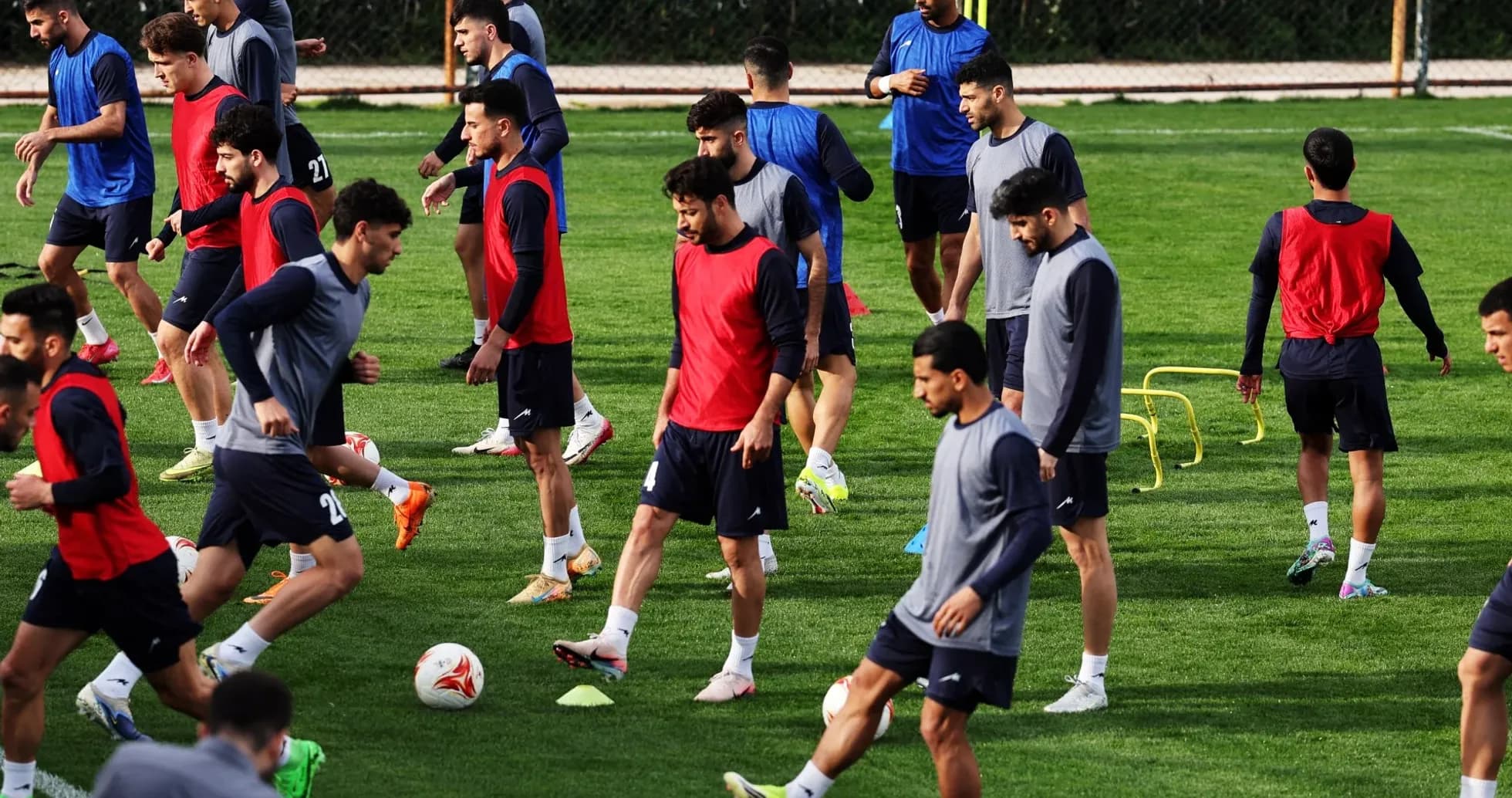
Alongside the photo shoot, the account pushed out images from training sessions on home soil. The location stayed undisclosed, but the intent did not. This is a team trying to build rhythm before stepping into a tournament that will be staged far from home, in a country that was, until recently, an open question.
War, threats and a World Cup in America
Iran have been drawn in Group G and will play all their group matches in the United States, cohost of the World Cup with Canada and Mexico.
That assignment became politically charged on February 28, when the US and Israel launched a war on Iran. Iranian officials immediately raised doubts about the US’s suitability as host and, more pointedly, about the safety of their players if they travelled there.
Then came the twist from Washington. President Donald Trump floated the idea that Team Melli’s players might not be safe in his country, throwing fuel on an already volatile debate.
For a time, Iran’s participation hung in the balance.
The tension eased only when FIFA president Gianni Infantino stepped up at the FIFA Congress in Canada. In his opening remarks, he cut through the speculation.
“Let me start at the outset. Of course, Iran will be participating at the FIFA World Cup 2026. And of course Iran will play in the United States of America,” he said.
That line settled the football question. Trump then followed with a shrug of acceptance.
“If Gianni said it, I’m OK,” he told reporters at the White House. “You know what? Let them play.”
With those words, the political storm moved, at least for now, to the edges of the pitch. The football calendar could take over.
Camp intensity and a taste of tournament pressure
Inside Iran’s camp, the schedule has been mapped out with little room for distraction.
Assistant coach Saeed Alhoei outlined the plan to Iranian outlet Varzesh3. The first phase of preparation, he said, will wrap up with an intra-squad match on Wednesday. It will not be a casual run-out.
The game is set for a stadium, with players in full official match kits. An international referee will take charge, backed by VAR technology, to recreate tournament conditions as closely as possible. Iran want the pressure, the rhythm, the arguments, the pauses — all of it — before they ever step on US soil.
On Monday, the squad will fly to Turkiye for the final leg of their build-up. Three friendlies await there, a mix of behind-closed-doors tests and one more pointed examination.
“We will have three friendly matches, two of which will probably be against [local] club teams and behind closed doors, and the third against an African team,” Alhoei said. “It is a quality team that can be a good simulation for playing against African teams.”
The logic is obvious. Group G brings variety: New Zealand, Belgium and Egypt. The African opponent in Turkiye is designed as a dress rehearsal for that last group match.
The path through Group G
The fixture list is clear and unforgiving.
Team Melli open their campaign against New Zealand in Los Angeles on June 15. Six days later, on June 21, they stay in the same city and face Belgium, a side stacked with European pedigree and tournament experience.
Then comes the potentially decisive night: Egypt in Seattle on June 26. By then, Iran will know exactly what they need. Survival, top spot, or damage limitation — the stakes will be defined by what happens in California.
Every training session now points to those three dates. Every tactical tweak is made with those three flags in mind.
A brutal setback: Gholizadeh out
Just as preparations began to look settled, bad news arrived from Poland.
On Monday, Iran suffered a significant blow. Winger Ali Gholizadeh, widely expected to start on the right flank at the World Cup, was ruled out with a season-ending knee injury while playing for Lech Poznan.
Gholizadeh was stretchered off against Motor Lublin last Saturday. Tests later confirmed the worst: a torn anterior cruciate ligament in his left knee.
“Gholizadeh will face surgery in the coming days, followed by several months of rehabilitation,” his club said in a statement.
For Iran, the timing is cruel. Gholizadeh offers creativity, work rate and balance on the right, and his absence forces a late rethink in a key area of the pitch. Someone else will now have to carry that load in Los Angeles and Seattle.
Focus fixed on June
So the picture is stark. A new kit ready to be unveiled. A training camp split between Iran and Turkiye. A politically charged World Cup hosted by a country at war with them. A key winger lost to injury.
And yet, the plan holds.
Infantino has spoken. Trump has relented. The fixtures are set. Team Melli will board a plane to the United States in June, step into stadiums in Los Angeles and Seattle, and try to turn a turbulent build-up into a coherent World Cup run.
The question now is simple and ruthless: in a group loaded with contrast and complication, can Iran turn all this noise into momentum when the ball finally rolls?