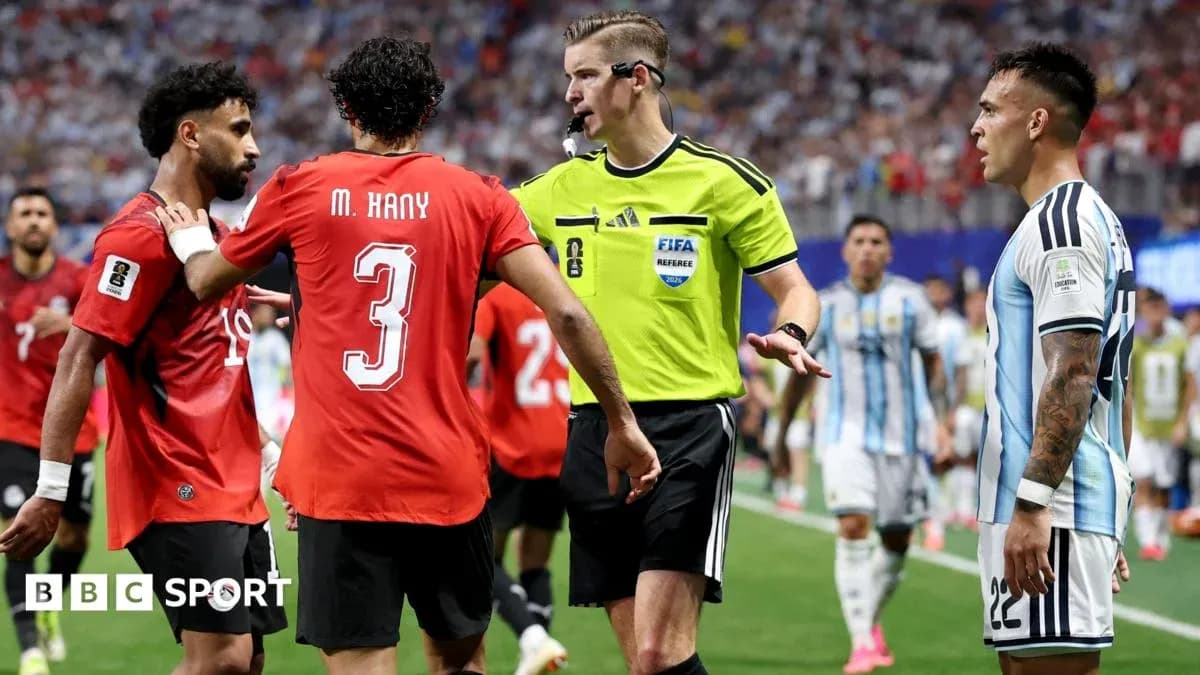
Argentina’s World Cup Drama Sparks Cyber Security Concerns
Argentina’s escape act against Egypt was dramatic enough on the pitch. Off it, the fallout has taken an unexpected turn into the world of cyber security and alleged hacking.
The Argentine Football Association (AFA) says it may have been the victim of a cyber attack after emails sent from one of its official accounts appeared to denounce Argentina’s own 3-2 win and accuse match officials of corruption.
The messages, reportedly received by journalists after the final whistle, claimed “Argentina did not win” and insisted the result came from “corrupt refereeing decisions”. They also praised Egypt’s performance in the last-16 tie.
For context, emotions were already running hot. The reigning world champions had been staring at a stunning early exit, trailing 2-0 to Egypt before mounting a late, ruthless comeback to reach the quarter-finals. The turnaround lit up the tournament. It also ignited fury in Cairo.
In the wake of the defeat, the Egyptian Football Association formally asked Fifa to remove French referee Francois Letexier and his entire officiating team from the competition, accusing them of bias in favour of Argentina.
Then came the emails.
Argentine outlet La Calle reported that the messages were sent from an AFA institutional account and distributed to media contacts. According to the publication, AFA sources indicated that hackers of Egyptian origin were suspected of being behind the breach.
The implication was stark: as Egypt raged about the referee, someone, somewhere, used an AFA channel to echo those complaints and undermine Argentina’s own victory.
AFA moved quickly to distance itself.
“We want to inform you that we have detected the possible sending of emails from one of our institutional accounts that were not generated or authorised by our team,” the federation said in a statement.
The governing body urged recipients to treat any recent unusual communication with suspicion, especially if it contained links, attachments or requests for personal data. It warned of “the possibility that our account has been subject to unauthorised access” and stressed that internal teams were working to clarify the breach and reinforce security.
No extra detail was given on how the account might have been compromised or whether any other systems were affected. For now, the episode sits at the intersection of high-stakes football politics and digital sabotage: a furious losing camp, a controversial refereeing display, and a world champion federation scrambling to prove it did not attack its own win.
On the field, Argentina march on to the quarter-finals. Off it, they are left trying to plug a different kind of gap – not in defence, but in their inbox.