Arne Slot's Season of Excuses as Liverpool Struggles
The numbers are brutal. More than £450 million spent in the summer, a squad reshaped at huge cost, and yet Liverpool’s 2025-26 campaign has drifted into something bordering on farce. The Champions League dream is already over. The Premier League title race never really started. Even a top-four push has struggled to catch fire.
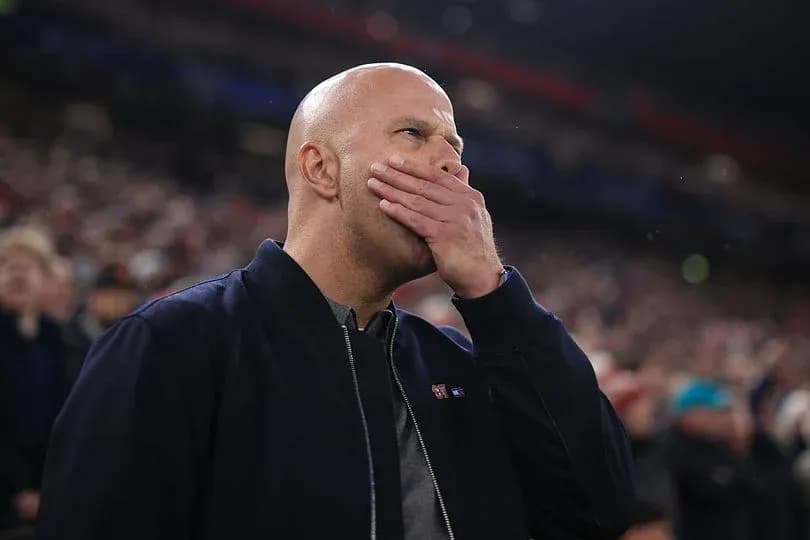
In the middle of it all stands Arne Slot, a coach fighting to make sense of a season that has lurched from disappointment to damage control. The Dutchman has had reasons, explanations, and justifications for almost every setback. One subject, though, he has refused to touch as a crutch: the sudden preseason death of Diogo Jota.
“The last thing I would do is use it as an excuse,” he said back in November.
On that point, he has stayed firm. On almost everything else, the explanations have flowed freely, echoing the tone of Jurgen Klopp’s most exasperated post-match interviews — only without the winning to soften the edges.
What follows is a tour through Slot’s most memorable attempts to explain away a season that has slipped through his fingers.
No. 4: Brentford 3-2 Liverpool – October, and the “unchanged” jibe
The excuses began even before kick-off in west London.
Liverpool had just lost 2-1 to Manchester United. Slot, already prickly, turned his gaze onto the opposition’s selection decisions. United, he pointed out, had tweaked their lineup specifically for Liverpool. It was, he suggested, a pattern.
“We’ve seen Sesko play the last three, four, five or six times, but they go to Liverpool [and] they change the line-up,” he said. “That’s not the first time we’ve faced a team, and they’ve done that.”
The implication was clear: teams treat Liverpool differently, and that skews the contest. It sounded like a manager who felt the deck was stacked against him.
Then came Brentford. An open, chaotic game ended in a 3-2 defeat, another blow in a growing run of poor results. Slot emerged to call the penalty his side conceded “soft.” He pointed to a punishing schedule, stressing that five of Liverpool’s last six fixtures had been away from home. He circled back to the summer overhaul, arguing that such extensive changes were always going to produce turbulence.
“It definitely (our form) also has to do with if you change quite a lot in the summer. I think it’s not a surprise that it can go a bit like this,” he said, as the defeat completed a four-match losing streak.
Brentford’s social media team didn’t miss their chance. Their post-match message — “Must have been that unchanged team then” — cut straight through the noise. While Slot reached for context, his opponents simply enjoyed the punchline.
No. 3: Crystal Palace 3-0 Liverpool – October, and the Guardiola comparison
When Liverpool crashed out of the League Cup with a 3-0 defeat at Crystal Palace, the scoreboard told one story. Slot tried to tell another.
He had rotated heavily, sending out a near-fully changed XI for the October tie. That decision, he argued, had precedent at the very top of the game. Pep Guardiola had done something similar with Manchester City against Swansea, and still emerged with a win.
“I saw [Manchester] City’s line-up, and I don’t think they had one starter from the weekend, but it felt as if – if you look at their line-up – that they had played with their 11 starters,” Slot said.
The message was that rotation should not be an excuse in itself — at least not for a club of Liverpool’s size — and yet it framed his own selection gamble as understandable. City, though missing most of their regular starters, still fielded quality. Even 18-year-old Divine Mukasa, handed a midfield role, slotted into a system drilled to perfection.
Liverpool’s fringe players, by contrast, looked disjointed and overmatched. Slot’s nod to Guardiola only underlined the gap between a fully functioning machine and a side still trying to remember how to win.
No. 2: Manchester City 4-0 Liverpool – April, and the xG lament
By April, the tone had shifted from irritation to exasperation.
Liverpool travelled to face Guardiola’s Manchester City in the FA Cup and were dismantled 4-0. The scoreline was emphatic. Slot’s response focused on the numbers beneath it.
“Again, we are facing a team that outperformed their xG by a mile, and that is happening constantly,” he said.
On this occasion, he had a point. City scored four times from 1.97 expected goals, a ruthless display of finishing that blew Liverpool away. But Slot’s frustration ran deeper than one afternoon in Manchester. He framed it as a trend.
The week before, Brighton had beaten Liverpool 2-1, generating 2.17 xG. Three weeks earlier, Liverpool themselves had thrashed West Ham 5-2, scoring five from just 1.84 xG while the Hammers produced 1.86 and found the net twice.
To Slot, these swings in expected goals painted a picture of a season warped by finishing variance and clinical opponents. To supporters, it sounded like a manager clinging to underlying metrics as the actual table turned against him. The numbers might have offered comfort. They did not offer trophies.
No. 1: Bournemouth 3-2 Liverpool – January, and the wind
If one game summed up Slot’s season of explanations, it came on a bleak January day at Bournemouth.
Liverpool lost 3-2, a result underpinned by a stark statistical reality: Bournemouth generated 2.30 xG to Liverpool’s 0.83. The home side created the better chances and took them. Yet Slot stepped in front of the cameras armed with reasons.
Fitness came first. “It is safe to say a few players of ours ran out of energy. I cannot criticize them for that because two days ago we played an away game in Europe,” he said.
The schedule, once again, was part of the story. Then came the defence of his captain.
“It is not completely fair to Virgil to blame him for the first goal,” he insisted. “You can see throughout the game how much impact the wind had. He wasn’t the only one who struggled with the wind."
Fatigue. Travel. Conditions. All placed carefully around a defeat that cut deep.
Across the season, a pattern has emerged. When Liverpool win, the focus is on progress, on the scale of the rebuild, on flashes of what this team might become. When they lose, the explanations come thick and fast: rotations, travel, officiating, xG, opposition lineups, even the wind.
Slot has been clear that he will not lean on the tragedy of Diogo Jota’s death as a shield. On that, he deserves respect. Yet the volume of other justifications has turned this campaign into a running commentary of what-ifs and why-nows.
The question, as the season staggers towards its conclusion, is a simple one: how long can a club of Liverpool’s size tolerate a manager whose words keep trying to bridge a gap his team no longer seems able to close on the pitch?