Arsenal Edges Sporting CP 1–0 in UEFA Champions League Quarter-Final
At Estádio José Alvalade, Arsenal edged Sporting CP 1–0 in a finely balanced UEFA Champions League quarter-final first leg defined by control versus incision. Arsenal’s 56% possession, superior passing accuracy (92% to 85%) and higher xG (1.33 to 0.71) underpinned their territorial dominance, but they needed a late Kai Havertz strike on 90' to translate that into a lead. Sporting, in a 4-2-3-1, generated 11 shots to Arsenal’s 8 and forced 5 saves from David Raya, yet lacked the clarity in the final third to turn promising central combinations into clear chances.
Scoring Sequence & Disciplinary Log
The only card of the night came on 31', when Hidemasa Morita was booked for a foul, a key tactical moment that constrained Sporting’s most important midfield presser for the remaining hour. No Arsenal player received a yellow card, reflecting their ability to control transitions without resorting to repeated tactical fouling.
The game’s key attacking controversy arrived on 64'. Martín Zubimendi thought he had broken the deadlock for Arsenal, only for VAR to intervene and cancel the goal. With the event logged as “Var – Goal cancelled” and no preceding goal event in the data, this stands as a disallowed strike rather than a confirmed one; Arsenal were forced to rebuild their advantage from open play.
Substitution patterns then reshaped the tactical landscape. On 62', Daniel Bragança (IN) came on for João Simões (OUT), adding more progressive passing from deep for Sporting. Arsenal responded on 70', with Kai Havertz (IN) replacing Martin Ødegaard (OUT), a clear shift from a pure playmaker to a more vertical, penalty-box-oriented presence between the lines.
On 76', Mikel Arteta refreshed both wings: Gabriel Martinelli (IN) came on for Leandro Trossard (OUT), and Max Dowman (IN) replaced Noni Madueke (OUT), injecting direct running and youthful energy. Sporting’s second change on 79' saw Rafael Nel (IN) come on for Pedro Gonçalves (OUT), trading experience for fresh legs in the attacking midfield band.
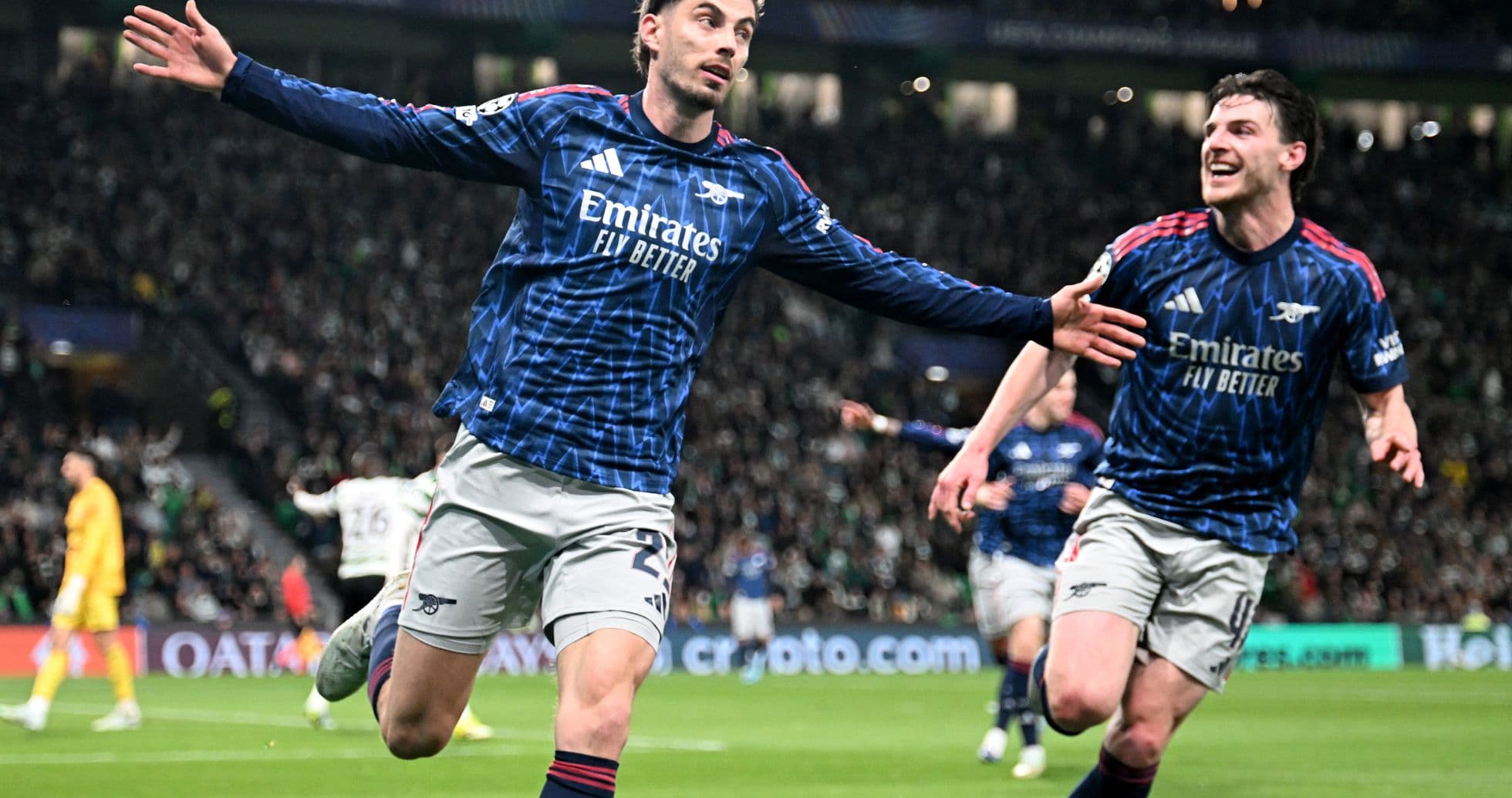
The decisive moment arrived on 90'. Havertz, introduced 20 minutes earlier, scored the only goal, assisted by Gabriel Martinelli. There is no VAR event linked to this goal in the data, so the strike stands uncontested as the match-winner.
Tactical Breakdown & Personnel
Sporting CP lined up in a 4-2-3-1 with Rui Silva in goal, a back four of Iván Fresneda, Ousmane Diomande, Gonçalo Inácio and Maximiliano Araújo, a double pivot of Morita and João Simões (later Bragança), and an attacking trio of Geny Catamo, Francisco Trincão and Pedro Gonçalves behind Luis Javier Suárez. Their plan was clear: compact mid-block, then break through the central three (Trincão–Gonçalves–Catamo) with Suárez stretching depth.
Arsenal’s 4-3-3, with David Raya behind Ben White, William Saliba, Gabriel Magalhães and Riccardo Calafiori, plus a midfield of Ødegaard, Zubimendi and Declan Rice, prioritized structured possession and rest defence. Noni Madueke and Leandro Trossard flanked Viktor Gyökeres up front, giving Arsenal a blend of channel runs and between-the-lines movement.
Statistically, the game was tight in shot volume but different in shot quality. Sporting produced 11 shots (5 on target, 4 off, 2 blocked) to Arsenal’s 8 (4 on target, 2 off, 2 blocked). Yet Arsenal’s xG of 1.33 versus Sporting’s 0.71 underlines that the visitors created the clearer openings, particularly inside the box where they had 4 shots compared to Sporting’s 8 but from more advantageous positions.
The blocked shots data (2–2) reflects how both back lines defended their own box aggressively, with Diomande–Inácio and Gabriel–Saliba each stepping out to contest shooting lanes. However, Arsenal’s superior pass volume (510 to 405) and accuracy (467 accurate, 92%) allowed them to sustain pressure and recycle attacks more efficiently than Sporting (345 accurate, 85%).
In goal, David Raya’s 5 saves versus Rui Silva’s 3 were decisive. With both teams credited with 1 goal prevented at team level, the difference lay in volume and timing: Raya repeatedly denied Sporting’s central and half-space efforts, especially as the hosts pushed late, while Rui Silva faced fewer truly clean looks thanks to Sporting’s compact shape.
Morita’s yellow card on 31' subtly shifted Sporting’s midfield aggression. Already a key in screening Zubimendi and Ødegaard, he had to manage his duels more cautiously, giving Arsenal marginally more comfort in the right half-space. The introduction of Bragança added progression but slightly reduced Sporting’s ball-winning capacity, a trade-off that suited Arsenal’s desire to keep the game in Sporting’s half.
Arsenal’s substitution pattern was tactically coherent. Havertz for Ødegaard moved the creative hub higher, placing a physical target between Sporting’s centre-backs and pivot. Martinelli’s entry for Trossard and Dowman for Madueke increased directness and depth, crucial in the final minutes as Sporting’s full-backs pushed higher. The winning goal – Havertz finishing from a Martinelli assist – encapsulated that shift: a fresh runner from the left finding a late-arriving, penalty-box-oriented midfielder.
Sporting’s late attacking change, Rafael Nel for Gonçalves, aimed to preserve energy and vertical threat, but without a structural shift (they remained in a 4-2-3-1), Arsenal’s reinforced rest defence, anchored by Rice and Zubimendi, largely contained transitions.
The Statistical Verdict
Arsenal’s 1–0 win is strongly supported by the underlying numbers. They led in xG (1.33 vs 0.71), possession (56% vs 44%), total passes (510 vs 405) and pass accuracy (92% vs 85%). While Sporting matched Arsenal in blocked shots (2–2) and actually produced more total efforts (11 vs 8), the hosts’ chances were generally of lower quality, reflected in the lower xG.
Discipline was also a differentiator: Sporting committed 11 fouls and received the only yellow card (Morita, 31'), while Arsenal committed 10 fouls with no bookings, maintaining control without incurring suspensions or jeopardizing their structure through cautioned key players.
In goal-prevention terms, both teams are credited with 1 goal prevented, but Raya’s 5 saves compared to Rui Silva’s 3 highlight the Arsenal goalkeeper’s heavier and more decisive workload. The late Havertz goal, combined with the earlier VAR-cancelled Zubimendi strike, suggests Arsenal consistently found ways to threaten between Sporting’s lines, and the data confirms that their eventual breakthrough was the logical outcome of sustained, structured pressure rather than a smash-and-grab.