Arteta Advocates for Expanded Matchday Squads in Premier League
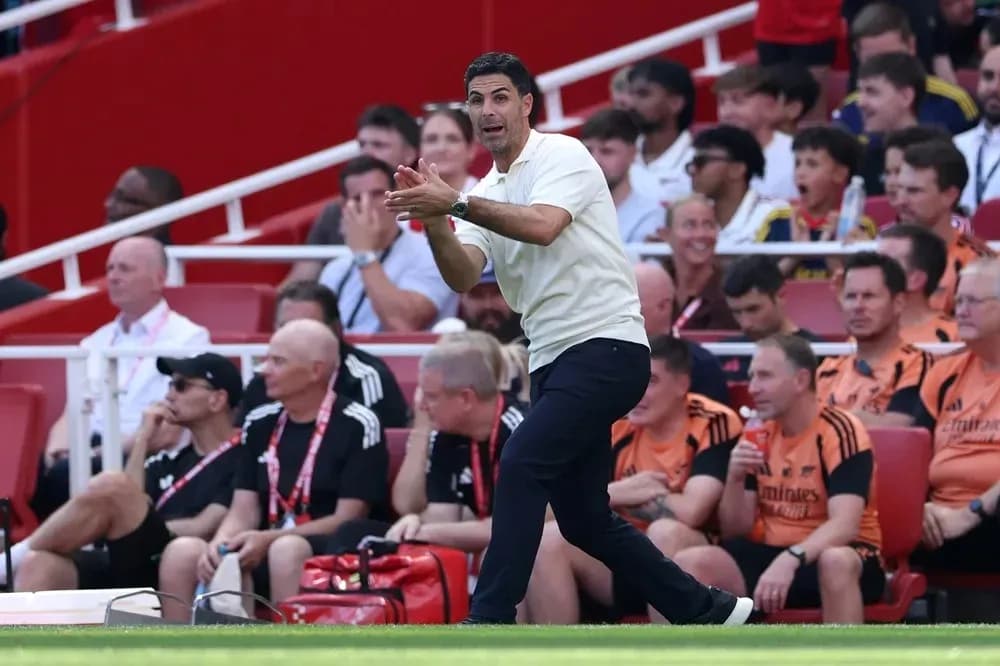
Mikel Arteta walked away from Cardiff with a 3-0 Community Shield win over Manchester City and another statement performance from his Arsenal side. But his mind was already on something else.
Not tactics. Not transfers.
Rules.
Arteta’s squad-size battle
As the players celebrated, the Arsenal manager was again pushing a long-running argument: the Premier League needs to expand matchday squad sizes to mirror UEFA competitions.
Right now, top-flight clubs can name 20 players on a domestic teamsheet – 11 starters and nine substitutes. In Europe, that number rises to 23, giving managers three extra spots to manage workload, reward form, and keep a bigger group involved.
Arteta wants that change at home as well.
"I've been trying to persuade the Premier League and the clubs to be able to extend the number of players that we can have, especially the outfield players in the squads, because we play more and more games and the load is unreal," he said after the win over City.
For him, this isn’t a theoretical debate. The evidence was written all over Arsenal’s team sheet in Cardiff.
Big win, big omissions
Some absences were straightforward. William Saliba and Jurrien Timber were missing through injury, with Timber still travelling and present at the stadium. Illan Meslier was also in attendance but not on the bench, a familiar role for a third-choice goalkeeper in domestic competition.
In UEFA competitions, that changes. Those extra three spots mean keepers like Meslier can be included, even if they rarely get on the pitch. Arsenal saw it last season with Tommy Setford, who regularly travelled to domestic fixtures for warm-ups but didn’t make the final list, while being named in Champions League squads all the way to the semi-final.
Against City, the squeeze was even more obvious outfield.
Arteta had to leave out Gabriel Martinelli, Ethan Nwaneri, Gabriel Jesus, Fabio Vieira, and Reiss Nelson entirely. All fit enough to be in contention. None involved.
Under UEFA rules, at least two of them could have been on the bench.
"It's just a shame (to leave players out), so it's the most difficult part of the job," Arteta admitted. "It's just a fact that we can bring 18 outfield players and we believe that for today's game these were the options that we needed, especially with the physical condition of certain players."
The message was clear: this isn’t about luxury, it’s about load.
The pushback from below
Arteta’s idea won’t go unchallenged.
Smaller Premier League clubs are likely to resist any move that gives the biggest squads even more firepower on the bench. Extra substitutes mean extra options, and not every club can afford – or even has – 23 fully fit senior players to choose from.
Some might question the point of expanding squads when their own benches already contain academy players and teenagers just to make up the numbers.
But the landscape is changing. Almost half the division now plays in Europe each season. Those clubs are already operating under two different sets of rules: one for midweek, one for the weekend. The number of sides who would never realistically name 23 players is shrinking.
Arteta is betting that the modern calendar – packed with domestic, European, and international fixtures – will force a rethink.
The Premier League has long prided itself on being its own beast. The question now is whether it can afford to stay out of step while its leading clubs are stretched to the limit.