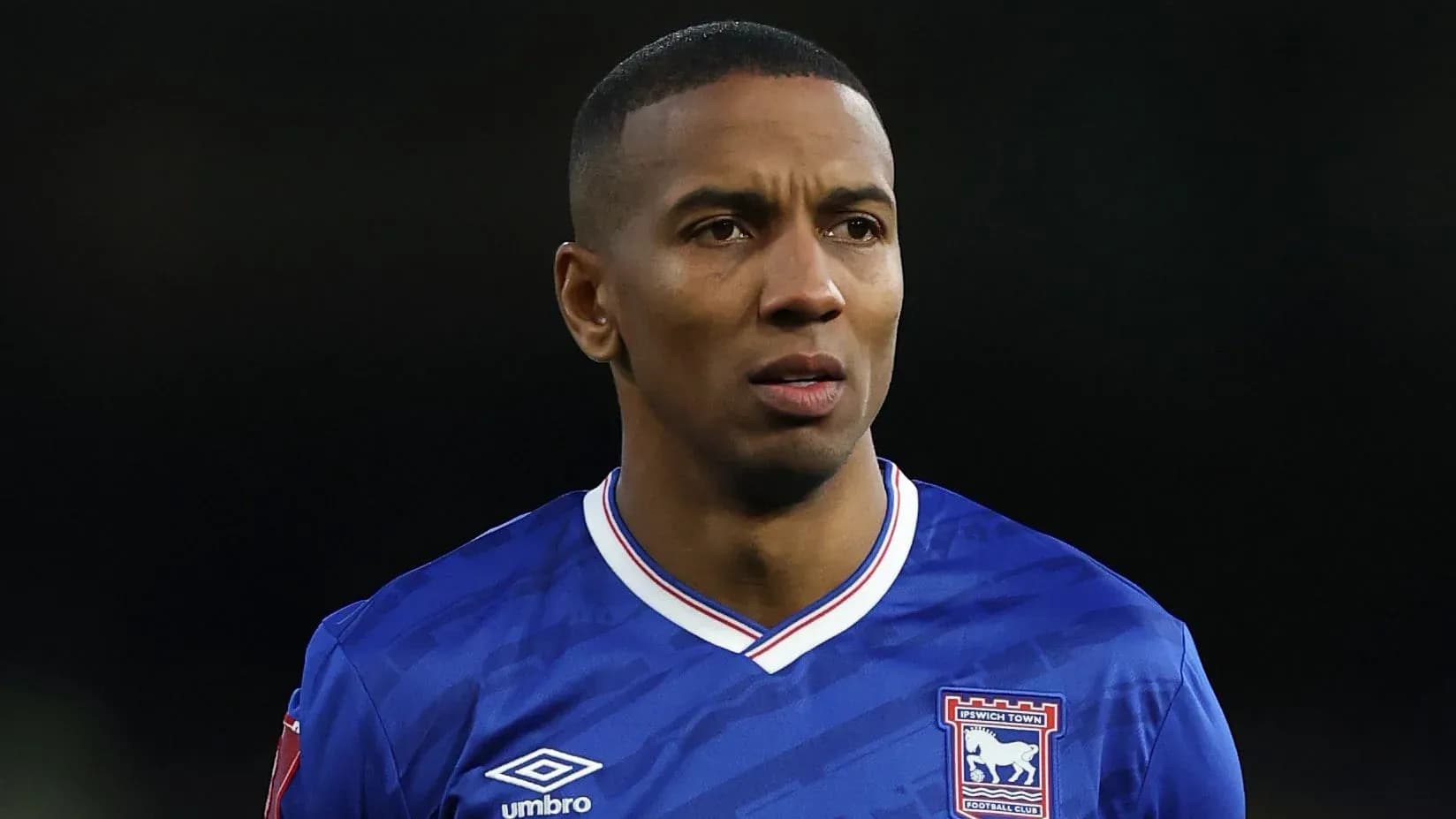
Ashley Young's Journey to Retirement: A Hip Replacement at 41
Ashley Young knew his body was shouting long before anyone else heard it.
Weeks after drawing a line under a 23-year professional career, the former Manchester United and England stalwart has revealed he now needs a hip replacement – a brutal, if brutally honest, epilogue to a playing life built on durability and defiance.
Young, 41, bowed out this summer after a final stint at Ipswich Town, helping to drag the Tractor Boys back into the Premier League for the first time in over two decades. On the pitch, he squeezed out 15 appearances across all competitions as Ipswich surged to second in the Championship. Off it, he was quietly wrestling with the reality that his body was no longer willing to follow his will.
Speaking on the High Performance Podcast, Young laid out the moment everything changed. A fall on his hip in November, an injection to get him through, and a personal red line he had always promised himself he would not cross.
“I went down on my hip in November and had an injection,” he said. “I have always said to myself: ‘If my body is saying you need injections, there is a problem, you need to think about retiring.’ Basically I need a hip replacement, in November I was told I would need it in about 10 years’ time.”
At first, there was a compromise. One more injection in January, one more push to the end of the season, one more charge at promotion.
“I got to January and was due to have another injection which would have got me through to the end of the season,” Young recalled. “I was saying to the specialist ‘I know it is painful, but I want to make sure I do everything I can possibly do to help the team’.”
Then training turned on him.
About a week before that second injection, during a seemingly routine session at Ipswich, he went down again. This time the alarm bells were deafening.
“About a week before I am about to have the injection, I go down on it in training and I am like ‘this is worse, I know it is a lot worse’.”
The damage was exactly that. Worse. The pain escalated to the point where Young simply could not train. For two to three months, one of the Premier League era’s great competitors was reduced to watching, waiting, and wondering if this was how it all ended.
“From January to the end of the season, I literally had two or three months where I couldn't train it was that painful,” he said. “I saw the specialist again and said ‘I'm not going out like this’.”
Those six words cut to the core of his career. Young never played like a man content to drift quietly away. He reinvented himself from winger to full-back, moved across leagues and clubs, survived managers and systems. Now he was refusing to let a medical report write his final chapter.
“I asked him ‘are you telling me I can't play football again, you can say it if you want, trust me if I get an opportunity to be back on the pitch, I'll be back on the pitch’.”
The doctors warned him off. His hip told him to stop. He ignored both.
For the final two months of Ipswich’s campaign, as the club hurtled toward promotion, Young forced himself back onto the grass.
“The last two months of the season I was training every day and he was like ‘it is not possible, you shouldn't be training’,” he revealed.
He never did get the farewell cameo he craved on the final day. No late substitution, no symbolic last few minutes in front of a celebrating crowd. Yet his pride lies elsewhere – in the work nobody sees, in the standards kept, in the dressing-room presence that helped carry a young, ambitious squad over the line.
“It would have been incredible to come onto the pitch for the last game of the season,” Young admitted. “But for me to train like I did that week and for us to be promoted on the last day of the season, it was fitting.”
Fitting, and unforgiving. Promotion for Ipswich. Retirement for Young. And now, a hip replacement looming far sooner than the decade-long grace period he was initially promised.
For a player who built a career on stretching every sinew, the cost of that commitment is finally due.