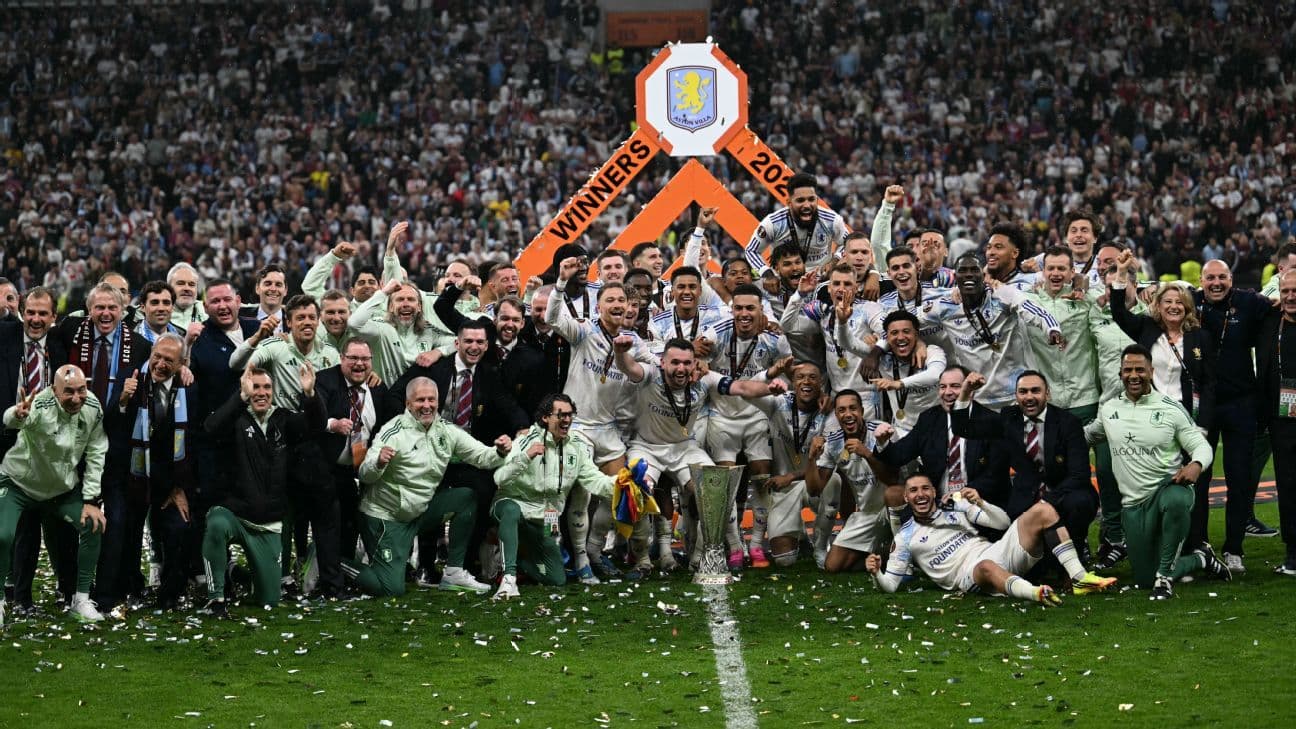
Aston Villa Wins Europa League: Unai Emery's Fifth Crown
Aston Villa’s European renaissance is complete. Forty-four years after toppling Bayern Munich to win the European Cup, they are continental champions again, carried to the summit by the man who has turned this competition into his personal playground: Unai Emery.
Emery’s empire, Villa’s rebirth
The 54-year-old did not so much outcoach Freiburg in Istanbul as overwhelm them. This is his territory. His fifth Europa League crown, with a fourth different club, only hardens the sense that when this trophy is on the line, Emery holds the rulebook.
On a warm night by the Bosphorus, his Villa side tore through Freiburg 3-0, the scoreline almost flattering the Bundesliga team. Youri Tielemans thundered in the opener, Emi Buendía bent in a gorgeous second, and Morgan Rogers, still just 23, finished the job with the sort of sharp, decisive strike that has defined this Villa season.
For a club that slipped out of the Premier League in 2016, this is not just a trophy. It is the high-water mark of their modern history. From relegation and midweek trips to Preston to a European final in Istanbul, the arc is staggering.
From Wembley to the Bosphorus
At the heart of it all stood John McGinn, the barrel-chested Scot who once dragged Villa out of the Championship and now has led them to Europe’s secondary crown. Seven years after that play-off win over Derby County at Wembley, he climbed the steps in Besiktas Park and raised silverware as captain.
The image will live for decades: McGinn, arms aloft, claret and blue confetti swirling, the Europa League trophy finally back in Villa hands. He is the first Scotsman to captain a side in a major European final since Barry Ferguson did it for Rangers in 2008, and the first to do so for an English club since Graeme Souness with Liverpool in 1984. That is the company he keeps now.
Around him, the spine of Villa’s resurgence. Tyrone Mings, there in the Championship grind. Tammy Abraham, part of the promotion story. Ezri Konsa, Emi Martínez, Ollie Watkins, Matty Cash – the recruits who turned a patched-up side into a hardened European outfit. They have flirted with a defining success before, only to see the door slammed shut: Conference League semi-finalists in 2024, Champions League quarterfinalists last season, beaten by eventual winners Paris Saint-Germain.
In Istanbul, there was no near miss. No what-if. This time, Villa walked through the door and slammed it on someone else.
The master of this competition
Thomas Tuchel once joked that UEFA might as well rename the Europa League trophy after Emery. Nights like this make that line feel less like a quip and more like a suggestion.
With this victory, Emery has now lifted the Europa League five times, matching Carlo Ancelotti’s tally of Champions League titles in terms of major European crowns. Sevilla three times, Villarreal once, and now Aston Villa. No one has won a major European competition with three different clubs until the Spaniard.
He plays down the “king of the Europa League” tag. He insists his past triumphs do not decide new finals. Yet his fingerprints were everywhere in Istanbul. From the way Villa bypassed Freiburg’s press with direct balls to Watkins, to the set-piece trickery that unlocked a tight first half, this was a final coached and controlled from the touchline.
It is easy to forget how this season started. No win in the first four matches. No goal until late September. From that stuttering opening to Champions League qualification and a major European trophy, Emery has not just repaired a broken club; he has reimagined it. He now stands, unquestionably, among the great modern coaches.
A final decided by moments of pure quality
For 40 minutes, the game was ugly. Fouls, restarts, broken rhythm. Freiburg ran hard – 2.5km more than Villa across the night – but never found a way to turn effort into incision. Villa looked strangely flat, content to go long, waiting for something to break.
Then the pressure told. Or rather, the planning did.
From a short corner, Lucas Digne caught Freiburg dozing. The ball went to Rogers, who paused, weighed his options, and floated a teasing cross to a pocket of space just inside the box. Tielemans arrived on cue. One thudding volley, one stunned goalkeeper, one end of the stadium erupting in disbelief and delight. A goal drawn up on a tactics board by set-piece coach Austin MacPhee, executed with ruthless precision.
The game changed in an instant. Freiburg sagged. Villa smelled blood.
Just as the Germans tried to steady themselves, Buendía carved them open. From the edge of the area, on his weaker left foot, he wrapped a vicious, arcing strike around Noah Atubolu’s desperate reach and into the top corner. It was the kind of goal that silences a stadium for half a second before the noise explodes. François Letexier barely let the replays run before blowing for half-time. Freiburg trudged off, two down, outclassed.
Villa have made a habit of the spectacular this season, their finishing consistently outstripping the underlying numbers. Istanbul simply added two more to the highlight reel.
Rogers seals it, history frames it
The third goal lacked the same artistry, but it carried its own weight. Rogers, 23 years and 298 days old, reacted sharply to kill the contest and, in doing so, wrote his name into the record books as the youngest Englishman to score in a major UEFA final since Steven Gerrard in 2001.
By then, the pattern was familiar. The last three Europa League finals with a two-goal half-time lead have all finished 3-0: Atlético Madrid over Athletic Club in 2012, Atalanta’s demolition of Bayer Leverkusen in 2024, and now Aston Villa’s dismantling of Freiburg in 2026. When a side with Villa’s control and Emery’s experience gets that far in front, they do not look back.
Around the stadium, claret and blue dominated. Among the 11,000 Villa supporters, one figure stood out: Prince William, the club’s most famous fan, watching as his team ended a 30-year wait for a major trophy. For those in that corner of Besiktas Park, Emery is not a king in name, but he is something close in status.
This triumph also fits into a wider English resurgence in the competition. With Spurs winning the Europa League last year, English clubs have now lifted the trophy in consecutive seasons for the first time since the very birth of the UEFA Cup in the early 1970s, when Spurs and Liverpool went back-to-back.
Even the subplots carried history. Jadon Sancho became the first player ever to appear in the finals of three different major European competitions in three straight seasons – Champions League in 2023-24, Conference League in 2024-25, and now the Europa League. Villa’s story is not just about redemption; it is a magnet for milestones.
Villa, finally in the light
This win stitches the names of McGinn, Martínez, Watkins, Konsa, Cash, Tielemans, Buendía, Rogers and their teammates into the same fabric as Paul McGrath and Peter Withe. Different eras, different competitions, same club, same sense of something monumental.
For years, this Villa team have hinted at a moment like this, only to fall just short. In Istanbul, under a manager who simply does not lose these finals, they stopped hinting and started winning.
The European Cup in 1982 was the club’s defining night. The Europa League in 2026 may be the one that tells the rest of the continent they are back to stay.