Australia and Egypt Clash for World Cup Knockout Spot
On a hot evening in Arlington, two footballing worlds will walk out with the same prize in sight and very different ghosts at their backs.
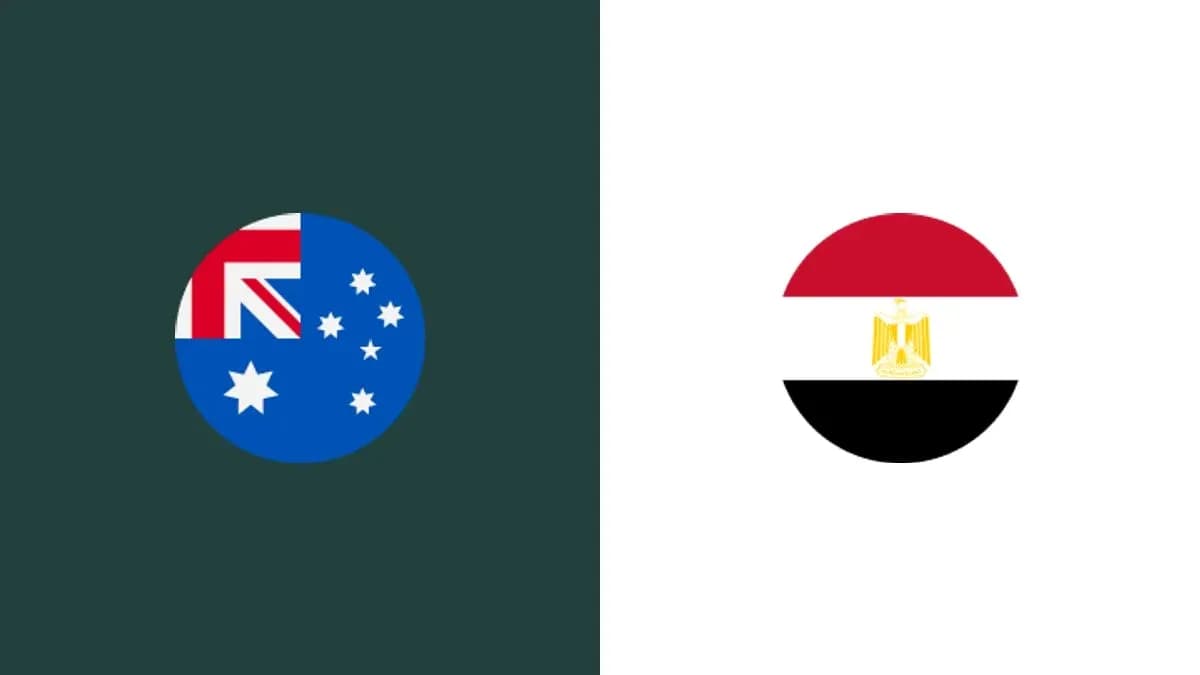
At Dallas Stadium on 3 July 2026, Australia and Egypt meet for a place in the World Cup Round of 16. One nation is chasing a first-ever win in a World Cup knockout tie. The other is living out its best modern-era tournament already and refuses to let the story end here.
Kick-off is 18:00 GMT, 14:00 EST. The stakes feel far later in the tournament than the Round of 32.
Socceroos chasing a barrier that’s haunted generations
Tony Popovic brings a familiar Australian identity into this tie: organised, combative, stubbornly hard to beat. It has carried the Socceroos out of a rugged Group D, but the next step is the one they’ve never managed – winning a single-elimination game on the world stage.
Their route has been anything but smooth. A 2-0 defeat to host nation United States on Matchday 2 exposed their attacking limitations and briefly rattled belief. The response was pure Australia: dig in, reset, grind.
They locked down Paraguay in a goalless draw that felt more like a statement of defensive intent than a spectacle. The key result, though, came on opening night – a 2-0 victory over Turkey that ultimately banked the points they needed to finish second. Across the group phase, Popovic’s side conceded little, survived a nervy final stretch, and did just enough.
The numbers underline both the strength and the flaw. Two goals scored in three group matches. Tight at the back, blunt in front of it. If they’re to make history in Texas, that balance has to tilt.
Popovic has selection headaches of the harshest kind. Veteran forward Mathew Leckie is out of the tournament, as is Jacob Italiano. Experience and depth gone in one stroke. So the focus falls on the defensive spine that has become Australia’s identity.
Harry Souttar remains the towering reference point, flanked by emerging centre-back Alessandro Circati and, likely, Lucas Herrington if Popovic opts for a back three. Whether it’s a trio or a more orthodox four-man line, the mission is the same: protect Patrick Beach, absorb pressure, and stay switched on for 90 minutes – or more.
Ahead of them, Jackson Irvine and Aiden O’Neill are expected to anchor midfield, with Aziz Behich and Jordan Bos patrolling the flanks. Further forward, Cristian Volpato and Connor Metcalfe will be asked to knit attacks together, while one teenager could change the entire feel of the contest.
Nestory Irankunda brings the kind of raw pace and directness that terrifies high defensive lines. Australia’s plan is no secret: stay compact, then hit vertically and fast. If Egypt over-commit, Irankunda is the release valve.
Egypt’s modern breakthrough, with a cloud over their star
On the opposite bench, Hossam Hassan has already etched his name into Egyptian football history. For the first time in the modern era, Egypt have advanced from a World Cup group. That alone would have been a landmark. This group, though, looks far from satisfied.
The Pharaohs have navigated Group G without defeat, finishing second with a blend of discipline and attacking clarity. They opened with a 1-1 draw against Belgium, a result that immediately announced their readiness to trade with elite opposition. A 3-1 dismantling of New Zealand then delivered Egypt’s first-ever World Cup win. The 1-1 draw with Iran completed a consistent, controlled group campaign.
They’ve scored five in their last five matches and conceded four. The numbers don’t scream chaos; they suggest a side that knows exactly how to manage tempo and pick its moments. Averaging more than four shots on target per game, Egypt carry threats from multiple angles, not just one famous left foot.
Yet that left foot is the story. Mohamed Salah, captain and talisman, is nursing a hamstring strain picked up against Iran. His fitness dominates every conversation around this tie. The Liverpool forward remains a doubt, his workload and even participation subject to ongoing assessment.
If Salah’s minutes are limited, the creative and scoring burden shifts sharply toward Omar Marmoush. The Manchester City forward has embraced the focal-point role, drifting into pockets, stretching back lines, and linking with runners like Emam Ashour and Ahmed Sayed “Zizo”.
Hassan’s likely XI reflects that attacking structure: Mostafa Shobeir in goal; Mohamed Hany, Yasser Ibrahim, Rami Rabia and Karim Hafez across the back; Marwan Attia and Mahmoud Saber screening midfield; Zizo, Salah and Ashour supporting Marmoush.
Even if Salah starts, Egypt cannot afford to become predictable. Their greatest strength so far has been variation – late arrivals from midfield, wide overloads, and quick combinations around the box.
Flanks, traps and a tactical tug-of-war
Strip away the narratives and the emotional weight, and this tie may be decided in the wide channels.
Egypt’s most dangerous pattern comes down the left. Marmoush drifts into half-spaces, Hafez or Fotouh surge past on the overlap, and midfielders shuffle across to create overloads. Those rotations are designed to drag centre-backs into areas they hate, open tight passing lanes, and carve out cut-backs inside the penalty area.
Australia know this. Their response will be to refuse the bait. If Souttar or Circati get pulled too far from home, the structure collapses. So Popovic’s wing-backs and midfielders must absorb the width, allowing the central defenders to hold their line and win the duels they’re built for.
On the other side of the ball, Australia’s threat is far more vertical. They won’t look to dominate possession or squeeze Egypt back with long spells on the ball. They’ll sit, wait, then spring. One turnover, one loose pass in midfield, and the plan ignites: an immediate ball into Irankunda’s path, runners joining from deep, and Egypt’s back four forced to turn and sprint towards their own goal.
That’s where Hassan’s midfield anchors become crucial. Attia and Saber must not only recycle possession but also kill transitions at source. Lose that battle and Egypt’s adventurous shape can be punished ruthlessly.
Mental tests on both sides
This is not just a tactical puzzle. It’s a psychological one.
Australia must live with long periods without the ball, trusting their shape and concentration. One lapse against Marmoush, one mistimed step toward Salah if he features, and the match can tilt in an instant. They’ve built their campaign on defensive discipline; this is its ultimate examination.
Egypt face a different kind of strain. For the first time, they carry the weight of expectation in a World Cup knockout tie. They’re the side with the unbeaten record, the star names, the attacking stats. They’re also the team tasked with breaking down a low block without losing their heads or their structure.
Push too hard, and Irankunda and company will find space. Stay too cautious, and the match can drift into the kind of tight, nervy contest Australia relish.
Form, history and a thin sliver of precedent
Both teams arrive with matching recent records: one win, two draws, two defeats in their last five. The paths have differed, but the form lines are eerily similar.
Australia’s recent run includes that 0-0 against Paraguay, the 2-0 loss to the United States, the 2-0 win over Turkey, plus pre-tournament results – a 1-1 draw with Switzerland and a 1-0 defeat to Mexico.
Egypt’s ledger shows a 1-1 draw with Iran, the 3-1 win over New Zealand, and the 1-1 against Belgium, framed by a 2-1 loss to Brazil and a 1-0 win over Russia in friendlies.
Head-to-head history offers little guidance. The only recorded meeting came in a 2010 friendly, Egypt winning 3-0. Sixteen years on, different players, different stakes, different world.
Probable lineups
Likely Australia XI vs Egypt
Beach; Circati, Souttar, Herrington; Bos, O'Neill, Irvine, Behich; Volpato, Irankunda, Metcalfe
Likely Egypt XI vs Australia
Shobeir; Hany, Ibrahim, Rabia, Hafez; Ateya, Saber; Ziko, Salah, Ashour; Marmoush
Squads in full
Australia 26-man squad
Goalkeepers: Mathew Ryan, Paul Izzo, Patrick Beach
Defenders: Harry Souttar, Lucas Herrington, Jacob Italiano, Alessandro Circati, Cameron Burgess, Aziz Behic, Jordan Bos, Jason Geria, Miloš Degenek, Kai Trewin
Midfielders: Jackson Irvine, Aiden O’Neill, Connor Metcalfe, Ajdin Hrustić, Cameron Devlin, Paul Okon-Engstler
Forwards: Nestory Irankunda, Mathew Leckie, Nishan Velupillay, Tete Yengi, Awer Mabil, Cristian Volpato, Mohamed Touré
Egypt 26-man squad
Goalkeepers: Mohamed El Shenawy, Mostafa Shobeir, Mohamed Alaa
Defenders: Mohamed Hany, Tarek Alaa, Hamdy Fathy, Rami Rabia, Yasser Ibrahim, Hossam Abdelmaguid, Mohamed Abdelmonem, Ahmed Fotouh, Karim Hafez
Midfielders: Marwan Attia, Mohanad Lasheen, Nabil Emad, Mahmoud Saber, Ahmed Sayed "Zizo", Emam Ashour, Mostafa Ziko, Mahmoud Hassan "Trezeguet", Ibrahim Adel, Haissem Hassan
Attackers: Mohamed Salah, Omar Marmoush, Aqtay Abdallah, Hamza Abdelkarim
Two nations. One knockout tie. One of them will leave Dallas Stadium with a new chapter written into its footballing history. The other will walk away wondering how far this World Cup run might have gone.