Australia's Stunning World Cup Victory Over Turkiye
Mike Grella lit the match. The Socceroos poured on the petrol.
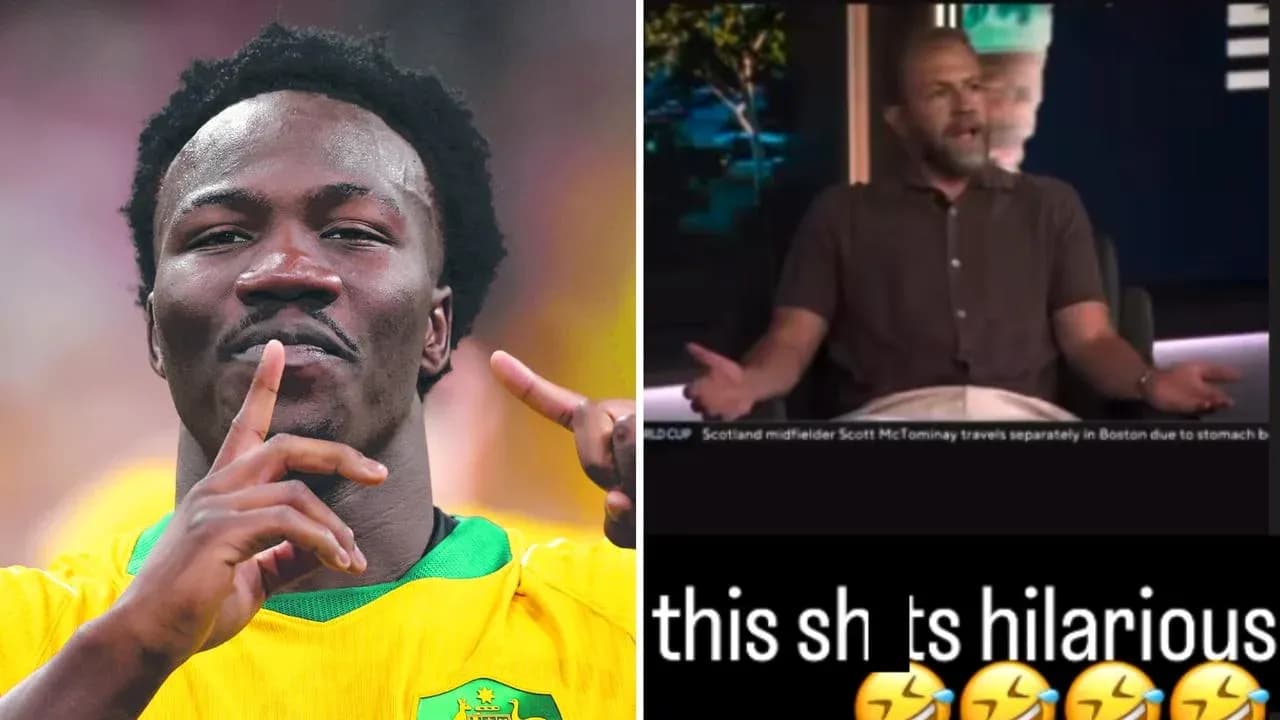
In the days before Australia’s World Cup opener, the former US international sat in a CBS Sports Golazo studio and dismissed them with a smirk. No chance of “doing anything”. “Weakest team in the group”. A “lay up” for the USA. He didn’t recognise a single name, he said, and wondered what they were “drinking over there”.
Then came Vancouver.
A 2-0 that echoed around the world
Australia didn’t just beat Turkiye. They shook up an entire narrative with a 2-0 win that felt bigger than the scoreline and louder than the crowd.
Nestory Irankunda, the 20-year-old winger who has already lived more lives than most of his peers, exploded into the tournament with the kind of goal that rewrites reputations. Blistering pace, fearless running, a finish that belonged on a World Cup montage.
Connor Metcalfe added the second, a strike that sealed the result and underlined the point: this was no fluke. This was a plan executed with conviction.
Behind them, Patrick Beach – a name barely known to most Australians before kick-off – turned his World Cup debut into instant folklore. Full-stretch saves, big moments handled with calm hands and a cold head. By the final whistle, the anonymous keeper had become a national reference point.
The doubters went quiet. The rest of the world turned up the volume.
From refugee camp to front pages
If Beach became an overnight hero at home, Irankunda’s story raced across borders.
In England, where his club Watford gave him a platform, his World Cup arrival landed with force. The BBC’s Chris McKenna framed it as the latest chapter in a remarkable journey: from refugee to World Cup scorer, with a recent stop in Munich learning from Harry Kane at Bayern.
The Sun pushed the Socceroos and Irankunda to the top of their website, ahead of Scotland’s own win, with a headline that cut straight to the heart of it: a Watford star born in a refugee camp scoring a historic World Cup goal.
FourFourTwo went for something punchier, drawing a line back to 1998 and asking the question: “The new Michael Owen?” The comparison came from the nature of the goal – the surge, the fearlessness, the sense of a young player arriving on the biggest stage with no interest in easing himself in.
In Vancouver, the commentary captured the moment in real time: “It’s a Nestory moment in Vancouver!” It already feels like a phrase that will be replayed for years.
Ange’s nod and an 85 per cent swing
Back in the UK and Ireland, the reaction carried a distinctly Australian accent. Ange Postecoglou, on ITV duty, watched his country’s “star boy” tear up the script and couldn’t hide his admiration.
“It doesn’t matter what level of football you play at, in the park or World Cup, that is fantastic speed,” he told ITV, calling it “a massive moment” and hinting at how quickly a World Cup can transform a young player’s life. A couple of good weeks, he said, and everything changes.
The numbers started to change as well. The Athletic’s projections shifted sharply, giving Australia an 85 per cent chance of getting out of the group after that opening win. For a team written off as cannon fodder by some US voices, it was a stark recalibration.
Suddenly, the “lay up” looked a lot more like a live threat.
Grella’s words, America’s nerves
Grella’s clip, once just another studio hot take, is now doing the rounds as motivational fuel. Former AFL player Dan Gorringe reposted the pundit’s comments with a blunt message – “we’re gona f*** you up” – and Grella tried to laugh it off, re-sharing the post with “Yo this sh*t’s hilarious” and “see you Friday”, complete with crying-laughing emojis.
The tone in the US studio has shifted.
“Grella’s going to be hired as their motivational speaker at this point,” joked former US midfielder Benny Feilhaber on CBS Sports Golazo. “He willed them to three points yesterday.”
Jimmy Conrad, the former US defender, didn’t miss the pattern.
“Everybody keeps discounting Australia and that seems to be not the right thing to do,” he said. “So, thanks Grella. We appreciate that.”
The banter has an edge now. The co-hosts face Australia in Seattle on Saturday morning (5am AEST), and those pre-tournament jabs suddenly look like a risk rather than a ratings play.
Streetwise, stubborn, and very Australian
The deeper tactical breakdown of Australia’s win came not from American analysts, but from The Athletic’s senior football writer Simon Hughes, who watched it unfold in Vancouver and then joined CBS to explain it.
“They were street wise,” he said. “Some of the darker arts in the game, they weren’t afraid to get involved in that side of it.”
In his post-match column, Hughes urged readers to “never underestimate true Australian grit”. On air, he expanded on that theme. Australia, he argued, understood their limitations and squeezed every last drop out of what they had.
He pointed out the obvious but often forgotten truth: the game is not decided by shot counts and possession charts alone. Australia, he felt, had control of the contest. When they needed Beach, he delivered. That is exactly what goalkeepers are there for.
What struck him most was the connection with the crowd. He sensed a fanbase that didn’t just hope, but believed their team could shape the match and “make an imprint on this tournament”. From that vantage point, he issued a warning: underestimate this side, and you will have problems.
The US, he suggested, might be next in line.
The world’s second team?
Scroll through social media and a pattern emerges. Neutrals are picking sides, and a lot of them are landing on Australia.
Some latch onto the humour, likening Popovic’s defensive structure to Arsenal’s title-winning resilience or jokingly branding it “Haram Ball” – a tongue-in-cheek nod to ultra-defensive, “anti-football” tactics. Others just enjoy the contrast: a back line built like a wall, and an attack that breaks like a lightning storm.
Trevor Noah, speaking on the Men in Blazers podcast, distilled the appeal.
“Australia has giants at the back. You don’t just swing the ball in and hope for the best against Australia,” he said. If you want to score, you keep it on the floor. Lofted hope is meat and drink for this defence.
Up front, he saw something new, something far removed from the Tim Cahill and Harry Kewell era. This was speed. Ruthless, vertical, modern.
He reserved special praise for Jordan Bos.
“That boy Bos, number five. Yo, yo, I want to see which team he’s playing for next... that man is silky on the ball!”
One game, and already the world is scouting the Socceroos.
A team that looks like its country
Off the pitch, Australia’s appeal runs deeper than tactics and transition speed. A pre-tournament video has resurfaced and spread in the wake of the Turkiye win, showing players talking about their backgrounds and the way this squad reflects modern Australia.
“Our diversity is our strength,” one line goes. It’s not branding. It’s a description.
In a sport where national teams often wrestle with identity, this group has leaned into it. Refugee stories. Migrant families. Different languages, different histories, one shirt.
That authenticity resonates. It’s why, after one game, people from other countries are already calling the Socceroos their “second team”. It’s why Irankunda’s rise hits harder than a simple breakout performance. It’s why Beach’s sudden stardom feels like more than a football story.
Tony Popovic’s side has taken one giant step towards the knockout rounds. The Athletic’s numbers say they should make it. The eye test suggests they’ll be a nightmare to remove.
Next up, the USA. The team Grella said they could never compete with.
If this is what Australia looks like when they’re underestimated, what happens when the rest of the world finally takes them seriously?