Barcelona's No. 9 Dilemma: Choosing Between Gyokeres, Espi, and Guirassy
Barcelona went into the summer with a clear idea of their ideal No. 9. The name at the top of every internal list was the same: Julian Alvarez. Eli Junior Kroupi sat just behind him as the alternative, the next big swing if the first proved too complicated.
Now, both doors are closing.
Atletico Madrid have dug in over Alvarez, refusing to even entertain meaningful talks. Bournemouth have done the same with Kroupi, sending a blunt message that he is not for sale. The youngster’s metatarsal injury, which will keep him out for three to four months, only hardens that stance and effectively removes him from Barcelona’s immediate plans.
So the dream targets fade. The reality begins.
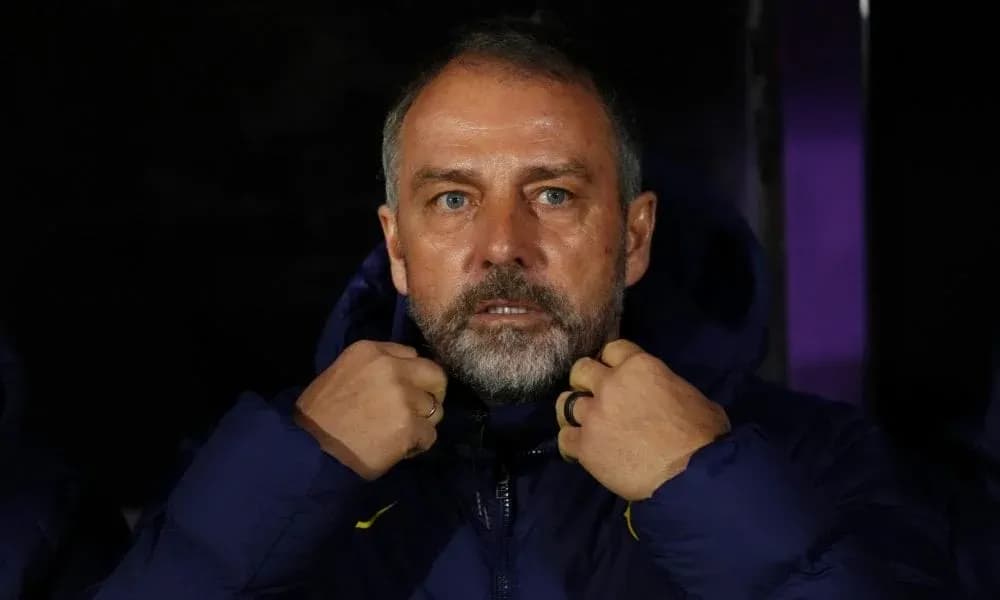
With Hansi Flick already imprinting his ideas on the squad, Barcelona cannot simply shrug and wait for the perfect striker to fall into their lap. They need goals, movement, pressing, presence. If Alvarez and Kroupi are out of reach, the club must look sideways rather than straight ahead.
Three names, three very different paths, sit on the table.
Viktor Gyokeres: The win-now striker
If Barcelona decide this is the moment to go all in, Viktor Gyokeres fits the brief almost too neatly.
The Swedish international has grown into one of Europe’s most complete centre-forwards. He finishes ruthlessly, drives with the ball, presses defenders into mistakes and has the frame to bully centre-backs who dare to get too tight. He doesn’t just stand between the posts and wait. He drifts wide, attacks space, links play and drags defences out of shape.
In Flick’s aggressive, front-foot system, that profile is gold. Gyokeres would not need a year of adaptation. He walks into the XI and changes the way Barcelona attack from the first week.
But there is a cost.
At 28, Gyokeres is in his prime, not on the runway to it. Barcelona would be paying top-end money – fee and salary – for immediate impact rather than long-term upside. This is not the classic “sign him young, grow him, sell him” operation. It is a statement that the club believes it can compete for the Champions League now, not in three years.
If that is the conviction inside the sporting department, there are few forwards who move the needle faster.
Carlos Espi: The future bet
On the other end of the spectrum stands Carlos Espi, the kind of name Barcelona traditionally try to secure before the rest of Europe catches on.
The 21-year-old Spanish striker offers mobility, clean technique and a ceiling that is still far from defined. This is not a signing to solve this season’s scoring problem overnight. It is a play for what comes next.
Espi would arrive as one of Spain’s most promising attacking talents, a player whose value could explode if handled correctly. But that is the key: handling him correctly.
Young forwards rarely walk into Camp Nou and dominate from day one. The pressure, the scrutiny, the expectation to deliver every weekend – it breaks plenty of careers before they start. Espi would need time, shelter, and a clear development plan.
That likely means starting the campaign with Ferran Torres as the main reference up front, with Espi learning behind him, picking up minutes in controlled situations rather than being thrown into the fire. If Barcelona truly believe in his potential, they would have to resist the urge to rush him just because the crowd wants a new hero.
This route is about patience, not headlines.
Serhou Guirassy: The short-term answer
Then there is Serhou Guirassy, the name that does not light up social media in quite the same way, but ticks boxes that matter inside a dressing room.
The Guinea international is a proven goalscorer, particularly in and around the penalty area. He moves intelligently, holds the ball under pressure and offers the kind of physical strength Barcelona often lack when opponents sit deep and defend their box for 90 minutes.
He would not arrive as a project. He would arrive to score.
Guirassy brings Champions League experience and, crucially for a club walking a financial tightrope, he would likely cost significantly less than Gyokeres in both transfer fee and wages. The trade-off is obvious: at 30, he does not represent the long-term face of Barcelona’s attack, and his resale value would be minimal.
But not every signing has to stretch over a decade. Sometimes a team simply needs a reliable finisher who can turn half-chances into points while the broader rebuild continues around him.
So which path fits Barcelona now?
Gyokeres represents the bold, immediate push – a striker who could reshape the attack from the first whistle of the new season. Espi is the slow burn, the gamble on a player who might grow into the role and hold it for years if nurtured properly. Guirassy offers a middle road: proven quality, lower cost, clear limitations in terms of future planning.
What Barcelona cannot afford is panic. If Alvarez and Kroupi are drifting out of reach, the temptation will be to sign “a striker” just to tick the box. That is how squads lose identity and budgets disappear.
Each of these profiles answers a different question. The real issue is simple: does this Barcelona want to win immediately, or are they finally ready to build an attack with a clear timeline and a clear plan?