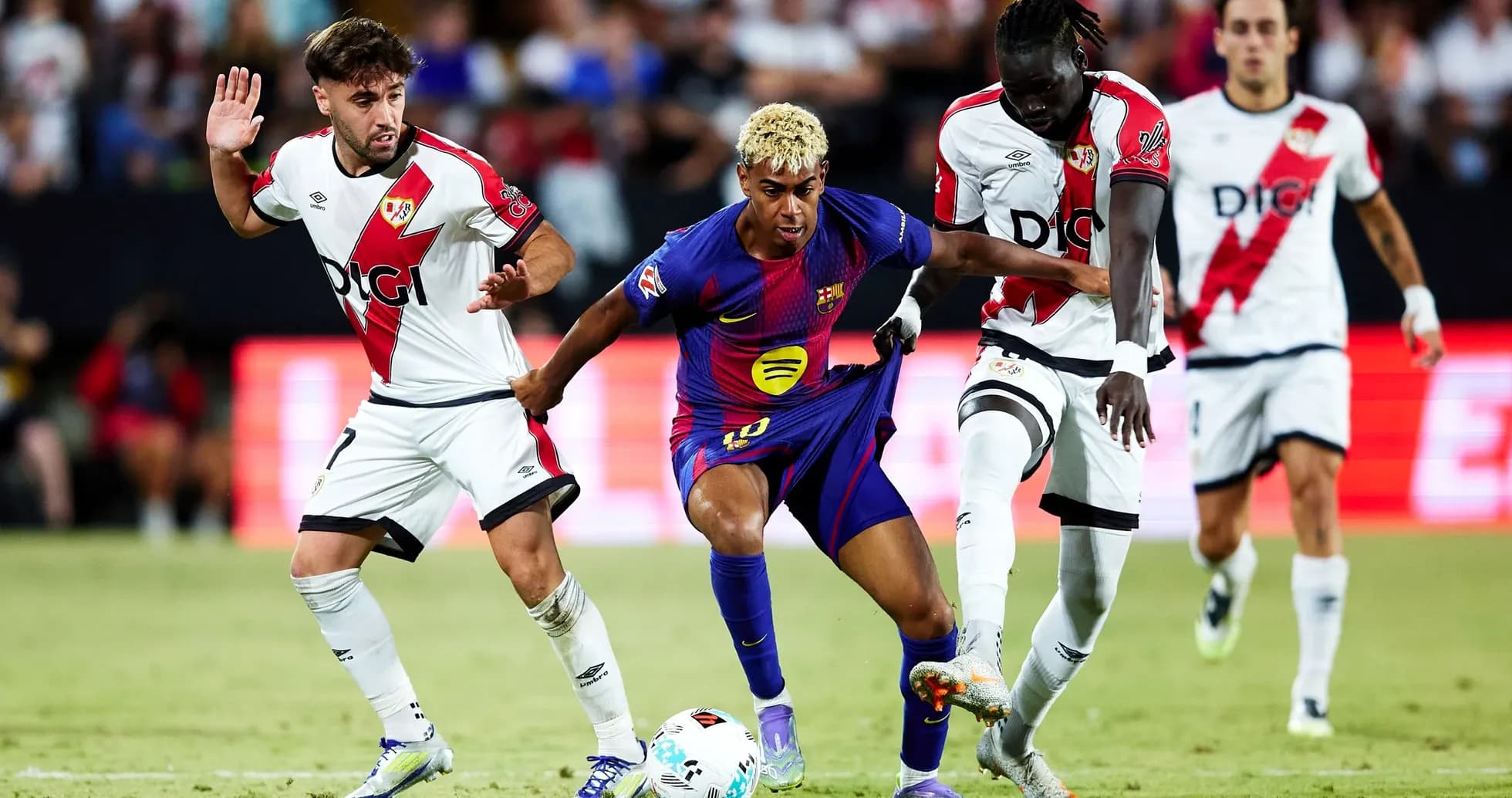
Barcelona Edges Rayo Vallecano 1-0 in La Liga Match
At Camp Nou, Barcelona edged Rayo Vallecano 1–0 in a tight La Liga Regular Season - 29 fixture, decided by a first‑half strike from centre‑back R. Araujo. Hansi Flick’s side controlled territory and possession, but Inigo Perez’s Rayo carried enough threat to make this a nervy 1/90-minute contest. Barcelona’s 61% of the ball, 15 total shots and 1.39 xG contrasted with Rayo’s more selective 8 efforts and slightly higher xG of 1.56, underlining how finely balanced the quality of chances was despite the hosts’ dominance of the ball. Ultimately, Barcelona’s defensive structure and set‑piece efficiency proved decisive.
Scoring Sequence & Disciplinary Log
The decisive moment arrived on 24'. From a Barcelona attacking phase, J. Cancelo advanced from left-back and delivered the key ball for R. Araujo, who attacked the space aggressively to finish and put the hosts 1–0 up. There were no further goals, and no VAR interventions are recorded in the data, so the scoreline remained unchanged through both halves.
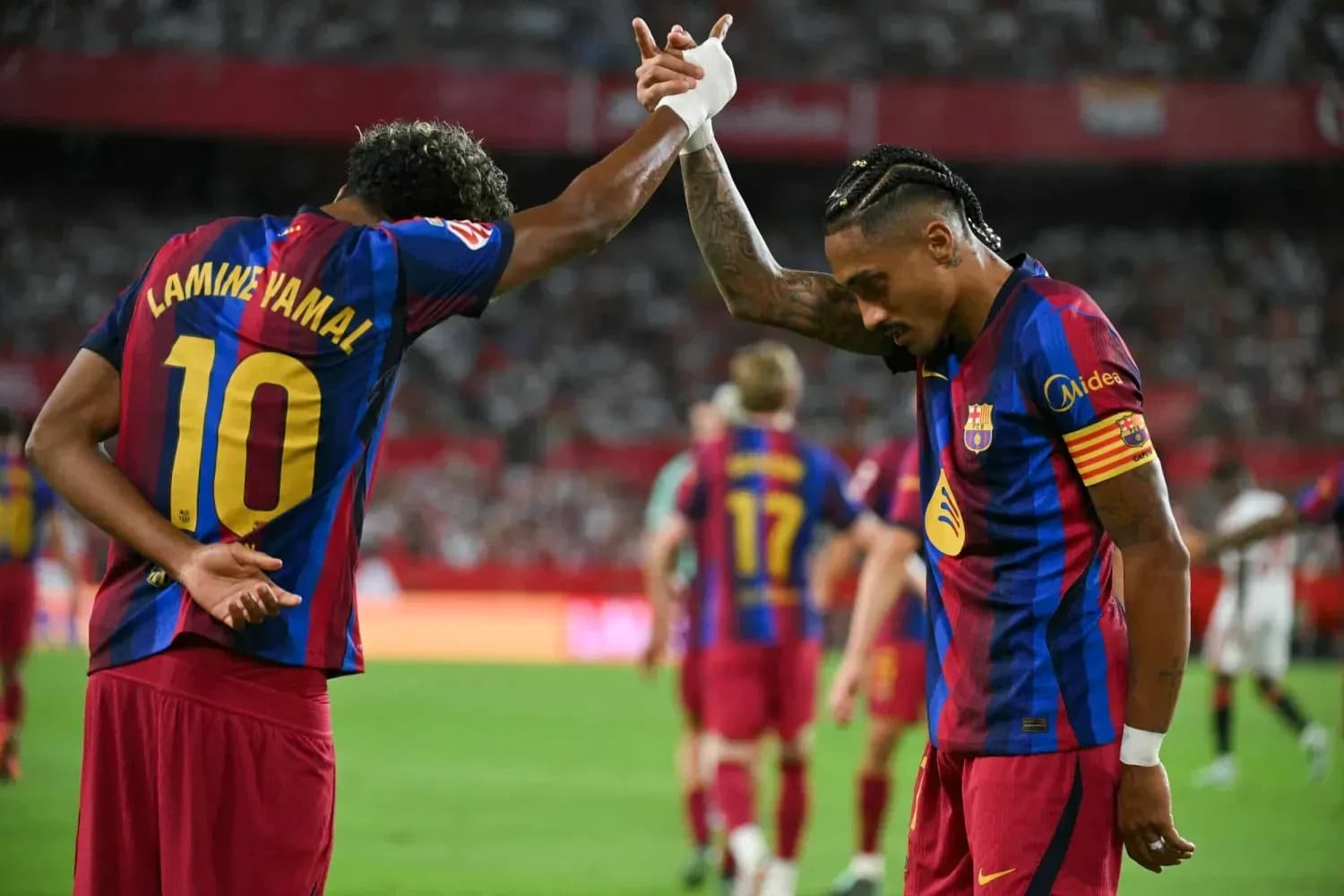
The game’s tone was set early in terms of discipline. On 8', Raphinha received a yellow card for a foul, reflecting Barcelona’s need to counterpress Rayo’s transitions. Just 18 minutes later, on 26', Lamine Yamal also received a yellow card for a foul, giving two cautions to the home side before the half‑hour.
Rayo’s first booking came on 34', when Óscar Valentín received a yellow card for a foul, signalling the intensity of their midfield duels. The second half brought further cautions: on 65', Fran Pérez received a yellow card for a foul, followed by Pathé Ismaël Ciss on 67' for another foul, as Rayo pushed aggressively to disrupt Barcelona’s buildup.
Barcelona’s final caution came on 72', when Pau Cubarsí received a yellow card for a foul, underlining the pressure Rayo applied in the latter stages. On 88', Isi Palazón received a yellow card for a foul, closing a combative evening.
In total, Barcelona received 3 yellow cards, while Rayo Vallecano saw 4 yellow cards. No red cards were issued.
Tactical Breakdown & Personnel
Both teams lined up in a 4‑2‑3‑1, but the application of the shape diverged. For Barcelona, J. Garcia (shirt 13) anchored the structure in goal, behind a back four of J. Cancelo, G. Martin, P. Cubarsi and R. Araujo. The double pivot of M. Bernal and Pedri supported a line of three – Raphinha, Fermín and Lamine Yamal – behind R. Lewandowski as the nominal striker.
With 61% possession and 483 total passes at 86% accuracy, Barcelona built patiently from the back. Cubarsí and Araujo were key circulation points, using G. Martin and Cancelo as high, wide outlets. Bernal often dropped between the centre‑backs to create a three‑man first line, allowing Pedri to step higher and connect with the attacking midfielders. The goal on 24' encapsulated this: Cancelo’s advanced positioning on the flank and Araujo’s willingness to attack the box from deep blurred the line between defender and auxiliary forward.
In the final third, Barcelona’s 10 shots inside the box show that their positional play did succeed in creating penalty‑area presence, but Rayo’s compact 4‑2‑3‑1 forced many efforts into traffic, with 5 Barcelona shots blocked. Raphinha’s early yellow on 8' reflected his role in counterpressing; he was required to immediately engage Rayo’s first pass out, risking fouls to prevent transitions. Lamine Yamal, booked on 26', combined touchline width with aggressive 1v1 play, but his caution also limited how hard he could press later.
Rayo’s 4‑2‑3‑1, with A. Batalla in goal, a back four of A. Ratiu, F. Lejeune, Pathé Ismaël Ciss and P. Chavarria, and a double pivot of P. Diaz and Óscar Valentín, was designed to absorb pressure then spring forward through C. Martin, G. Gumbau, Fran Pérez and central forward I. Palazón. With only 39% possession and 296 passes at 76% accuracy, Rayo focused on verticality and set‑pieces. Their 9 corner kicks versus Barcelona’s 6 underline a strategy of targeting wide areas and forcing defensive restarts.
The expected goals figures – 1.39 for Barcelona and 1.56 for Rayo – reveal that, despite fewer shots (8 vs 15), Rayo’s chances were of comparatively high quality, especially in and around the box, where they produced 7 shots inside the area. Barcelona’s defensive line had to absorb late pressure, particularly after Flick’s substitutions:
- At 46', F. Torres (IN) came on for R. Lewandowski (OUT), shifting Barcelona towards a more mobile front line and greater threat in the channels rather than pure penalty‑box presence.
- At 61', D. Olmo (IN) came on for Fermín (OUT), adding control and ball‑retention between the lines.
- Also on 61', M. Casado (IN) came on for M. Bernal (OUT), refreshing the pivot and providing legs to protect the lead.
- At 82', M. Rashford (IN) came on for Lamine Yamal (OUT), giving Barcelona an outlet for direct runs into space as Rayo committed more men forward.
- At 90', X. Espart (IN) came on for J. Cancelo (OUT), a clear move to reinforce defensive solidity and aerial presence for the closing moments.
Rayo’s changes mirrored their growing ambition:
- At 46', A. Garcia (IN) came on for C. Martin (OUT), and Pacha (IN) came on for O. Valentin (OUT), adding fresh energy and slightly more attacking intent down the left.
- At 59', U. Lopez (IN) came on for G. Gumbau (OUT), and J. de Frutos (IN) came on for P. Diaz (OUT), increasing creativity and forward running from midfield.
- At 82', S. Camello (IN) came on for F. Perez (OUT), adding a more direct striker profile alongside or around Isi Palazón.
Defensively, Barcelona’s 4 goalkeeper saves and 0 goals prevented indicate that J. Garcia had to be alert, facing 4 shots on target from Rayo. He was not simply a recycling outlet; his shot‑stopping contributed materially to preserving the clean sheet, particularly as Rayo’s xG crept above Barcelona’s.
The Statistical Verdict
The statistical profile paints a nuanced picture. Barcelona dominated possession (61% to 39%), completed more passes (483 vs 296) and produced more total shots (15 vs 8). They also created more volume in dangerous zones, with 10 shots inside the box compared to Rayo’s 7. However, Rayo’s shot selection was efficient enough that their xG of 1.56 narrowly exceeded Barcelona’s 1.39, suggesting that, when they did arrive in the area, their chances were comparatively clear.
In terms of defensive resistance, Barcelona saw 5 of their shots blocked, while Rayo Vallecano had 1 attempt stifled by the opposition. Set‑piece dynamics were finely balanced: Barcelona earned 6 corners, Rayo 9, reflecting the visitors’ ability to turn limited possession into territorial pressure.
Goalkeeper involvement was symmetrical in volume if not in outcome: both J. Garcia and A. Batalla registered 4 and 3 saves respectively, with goals prevented at 0 for both sides, implying that finishing rather than extraordinary goalkeeping defined the lone goal. The foul count – 12 for Barcelona, 11 for Rayo – and the 7 yellow cards underline a physically intense match.
Overall, the data supports the narrative of a Barcelona side that controlled the ball and territory but had to rely on defensive concentration and one decisive set‑piece‑type action from R. Araujo and J. Cancelo to edge a Rayo team whose attacking phases were fewer but statistically dangerous.