Bayer Leverkusen's Strategic Win Over Olympiakos
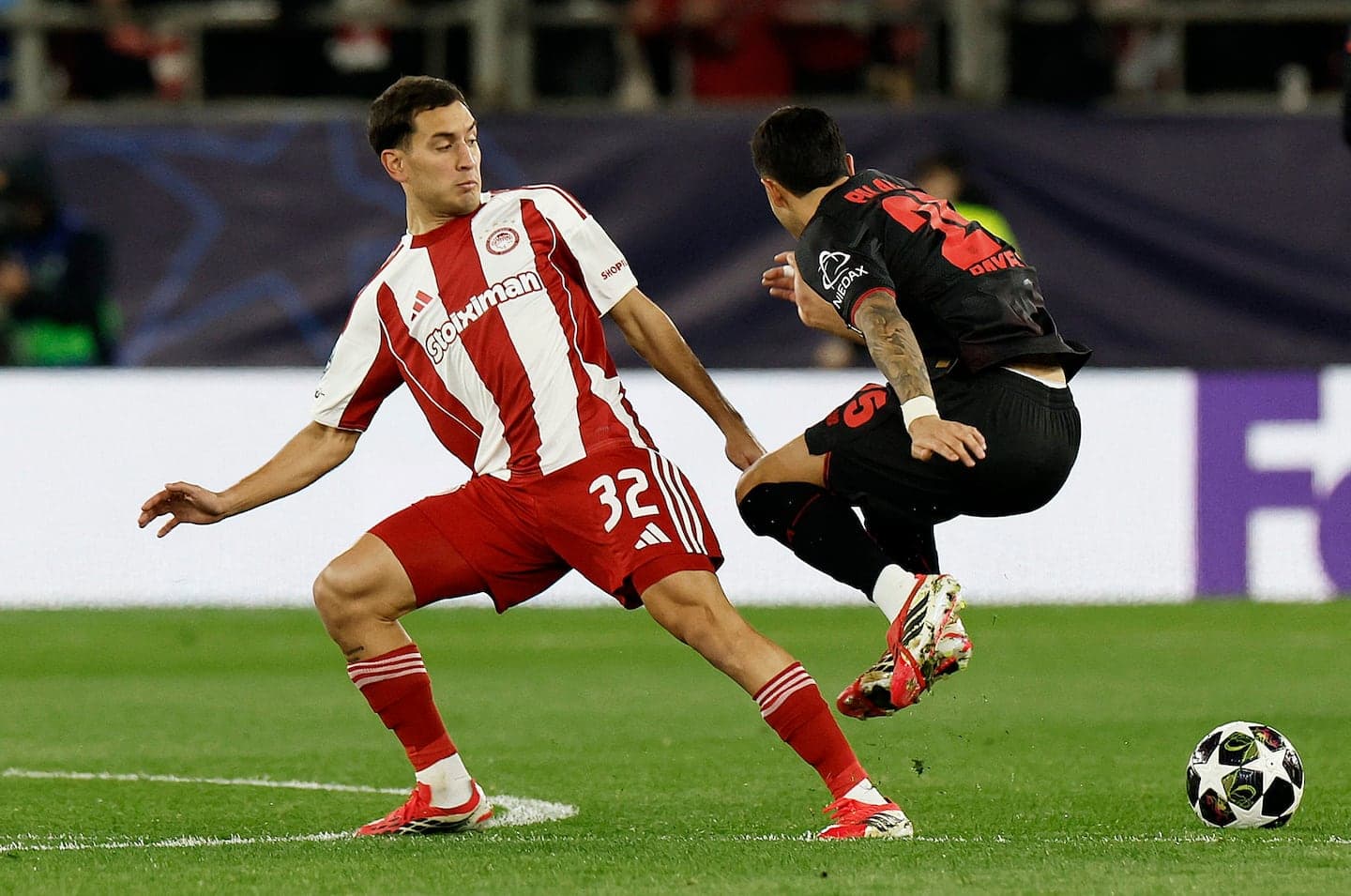
This was a controlled away performance from Bayer Leverkusen built on measured possession and territorial control. With 58% of the ball and 591 total passes at 84% accuracy, Leverkusen dictated the rhythm, circulating patiently through their 3-4-2-1. Olympiakos Piraeus, in a 4-2-3-1, accepted a more reactive role, finishing with 42% possession and 414 passes at 79%. The hosts tried to compress space centrally and spring forward once the ball was regained, but Leverkusen’s structure allowed them to dominate space between the lines and gradually push the game closer to the Olympiakos box, especially after the break.
Offensive Efficiency
The contrast in attacking efficiency defined the tie. Olympiakos actually attempted more total shots (13 to Leverkusen’s 8), but only 1 of those hit the target. With 9 of their 13 efforts coming from outside the box, their attacks were often forced into low‑quality attempts rather than clear chances. An xG of 0.87 underlines that their volume did not translate into danger, despite 3 corners and 6 blocked shots hinting at some pressure phases around the area.
Leverkusen, by contrast, were ruthlessly efficient. They produced only 8 shots but hit the target 5 times, with 7 of those attempts coming from inside the box. An xG of 1.95 shows they consistently engineered high‑value opportunities, turning their territorial control into clean final‑third entries rather than speculative shooting. Both teams had 3 corners, reinforcing that Leverkusen did not rely on set‑piece volume but on structured, well-timed incursions through their front three and wing‑backs. The 2–0 scoreline from just 8 shots is a textbook example of clinical finishing married to good chance creation.
Defensive Discipline & Intensity
The game was not especially chaotic or overly physical. Olympiakos committed 7 fouls and Leverkusen 9, with one yellow card apiece, suggesting more of a controlled tactical battle than a disruptive contest. Olympiakos’ defensive block did manage 6 blocked shots, showing commitment in last‑ditch defending, but Leverkusen still generated nearly 2.0 xG, indicating that those interventions were often reactive rather than preventative.
In goal, neither keeper was forced into heroics. Olympiakos’ K. Tzolakis made 3 saves, while J. Blaswich faced only 1 shot on target. The “goals_prevented” metric at 0 for both sides confirms that the result was not shaped by extraordinary goalkeeping, but by the quality and efficiency of Leverkusen’s finishing and their ability to restrict Olympiakos to low‑threat efforts.
Bayer Leverkusen’s controlled possession and ruthless shot selection (5 shots on target from 8 attempts, 7 inside the box) overcame Olympiakos Piraeus’ lower‑quality volume. Olympiakos’ 13 shots and 42% possession reflected effort without cutting edge, while Leverkusen’s efficiency and spatial control turned a measured away performance into a comfortable 2–0 win.