Benfica vs Real Madrid: Vinícius Júnior's Goal Secures Narrow Victory
At Estádio da Luz, under the eye of referee François Letexier, Real Madrid carved out a narrow 1–0 away win over Benfica in the UEFA Champions League Round of 32. A single second‑half goal from Vinícius Júnior decided a tight contest in which both defences largely kept control. The result underlines Real Madrid’s status as one of the competition’s form away sides and leaves Benfica, already with a negative goal difference in this campaign, needing a response in the return leg to keep their play‑off run alive.
First Half Analysis
The opening 45 minutes produced no goals and, tellingly, no major incident in the event log. With the score 0–0 at the interval, both sides had effectively cancelled each other out in terms of clear, decisive moments.
Jose Mourinho’s 4‑2‑3‑1 for Benfica, built on the double pivot of Leandro Barreiro and Fredrik Aursnes, appeared primarily focused on compactness in front of Anatoliy Trubin. Real Madrid, lined up in a 4‑4‑2 under Alvaro Arbeloa with Kylian Mbappé and Vinícius Júnior leading the line, were unable to translate their technical quality into a breakthrough before the break.
The absence of first‑half cards or substitutions underlined the balance of the contest: neither coach felt compelled to change the script early, and the referee kept his cards in his pocket as both teams probed without turning territorial phases into decisive, recordable events.
Second Half & Tactical Shifts
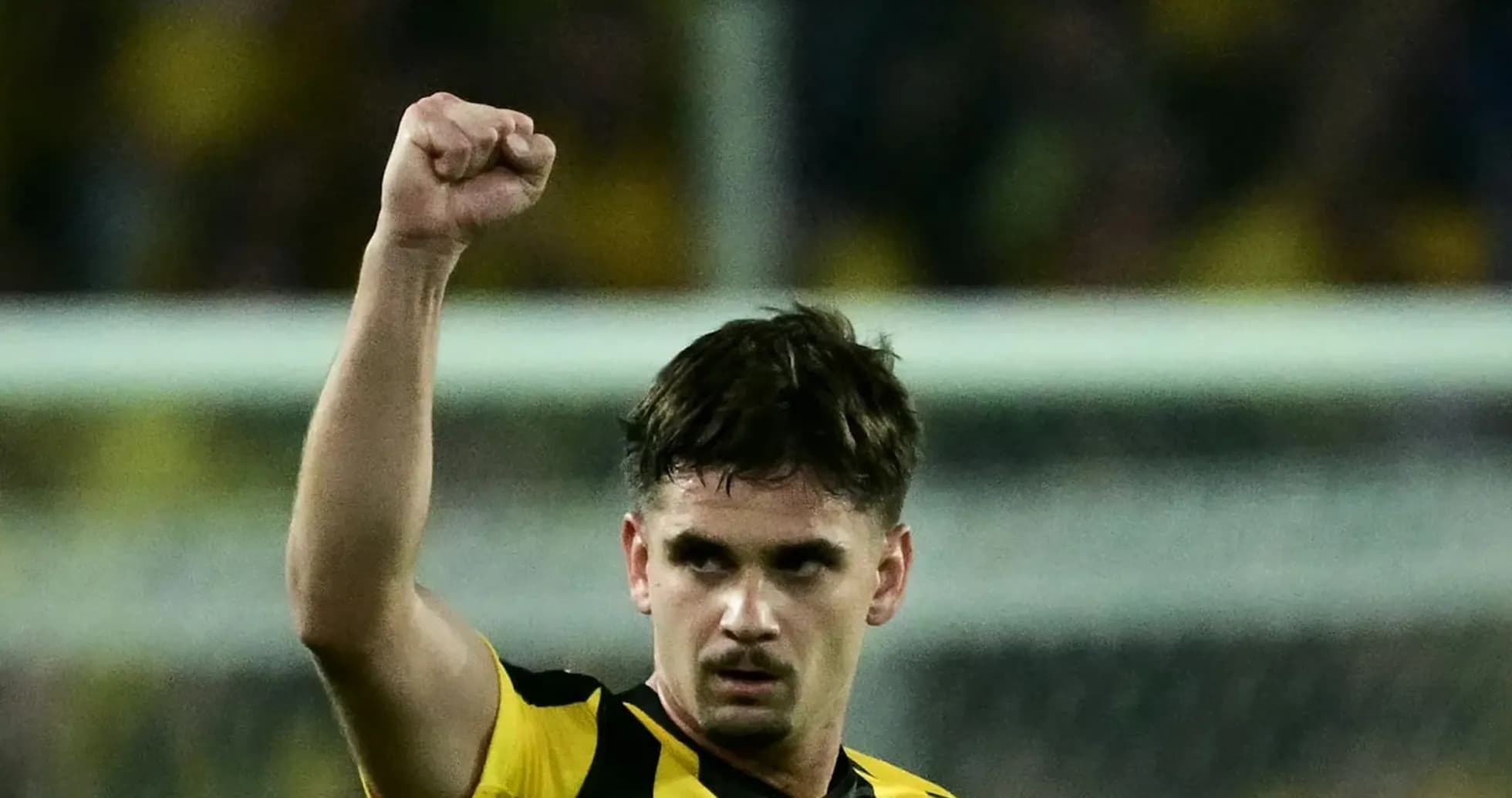
The game burst into life immediately after the restart. On 50', Vinícius Júnior collected a yellow card for Real Madrid, but moments later he delivered the decisive action of the night. Also on 50', the Brazilian scored the only goal, finishing a move assisted by Kylian Mbappé to give the visitors a precious away advantage.
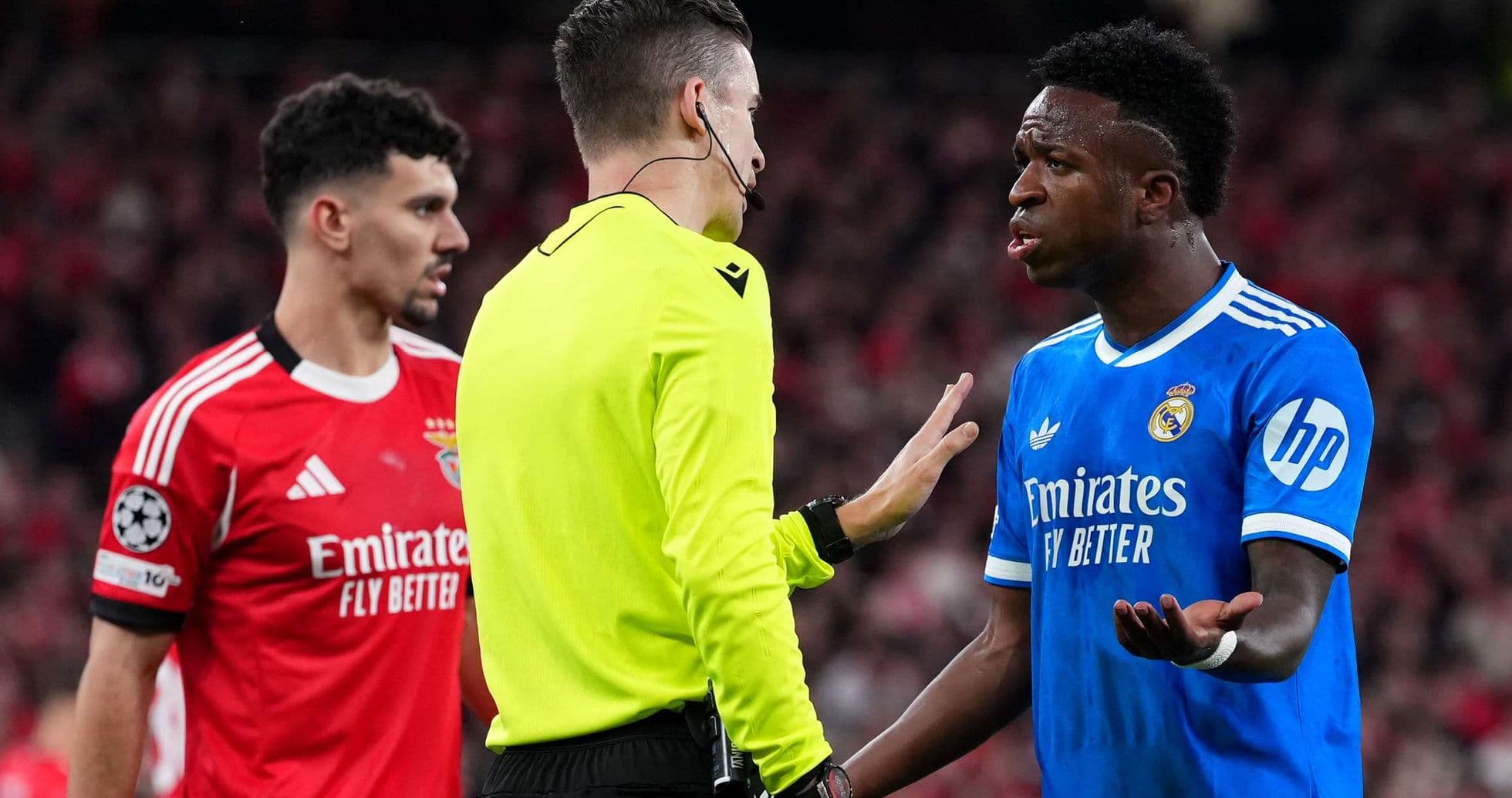
What had been a gripping contest was ultimately eclipsed by a disturbing flashpoint late in the second half. Just after scoring, Vinícius Júnior alleged that Gianluca Prestianni had subjected him to racist abuse, prompting referee François Letexier to implement UEFA’s three-step anti-racism protocol. The game was brought to a standstill for 11 tense minutes as players weighed up walking off and projectiles were thrown from the crowd. Amid the disorder, Benfica boss José Mourinho was shown a red card in the 86th minute after launching into an angry confrontation with the officials, leaving the “Special One” suspended from the sidelines for the crucial second leg at the Santiago Bernabéu.
Chasing the game, Mourinho reacted with a double substitution on 74'. Andreas Schjelderup made way for Georgiy Sudakov, adding fresh creativity in the attacking midfield band, while Rafa Silva was replaced by Richard Ríos, a midfield change that hinted at a search for different passing angles rather than pure attacking chaos.
Benfica’s urgency grew and so did their risk profile. On 78', Gianluca Prestianni was booked for simulation, a sign of the frustration creeping into the hosts’ play. Mourinho then adjusted his back line on 80', withdrawing Fredrik Aursnes and introducing defender Sidny Lopes Cabral, a move that suggested a reshuffle of roles rather than a straightforward defensive retreat as Benfica tried to push full-backs higher. One minute later, at 81', Prestianni departed and Dodi Lukebakio came on, an attacking switch aimed at adding directness and pace in the final third.
Arbeloa waited until the closing stages to touch his starting structure. On 86', Arda Güler was replaced by Brahim Díaz, a like‑for‑like midfield change to inject fresh legs between the lines. The tension spiked in the final minutes: Mbappé received a yellow card on 87', while Sudakov was cautioned for a foul at 90+2'. Arbeloa then added further defensive security in stoppage time, bringing on Dani Carvajal for Álvaro Carreras at 90+9' and earlier, at 90+4', replacing Eduardo Camavinga with Thiago Pitarch to reinforce midfield energy for the final defensive stand. Real Madrid saw out the remaining minutes to protect their slim advantage.
Statistical Deep Dive
Across the 90 minutes, Real Madrid controlled 58% of the ball, with Benfica conceding possession and looking for more selective attacks. That territorial edge was backed by cleaner passing: the visitors completed 549 of 621 passes (88%), significantly outstripping Benfica’s 355 of 443 (80%), which helped Arbeloa’s side manage the tempo after going ahead.
In attack, the difference was just as clear. Real Madrid produced 16 total shots to Benfica’s 10 and hit the target seven times versus the hosts’ three. The xG figures (1.11 for Real Madrid, 0.41 for Benfica) aligned closely with the final 1–0 scoreline, underlining that the visitors created the better quality chances while Benfica struggled to turn their limited openings into serious danger.
Discipline was relatively even. Real Madrid committed nine fouls to Benfica’s six, and both sides collected two yellow cards. The bookings for Vinícius, Mbappé, Prestianni and Sudakov illustrated a match that grew edgier as the stakes rose but never tipped into chaos.
Standings & Implications
For Benfica, ranked 24th with 9 points and a goal difference now stretched to -2, this defeat adds pressure to an already fragile Champions League campaign, especially given their record of five losses in eight matches. Their home form (previously two wins and two defeats) takes another dent, and they will likely need an away upset to overturn the deficit.
Real Madrid, sitting 9th in the overall table with 15 points and a +9 goal difference, reinforce their status as one of the competition’s most potent sides, now boasting 22 goals in eight matches. With two away wins already in this campaign, Arbeloa’s team carry both momentum and a valuable aggregate lead into the second leg.