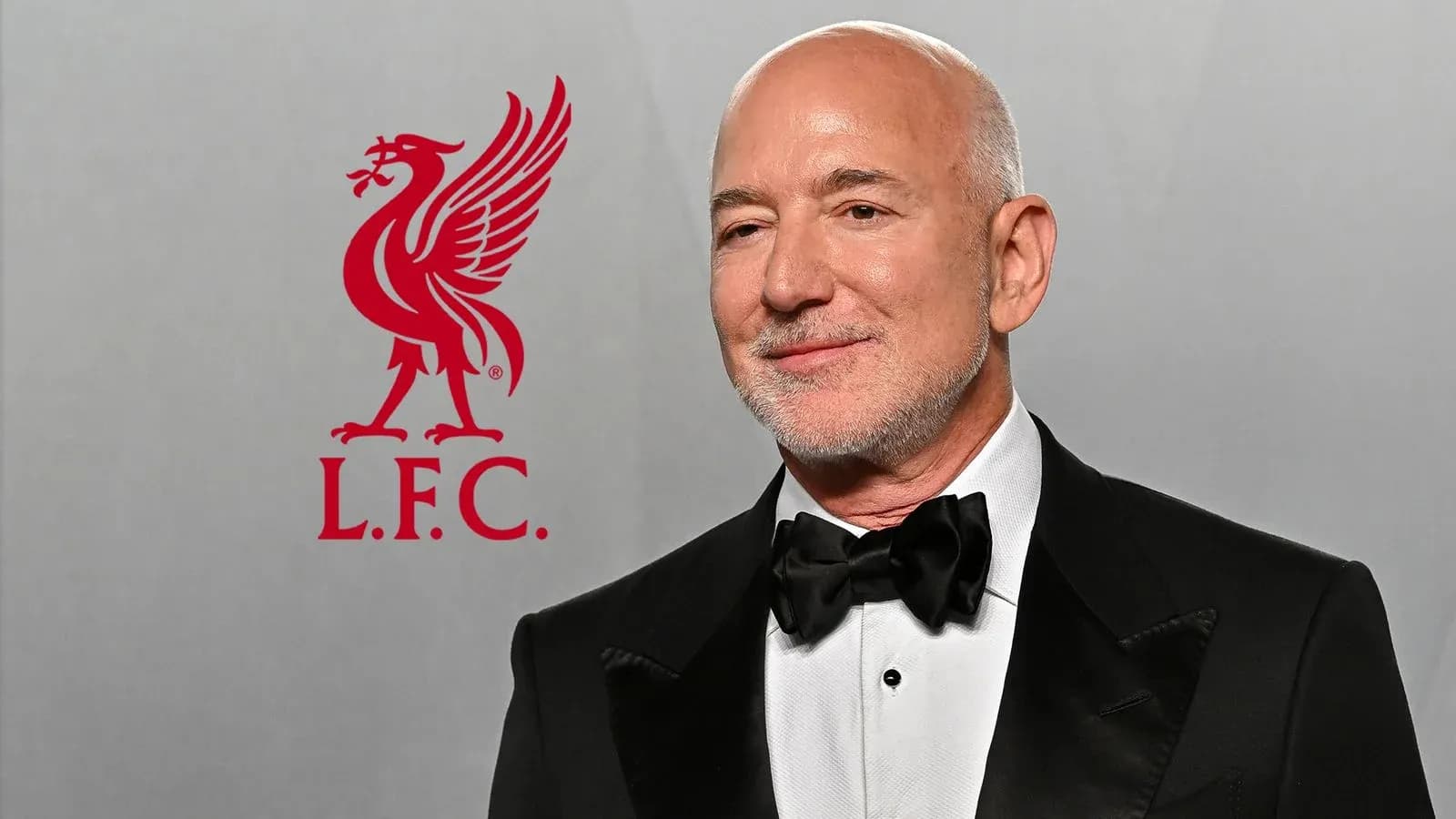
Bezos, Saverin, and Bhatia Near Liverpool Stake Deal
Liverpool are on the brink of welcoming some of the richest men on the planet into the Anfield boardroom, in a deal that would redraw the financial map of one of English football’s great institutions.
Sky News understands a consortium featuring Amazon founder Jeff Bezos is closing in on an agreement to buy roughly a one-third stake in Liverpool, with Fenway Sports Group (FSG) preparing to announce a transaction as early as this week. Those close to the process suggest the timing could slip into next week, but the direction of travel is clear: heavyweight money is moving towards Merseyside.
At the heart of the bid is Amit Bhatia, the British-Indian entrepreneur leading the syndicate. Bhatia, son-in-law of steel magnate Lakshmi Mittal and a former shareholder in Queens Park Rangers, fronts an investor group that includes Bezos and Eduardo Saverin, the Facebook co-founder.
If completed, the deal will value Liverpool at around £4.4bn ($6bn). That figure would rank among the richest transactions in football history and crystallise the extraordinary financial journey FSG has overseen since buying the club for just £300m in 2010, when Liverpool were in a precarious state off the pitch.
Three billionaires, one club
The numbers are staggering. Bezos, whose fortune Forbes estimates at over £207bn ($280bn), would instantly become one of the most powerful figures in the global football landscape. Saverin, worth more than £23.7bn ($32bn), adds another layer of tech wealth to a consortium already steeped in investment capital.
One insider has suggested the stake could edge beyond the previously floated figure, potentially nudging above 30 per cent. Even as a minority holding, that would install a trio of the world’s wealthiest individuals as co-owners of the Reds, alongside FSG.
The presence of such financial firepower will inevitably ignite speculation. A strategic minority investment today often looks like a stepping stone to outright control tomorrow. Expectations around long-term ownership will surge the moment the ink is dry.
For now, though, the structure is clear: FSG remains in charge, but with a new, deep-pocketed partner at the table.
Who is leading the charge?
Bhatia, 46, is no stranger to football or high finance. With an investment banking background, he currently runs AyBe Capital, a multi-asset investment firm with interests across technology, media, property and real estate, consumer retail, and health. His previous spell as a shareholder at QPR gave him a front-row seat to the realities of running an English club, albeit on a far smaller scale than Liverpool.
Bezos, by contrast, has never been seriously linked to a football deal before. His empire has stretched from Amazon, founded in a Seattle garage in 1994, to aerospace company Blue Origin and Nash Holdings, the vehicle through which he owns The Washington Post. Now, his prospective move into Liverpool underlines a growing truth: elite sport has become an asset class in its own right, a magnet for the world’s richest investors.
Saverin has already dipped a toe into Premier League waters. In 2022, he was part of a consortium that mounted an unsuccessful bid for Chelsea during the auction triggered by sanctions on Roman Abramovich after Vladimir Putin’s invasion of Ukraine. Liverpool would be a very different entry point – a club with stable ownership, a global fanbase, and a proven commercial machine.
FSG’s windfall and the next chapter
For FSG, this deal would be another validation of a long-term strategy. The group that also owns the Boston Red Sox took over a distressed asset and turned it into one of sport’s most valuable properties. A valuation of £4.4bn would underscore that transformation in stark, financial terms.
A stake last changed hands in 2023, when Dynasty Equity bought a small interest that valued Liverpool at more than £3.3bn ($4.5bn). The new consortium’s entry would mark a significant jump in just a short period, reflecting both the Premier League’s continued commercial surge and Liverpool’s enduring global pull.
Publicly, everyone is keeping their counsel. Liverpool and FSG have been contacted for comment but have so far stayed silent. Last month, an FSG spokesperson confirmed only that “an investment consortium led, managed, and represented by Amit Bhatia has expressed interest in making a strategic minority investment in Liverpool Football Club.” No further detail on timing was offered.
A spokesman for Bhatia’s group also declined to elaborate.
So the deal moves forward in the shadows, but the outline is now unmistakable: a historic club, a valuation at the very top of the sport, and a new cast of billionaire backers waiting in the wings.
If and when the announcement lands, Anfield will wake up to a new reality – one in which Liverpool sit not just among Europe’s traditional giants, but backed by some of the deepest pockets anywhere in the game.