Bodo/Glimt Stuns Inter with 3–1 Victory in Champions League
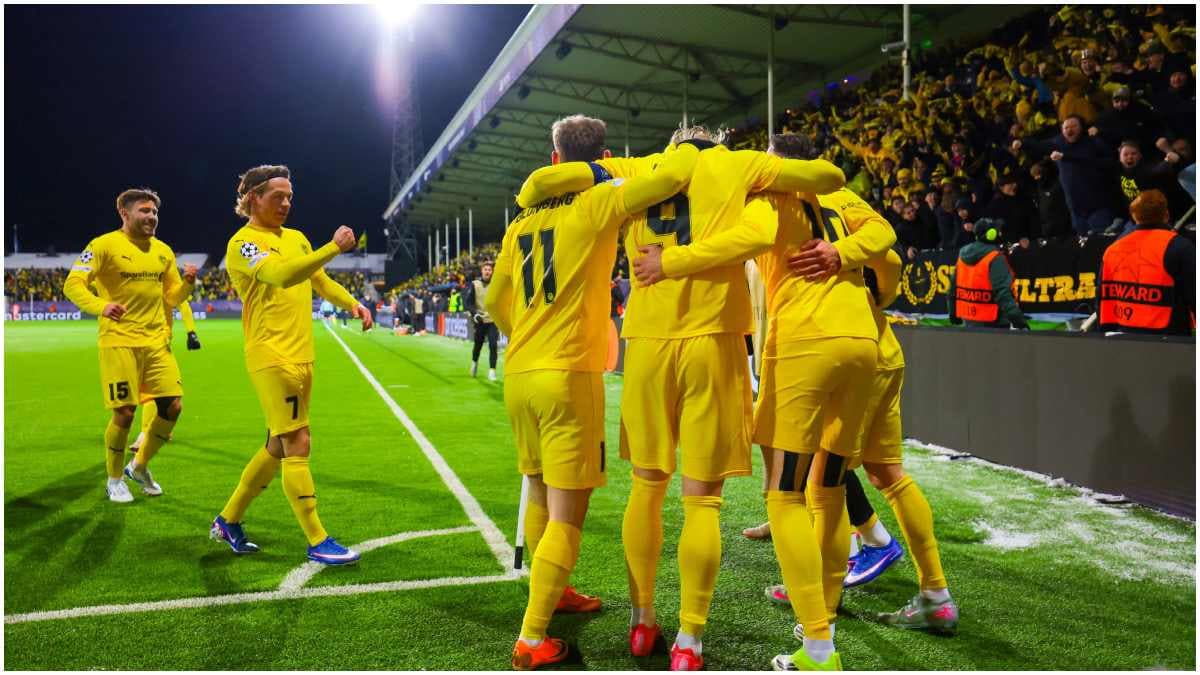
On a crisp Champions League night at Aspmyra Stadion in Bodo, Bodo/Glimt produced a statement 3–1 victory over Inter to seize control of their Round of 32 tie. With referee Daniel Siebert overseeing proceedings, the hosts overturned pre-match expectations through clinical finishing and disciplined organisation. Inter, higher in the overall Champions League standings, controlled more of the ball but were repeatedly punished in key moments. The result boosts Bodo/Glimt’s continental credentials and dents Inter’s otherwise strong campaign, potentially reshaping the dynamics of the knockout phase.
First-half analysis
The opening 45 minutes unfolded as a balanced contest, with Bodo/Glimt’s 4-3-3 under Kjetil Knutsen matching up against Cristian Chivu’s 3-5-2. The breakthrough came on 20', when Sondre Fet struck for the home side, finishing a move in which Kasper Høgh provided the assist. That early goal validated Bodo/Glimt’s intent to attack despite Inter’s technical superiority in midfield.
Inter responded on 30', restoring parity through Francesco Pio Esposito, set up by Carlos Augusto. The goal underlined Inter’s ability to create from wide areas and leverage their front two. The half’s only card arrived on 45', as Esposito went into the book for a foul, a sign of Inter’s growing frustration as Bodo/Glimt refused to be overrun. The sides went into the break at 1–1, the scoreline reflecting a half where neither team fully imposed themselves, but Bodo/Glimt showed a cutting edge that would prove decisive later.
Second half & tactical shifts
The second half swung dramatically in Bodo/Glimt’s favour, with key moments clustered around the hour. On 61', Chivu made his first move, withdrawing Lautaro Martínez and sending on Marcus Thuram, a like-for-like change designed to refresh the Inter frontline. Yet within the same minute, Bodo/Glimt struck: Jens Petter Hauge put the hosts 2–1 up, again with Høgh involved as provider. The timing was brutal for Inter, turning their attacking adjustment into an immediate setback.
Just three minutes later, on 64', Høgh capped his outstanding night by scoring Bodo/Glimt’s third, assisted by Ole Didrik Blomberg. At 3–1, the tie’s momentum had swung decisively towards the Norwegians, whose forwards punished Inter’s back three with ruthless efficiency.
Chivu reacted with a triple substitution on 76', removing Henrikh Mkhitaryan, Matteo Darmian and goalscorer Esposito, and introducing Piotr Zieliński, Luís Henrique and Ange-Yoan Bonny. It was a clear attempt to inject creativity and attacking thrust, with Zieliński offering fresh legs in midfield and Bonny and Luís Henrique reshaping the forward options. However, Bodo/Glimt’s structure held.
Discipline briefly flared on 77', when Blomberg was booked for a foul, but Knutsen immediately managed his side’s energy and risk. On 78', Blomberg made way for Sondre Auklend, while Høgh was replaced by Andreas Helmersen — sensible changes to preserve a key scorer and a cautioned winger. Late on 89', Knutsen further shored up his team: defender Jostein Gundersen was substituted for Haitam Aleesami, and Fet, already on the scoresheet, was replaced by Isak Dybvik Määttä, adding fresh defensive legs in midfield and at the back.
Inter’s final roll of the dice came on 89', with Nicolò Barella withdrawn for Andy Diouf, a midfield swap that added dynamism but came too late to alter the outcome. Bodo/Glimt saw out the closing stages with composure, protecting their two-goal cushion.
Statistical deep dive
Inter controlled 58% of the ball, leaving Bodo/Glimt with 42%, and the Italians also posted the sharper passing figures: 606 total passes at 87% accuracy, compared to Bodo/Glimt’s 452 passes at 81%. On pure possession and circulation, Inter appeared the more polished side. Yet the hosts translated their smaller share of the ball into far greater impact in both boxes.
Inter registered 15 total shots to Bodo/Glimt’s 8, with the visitors also leading in blocked efforts (4 to 1) and shots inside the box (13 to 7). Expected goals were narrowly in Inter’s favour, 1.35 to 1.17, suggesting the chance quality was relatively even, if not slightly tilted towards the Italians. However, Bodo/Glimt’s finishing was far more efficient: 6 shots on target produced 3 goals, compared to Inter’s 4 efforts on target yielding just 1. Both goalkeepers made 3 saves, underlining that the difference lay not in shot-stopping but in conversion.
In terms of discipline, Bodo/Glimt committed 12 fouls to Inter’s 6, each side receiving one yellow card. The higher foul count from the hosts points to a willingness to disrupt Inter’s rhythm, especially without the ball, and they managed that edge without crossing into red-card territory.
Standings & implications
In the broader Champions League picture, this win is a significant boost for Bodo/Glimt. Coming into the tie with 9 points, a -1 goal difference and ranked 23rd overall (2 wins, 3 draws, 3 losses, 14 scored and 15 conceded), they enhance both their points tally and goal differential, strengthening their push from the play-off positions. Inter, who started from a far stronger base — 15 points, +8 goal difference, 5 wins and just 3 defeats, ranked 10th — suffer a setback that could tighten the pack around them. For a side accustomed to controlling ties, this defeat in Bodo serves as a sharp warning that their margin for error in the knockout rounds is slimmer than the table had suggested.