Bottesford Town’s Journey to Special Olympics Gold
On a warm July evening in Scunthorpe, with England chasing their own World Cup dream an ocean away, a very different kind of football ambition was taking shape under the trees of a small town park.
No TV gantries. No roaring stands. Just the sharp thud of footballs on a 4G surface and the sound of instructions cutting through the shade.
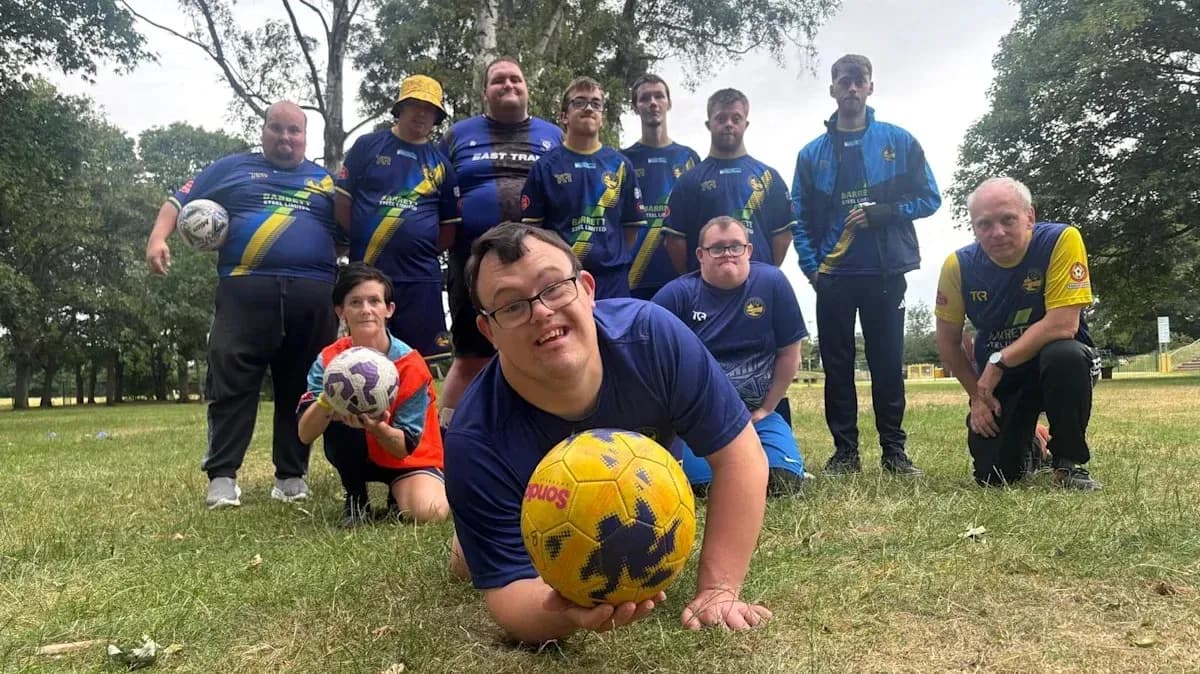
This was Central Park, North Lincolnshire, and a group of players with intellectual disabilities were being pushed through drills with one goal in mind: Special Olympics gold in Birmingham.
From small steps to national stage
The team began life at Bottesford Town Football Club around a decade ago, originally formed for young adults with Down's syndrome. Back then, the aims were modest: give them a place to play, a place to belong, and maybe help them grow in confidence.
It has become something much bigger.
The squad has expanded to include players with autism, ADHD and a range of learning disabilities. The faces are familiar, but the level is not. Those tentative early touches have turned into sharp passing routines, structured drills and a group that now trains like a team with something serious on the horizon.
That horizon is the Special Olympics GB National Summer Games at Alexander Stadium in Birmingham, running from 26 to 30 August. This time, Bottesford Town’s disability side arrive not as wide-eyed newcomers, but as genuine contenders.
They have history. In 2017, they came away with silver. That taste of success still lingers.
Jake’s corners and a golden target
Ask Jake how he feels about going to the Games and the answer comes quickly.
“I feel happy,” he says, before explaining his role with a quiet pride. He takes corners. Not just any corners, either. He talks about how to “wrap” the ball into the net, offering his own tips on technique.
He is not just going to Birmingham to make up the numbers. Having stood on the podium before, he has set his sights higher: two goals, and a gold medal.
Jake is one of around 1.5 million people in Great Britain living with an intellectual disability, a group Special Olympics GB exists to serve. The organisation runs sport year-round, in local communities, for people who often find mainstream pathways closed off to them.
On this pitch, those barriers fall away.
A mother’s push, a club’s embrace
Behind Jake’s journey lies a familiar story of persistence. His mum, Sue, has been there from the first session, the first fundraiser, the first away trip. Her other son, Aiden, also has disabilities and is now learning to coach the team.
She remembers how it started: a boy who loved football but could not quite fit into the mainstream game.
“My son Jake, he's got Down's syndrome and he loves playing football but struggled to play it mainstream,” she explains. “He found it too difficult and couldn't keep up with the team.”
So she went to Bottesford Town FC and asked for something different – a space where Jake and his friends could play the game on their own terms.
“For Jake to be able to play football was just such a big thing for him,” she says. “It's his passion. He loves football and he wanted to be able to play it.”
What began as a lifeline has become a community. Skills have improved, yes, but so have friendships. The squad is tighter, more confident, more vocal. The game has given them a language of their own.
“When your child is born and you find out they have a disability, it's a complete unknown,” Sue says. “But my commitment was always that my boys would access as much as possible in their lives.”
Bottesford Town have matched that commitment. Sue calls the club “amazing”, pointing to the sports hall used for training and the 4G pitch that allows them to play all year round. For this group, those facilities are not just nice-to-haves; they are the difference between dipping in and dropping out, between a hobby and a serious sporting journey.
Setbacks, sacrifice and £10,000 to find
The path to Birmingham has not been smooth.
The team were accepted into the Games in 2021. They trained, they dreamed, they planned. Then Covid-19 hit, and the event was cancelled. For players who rely on structure and routine, the impact was heavy.
“It set quite a few of them back. Jake was one of those who struggled,” Sue admits.
They had to rebuild momentum, rebuild confidence, rebuild habits. And then there was the money.
The biggest challenge, Sue says, has been raising £10,000 to cover travel and accommodation for two teams to compete at this year’s Games. Fundraising has underpinned everything: raffles, events, appeals. For many of the players, that total is the difference between watching the Games on a screen and walking out at Alexander Stadium themselves.
Training ramps up, belief hardens
Manager Michael Potts can see the change as the tournament nears. Sessions are sharper. Focus has hardened. The players know what is coming.
The training, he says, is “ramping up” and the squad is “excited”. Playing regularly on the 4G surface has helped them grow; the reliable pitch allows them to work on shape, movement and passing patterns without worrying about bobbles or mud.
As the team has widened to include players with a variety of intellectual disabilities, the coaching staff have had to evolve too. Sessions are tailored, instructions adapted, support adjusted. The aim is simple: give every player the tools to contribute.
A ‘rock solid’ defence and advice for England
At the back, Mason stands in goal. He does not hesitate when asked to assess his defence.
“Rock solid,” he says.
He has his own ideas about how to improve another back line as well. Asked what he would say to the England men’s team about tightening up at the back, he keeps it blunt: train hard, and make sure the goalkeeper concentrates on “throwing the ball out” properly.
This is a keeper who knows what pressure feels like. At his last competition, he saved a penalty. That moment has fuelled his own ambition. Like Jake, he wants gold.
Taylor, a defender who joined the team a decade ago, talks about steady progress in training. He has been part of this journey almost from the first whistle, seen the team grow from a small group into a squad heading to a national Games.
His message to others is consistent with the spirit of the group: train hard. On the pitch, he is thinking big, predicting he will score four goals.
Dreams under the trees
As the evening light fades and the park begins to empty, the players keep going, moving through drills with a mix of laughter and intensity. There is nothing tokenistic about this. The standards are real, the expectations clear.
From the path, you can see it in the way they press, the way they celebrate small wins in training, the way they listen when instructions come. Passion and professionalism, side by side, in a quiet corner of Scunthorpe.
Soon, they will swap this park for Alexander Stadium, the trees for stands, the training bibs for the colours they now proudly call their own.
The question is no longer whether they belong on that stage.
It is how many of their dreams will be realised when they get there.