World Cup Pause: Nostalgia, Nerves, and the Future of Football
The football has stopped for 63 hours, but nobody seems to have noticed. The World Cup may be on pause, yet the game is still rattling around people’s heads, in inboxes, pubs and half-formed arguments about formats and favourites.
This is what the final week of a World Cup looks like now: Messi and Maradona in the same breath, Jude Bellingham and Thomas Tuchel in the same sentence, Gianni Infantino looming over everything, and an England fan gambling on memories before the result is even known.
One fan, six kids, and a semi-final punt
The most striking story of the day doesn’t come from a dressing room or a press conference, but from a kitchen in England.
A supporter, Al Daw, took his mother to see England against Panama at MetLife Stadium in New Jersey for her 70th birthday. It poured all night, the vast arena felt like a concrete cell, but it didn’t matter. The World Cup had him hooked again.
A couple of weeks later, with England edging towards the business end and his life already full – five children, another due at the end of July – he did what football does to people: he ignored logic.
On Thursday, before England’s quarter-final result was even in, he booked semi-final tickets for himself and his eight-year-old son, Digby. Flights from Manchester to Atlanta via Paris. Hotel by the stadium. “Crackers pricing,” as he put it, but he pressed confirm anyway.
He watched the quarter-final through his fingers, his anxiety now measured not only in the scoreline but in the potential cost of a dead rubber trip. England got through. His voice has gone. His son can’t believe he’s about to watch England and, quite possibly, Lionel Messi’s last game for his country.
This is what the World Cup still does. It cuts through the spreadsheets and the cynicism and hands an eight-year-old a story he will tell for the rest of his life.
Pubs packed, tills quiet
Not everyone is cashing in on the tournament glow.
The Shovel Inn in Stourbridge, the town where Bellingham was born, should be thriving. A World Cup semi-final, a local hero turned global star, a reasonable kick-off time. Once, that combination would have guaranteed a packed house from mid-afternoon, pints lining tables long before the teams emerged.
Instead, owner Steve Hopkins is preparing to walk away after the tournament. He has been in pubs for six World Cups. Most were a licence to print money. This one has been different.
People are staying away, or drifting in at the last minute. The days of a pub filling at 3pm for an 8pm start feel distant. Where Hopkins once counted on doubling his trade during a World Cup, he is now hoping for a third of a good night’s takings. A strong evening might bring in around £3,000; he says if he hits £1,000 on semi-final night, he’ll consider it a result.
Covid changed habits. Home viewing, cheap supermarket beer, the ease of a sofa and a phone. The atmosphere that can’t be bottled or streamed is still there, but not enough people are willing to pay for it regularly. After decades behind the bar, Hopkins, now 64, has decided he’s had enough.
So the same tournament that sends one family halfway around the world to chase a memory is pushing a publican out of the trade. Football’s reach is as wide as ever; its economic impact is anything but simple.
France to beat – but who can actually stop them?
On the pitch, or at least in the collective mind, the conversation keeps circling back to France. Deep, ruthless, physically imposing, and with Kylian Mbappé prowling at full tilt, they look like the side everyone else has to solve.
Spain might be the best equipped. Rodri is beginning to resemble his pre-injury self, knitting their midfield together with that unhurried authority that makes chaos bend to his tempo. But they need more from Lamine Yamal. The teenager still doesn’t look fully right, and without his spark Spain’s attack loses a layer of unpredictability.
England have a different route. Their midfield could, in theory, outrun and outlast France’s, dragging them into areas they don’t enjoy, turning the game into a lung-busting contest of repeated transitions. The problem lies behind. Over 90 minutes, and maybe 120, their defence feels like it would eventually crack under sustained pressure.
Argentina? With Messi, they always have a puncher’s chance, but the concern is the same as it has been all tournament: not enough control in midfield, not enough grip on games against top opposition. At some point, even Messi needs a platform.
Stones, Messi and the defensive debate
That platform, and how to protect it, is why John Stones sits at the heart of an argument that refuses to go away.
As a footballer, his quality is beyond doubt. Comfortable on the ball, able to step into midfield, a key cog in the modern, possession-heavy approach. As an outright defender, the doubts persist. His lack of pace could be exposed by the sharp, relentless movement of Julián Álvarez and Lautaro Martínez. Tracking Messi, reading the little feints and pauses, demands a level of defensive nous that very few centre-backs possess.
It’s a harsh spotlight, but that’s the reality at this stage of a World Cup. Every weakness is a target. Every selection is a risk.
On the flanks, the choices are just as pointed. Djed Spence offers something different as an impact substitute: raw pace, direct running in behind, a physical test for tiring defenders. Against Argentina, Reece James looks the logical starter at right-back, with Nico O’Reilly likely on the left. On form and pedigree, Lewis Hall and Luke Shaw would normally be ahead of O’Reilly, but both are at home. Tournament football rarely gives you your ideal XI; it gives you what’s left and asks you to make it work.
Portugal’s wasted talent and Mourinho’s next act
If England and Spain are trying to fine-tune, Portugal feel like a supercar stuck in second gear.
Roberto Martínez has at his disposal a midfield that has twice conquered Europe at club level, with Bruno Fernandes stationed in front of them. It should be a platform for expressive, front-foot football. Instead, the team have looked dour, ponderous, strangely flat.
Leaving out Bernardo Silva or substituting Bruno early almost never feels like the answer. Bruno, in particular, is a player who needs time. He spends matches forcing angles, gambling on passes, repeatedly trying to break lines. Trim 20 minutes from his game and you trim a chunk of his chance to produce the decisive moment. Drop him too deep to collect from the back four and you blunt his threat before the ball even reaches the final third.
Against that backdrop, the idea of José Mourinho taking charge of this Portugal generation lingers. It will not happen now – Mourinho has been handed another turn at Real Madrid, a club betting they can revive old magic – but the thought persists: could he really have done worse than Martínez?
International management always seemed a natural landing spot for Mourinho by this stage of his career. Instead, he returns to the Bernabéu, a box-office appointment if not necessarily a guaranteed revival. A Netflix series on Mourinho is due next month, which feels fitting. Even when he’s not on the touchline, he sits at the centre of the story.
Bellingham, Tuchel and a row that shouldn’t last
Not every flashpoint is a crisis.
The recent exchange of words between Thomas Tuchel and Jude Bellingham has been painted as a potential fracture, but the reality is more mundane. Both are serious professionals, both are obsessed with winning, and both know they need each other.
Their comments came in the heat of a high-stakes moment, a cocktail of adrenaline and relief that has always made footballers and coaches say more than they mean. Once the noise dies down, relationships like that usually reset quickly. If there was a genuine rift at all, it is likely already cooling.
Infantino’s 64-team World Cup and the fight for shape
Hovering above all this is the shape of the tournament itself. Infantino’s push to expand the World Cup to 64 teams feels, on instinct, like another land grab, another attempt to squeeze more money out of an already bloated calendar.
Yet the argument is not entirely one-sided.
On paper, the gap between the 48th and 64th ranked nations in the world is not enormous. Bringing more of them into the World Cup does not automatically mean a procession of mismatches. It also opens the door to a cleaner group structure: four-team groups, top two only, no third-placed lifelines. More jeopardy, fewer dead games, no more 72 group matches just to eliminate 16 sides.
Expanded tournaments have already shown their upside at the Euros. New faces, different styles, fresh stories. Countries otherwise locked out of the elite party have brought colour and noise, enriching the experience for everyone else.
The concerns are real, though. Qualification, already long and often tedious, would stretch even further. And the logistics loom large. Stadiums, hotels, training bases, media facilities – the infrastructure demands for 64 teams are enormous. Without care, the pool of potential hosts shrinks to a handful of wealthy nations, the very opposite of the global celebration the World Cup is supposed to be.
So the game stands at another crossroads: more teams, more stories, more money, but also more strain. The instinct to resist anything Infantino proposes is strong. The practical case for change is harder to dismiss.
Messi, Maradona and the myth of the lone genius
In the middle of all this modern noise, the mind drifts back to Mexico 86. For some, that tournament is not just a memory but a permanent address.
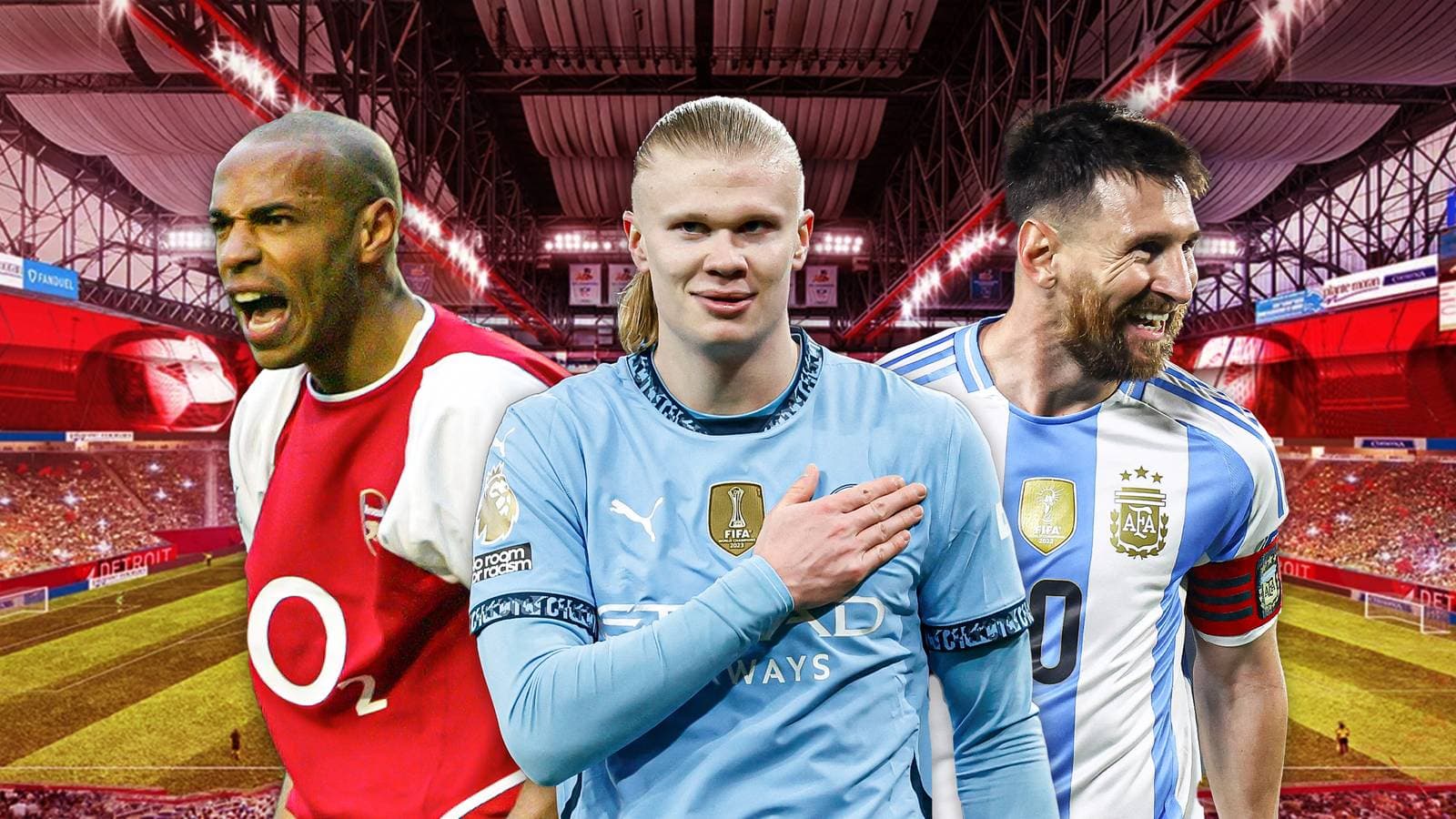
Diego Maradona’s second goal against England remains the moment that warped expectations of what footballers can do. As Barry Davies exclaimed, “you’ve got to say that’s magnificent,” a seven-year-old watching at home decided that “one bloke running around everyone on the other team” was simply part of the sport.
It wasn’t. It was Diego.
No one has done more to challenge the old truism that football is a team game. For a month in Mexico and the season that followed, when he dragged Napoli to their first scudetto, Maradona reached a level that still feels untouchable. Lionel Messi has a stronger claim to greatest of all time in terms of consistency and longevity, but it is hard to argue that anyone has ever burned brighter, for a concentrated period, than Maradona did then.
That is why the idea of this being Messi’s last World Cup match carries such weight. One era of genius feeding into the legacy of another, separated by generations but linked by the same impossible expectation: that one man can bend a tournament to his will.
A week without football, full of football
So here we are: no matches for 63 hours, yet barely a quiet moment.
Fans are booking semi-finals before quarter-finals are won. Publicans are wondering if this will be their last big tournament. Coaches are wrestling with whether to trust John Stones against Messi, or how long to leave Bruno Fernandes on the pitch. Infantino is plotting a 64-team future. Maradona still haunts the conversation every time Messi steps on to a World Cup stage.
The ball will roll again soon enough. When it does, all these threads – tactical doubts, structural arguments, economic realities, private gambles – will be dragged into the white heat of knockout football.
By the time the final whistle blows on this World Cup, we may not just know a new champion. We may know what kind of World Cup we’re heading towards next – and whether the game can grow without losing the very chaos and romance that keep people like Al Daw and his son chasing it across continents.