Cabo Verde Shocks Spain and Disrupts Betting Markets
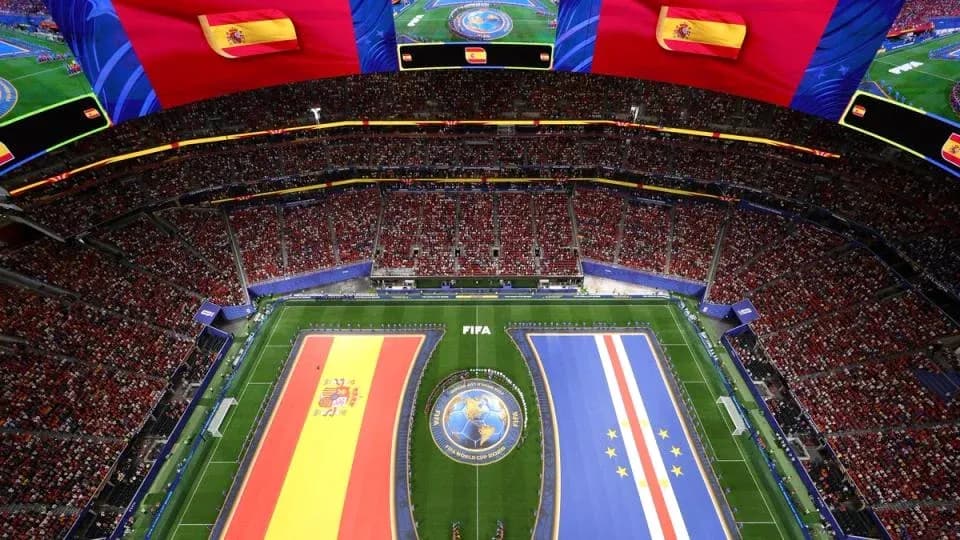
Spain were supposed to stroll this. World Cup debutants Cabo Verde were priced at 1:10 against before kick-off, a plucky footnote to the reigning European champions’ march through the group. Ninety tense minutes later, the scoreboard read 0-0, the favourites were jeered off, and a tiny island nation had just torn up the script – on the pitch and in the betting markets.
This was more than a famous point for Cabo Verde. It was a financial earthquake.
A World Cup shock with a crypto twist
On Polymarket, the crypto-based prediction platform that has turned football matches into live trading pits, the draw produced two of the wildest swings of the tournament.
One brand-new wallet, operating under the name “fishalive,” turned roughly $4 million into a profit of more than $9 million in a matter of hours, according to Polymarket data reviewed by CoinDesk and on-chain analytics from Lookonchain. On the other side of the same result, another user, “betoor619,” saw nearly $1 million vanish in a bet that was supposed to be as close to risk-free as it gets.
The numbers tell the story of just how lopsided this match looked before a ball was kicked. Spain, stacked with elite talent and armed with the swagger of European champions, were trading at around a 92% implied chance of victory. Cabo Verde, with no high-profile professionals and a 40-year-old goalkeeper, were treated by the market as little more than a formality.
The match refused to cooperate.
Vozinha’s night, Cabo Verde’s statement
On the grass, this was a heroic rearguard. Cabo Verde, playing in their first World Cup, dug in, chased everything, and leaned on their veteran goalkeeper Vozinha, who turned back Spain’s attacks and walked away with the player of the match award.
Every save, every clearance, every wasted Spanish chance nudged the odds a little further away from the pre-match narrative. For punters who had backed an upset or even just resistance, the tension grew with every minute the favourites failed to score. For those loaded up on a Spain win, the clock became an enemy.
The pressure finally told – not on the pitch, but in the market.
How $4 million became $13 million
“Fishalive,” a wallet created only this month, took a clear, aggressive stance against the giants. According to Lookonchain, the trader placed two big positions:
- That Spain would not win the match outright.
- That Cabo Verde would stay within 2.5 goals – a spread bet that covered a draw, a narrow defeat, or the unthinkable: a Cabo Verde victory.
When the final whistle confirmed the goalless draw, both bets cashed. The wallet redeemed about $4.7 million on the Spain market and roughly $8.5 million on the spread, based on its public trading record. In a single day, that meant a profit in the region of $9 million.
It was a gambler’s perfect storm: a massively favoured team failing to deliver, a debutant side refusing to fold, and a trader who had staked big on the upset not just being possible, but likely enough to justify the risk.
A million-dollar loss for a modest gain
The same match turned brutal for “betoor619.” Polymarket’s trading records, reviewed by CoinDesk, show the user staking almost $1.1 million on a Spain win when the market had them at about 92% to take the game.
The potential upside? Around $85,000.
It was the kind of position that looks safe until it isn’t – a heavy outlay for a thin reward, built on the assumption that giants do what giants usually do. When Spain failed to find a way through, that near-certain outcome evaporated. The loss, close to $1 million, dwarfed anything previously recorded on that account, which had never won or lost more than $9,000 on a single event.
The risk-reward equation, laid bare in one result.
Polymarket’s World Cup bonanza
All of this unfolded inside Polymarket’s growing ecosystem, where traders buy and sell shares tied to real-world outcomes, settling in USDC, a dollar-pegged stablecoin, on a public blockchain. Prices move like live odds, reflecting the crowd’s evolving belief in what will happen next.
On this single Spain match, about $64 million changed hands. Across the tournament, the platform’s World Cup winner market has drawn around $2.4 billion in volume, making it Polymarket’s biggest event since last year’s U.S. election and pushing it past the roughly $1.4 billion wagered on this year’s Super Bowl.
The stakes are not just emotional. They are structural. Traders operate through crypto wallets under pseudonyms, without the traditional background checks and identity verification that regulated sportsbooks impose. That anonymity has attracted users and critics alike, with lawmakers already questioning how such platforms fit into existing regulatory frameworks.
For now, though, the story is simpler: a minnow stood up to a powerhouse, a 40-year-old goalkeeper wrote his name into World Cup folklore, and a match that should have been routine turned into a case study in risk, reward, and the brutal honesty of markets.
Spain will regroup and move on. Cabo Verde will remember this night forever. And somewhere behind the pseudonyms, one trader is counting a life-changing win, while another is left to wonder how a “sure thing” slipped through their fingers.