Cagliari Shocks Atalanta in Serie A Clash
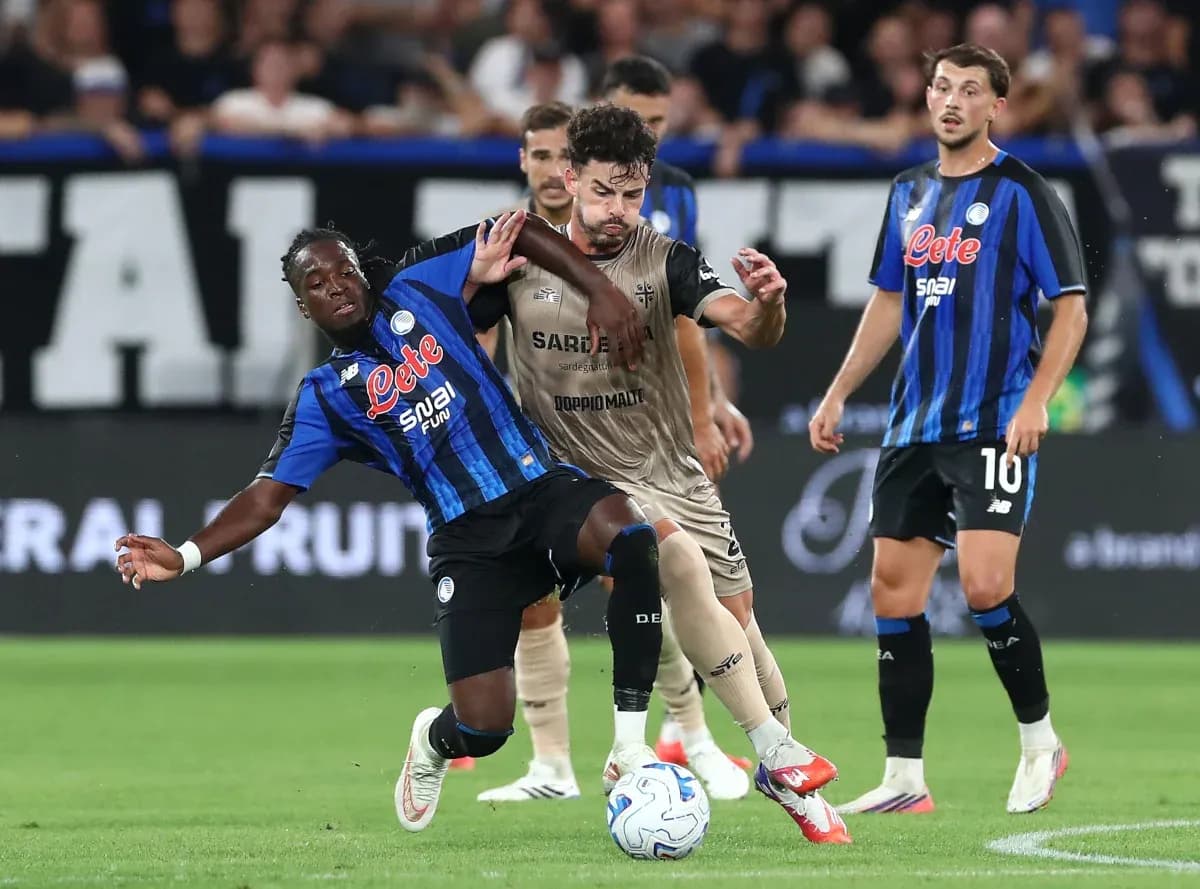
Under the Bergamo lights at the New Balance Arena, this Regular Season - 4 clash in Serie A ended with a jolt to the established order. Atalanta, reshaped under Maurizio Sarri and set up in a 4-3-3, were turned over 2-1 at home by a disciplined Cagliari side in a 4-4-1-1 under Fabio Pisacane. Following this result, the table snapshot is stark: Atalanta sit 11th on 6 points with a goal difference of 0 (5 scored, 5 conceded overall), while Cagliari climb in the early Champions League conversation in 4th on 9 points, their goal difference a tidy +2 (4 scored, 2 conceded overall).
The story of the evening begins with structural identity. Atalanta have leaned fully into Sarri’s positional 4-3-3: M. Carnesecchi behind a back four of R. Bellanova, O. Kossounou, G. Scalvini and S. Kolasinac, a midfield trio of L. Samardzic, F. Kessie and Ederson, and a fluid front three of C. De Ketelaere, G. Scamacca and J. Rowe. Heading into this game, Atalanta had played 4 league matches, all in this shape, scoring 5 goals overall at an average of 1.3 per game, with 4 of those at home at an average of 1.3. They had not failed to score once, and their home record – 2 wins, 1 defeat – suggested the New Balance Arena could become a fortress.
Cagliari arrived with a different kind of flexibility. Their season had already seen three formations – 4-2-3-1 (twice), 4-3-2-1 and now 4-4-1-1 – but the spine has been consistent. E. Caprile in goal; a back four of J. Pedro, A. Deiola, J. Rodriguez and A. Obert; a compact midfield line of M. Adopo, A. Romano, H. Winks and J. Fazzini; D. Maldini floating between the lines behind P. Mendy. Heading into this match, Cagliari’s defensive record was elite: only 2 goals conceded overall in 4 games, an average of 0.5 per match both at home and on their travels. Away from home they had been perfect – 2 wins from 2, with 3 goals scored and just 1 conceded.
The absentees shaped the tactical voids. Atalanta were without G. Gaetano (suspended after a red card), plus I. Hien and K. Sulemana through injury. Gaetano’s absence was particularly significant: his season to date had brought 1 assist, strong pressing numbers and, crucially, the red card that now removed him from Sarri’s rotation. Without him, creativity and counter-pressing from midfield had to be reallocated to Samardzic and Ederson, with Kessie asked to anchor and progress in equal measure.
Cagliari’s list of absentees was longer but more spread across roles: M. Felici and R. Idrissi (both knee injuries), M. Nzola (lacking match fitness) and Y. Trepy (injury). The front line, however, remained intact enough for Pisacane to build around Maldini’s movement and Mendy’s work rate. The bench, with options like A. Fadera, Kevin and R. Ciervo, still carried pace and direct running for the final half hour.
Discipline was an undercurrent even if the match itself avoided a meltdown. Atalanta’s season card profile before kick-off showed a late tendency to lose control: 50.00% of their yellow cards arriving between 61-75 minutes and another 50.00% between 76-90, with a red card coming in the 91-105 window. Cagliari, by contrast, spread their cautions more broadly, but with a notable spike between 46-60 minutes at 40.00%. Into that context stepped A. Deiola, already one of the league’s most combative defenders: 8 tackles, 4 interceptions and 4 successful blocks this season, but also 2 yellow cards. He walked the familiar tightrope again here as the physical reference point in Cagliari’s back line.
The key matchups defined the rhythm. In the “Hunter vs Shield” duel, Atalanta’s attacking trident – Scamacca’s penalty-box presence, De Ketelaere’s drifting between lines, Rowe’s direct running – ran into a Cagliari defence that had conceded just 1 goal on their travels. Atalanta’s own defensive record at home, 3 conceded in 3 with an average of 1.0, hinted at vulnerability that Maldini and Mendy could exploit on transition. The 1-1 half-time scoreline reflected that tension: Atalanta’s structured possession probing against Cagliari’s razor-sharp counters.
In the “Engine Room”, F. Kessie and Ederson were tasked with controlling H. Winks and M. Adopo. Winks, sitting as Cagliari’s metronome, and Adopo, one of Serie A’s early assist leaders with 2 in 4 appearances, formed a double axis: one to circulate, one to break lines. Adopo’s season numbers – 148 passes with 8 key passes at 86% accuracy – underpinned Cagliari’s plan to escape Atalanta’s press and release Maldini between Scalvini and Kossounou. Without Gaetano, Atalanta’s press lacked one of its most intelligent triggers, and that half-space just in front of their centre-backs became a recurring battleground.
On the flanks, Bellanova’s aggressive overlapping from right-back was meant to pin A. Obert and drag Cagliari’s wide midfielders deeper, but it also left channels for J. Fazzini and Maldini to counter into. On the opposite side, S. Kolasinac’s more conservative positioning tried to balance the back line against Mendy’s runs in behind.
The benches hinted at different late-game stories. Sarri could call on N. Krstovic, whose season so far shows 1 goal, 5 shots and a yellow card in 119 minutes, plus the guile of M. Pasalic and G. Raspadori. Cagliari’s depth was more about legs and structure: defenders like Y. Sugawara and G. Aurelio to protect a lead, and runners like A. Fadera or Kevin to stretch a tiring Atalanta back line.
In the end, Cagliari’s statistical profile told you this was no smash-and-grab. Their overall scoring rate of 1.0 per game, combined with that miserly 0.5 conceded, is the template of a side comfortable winning tight matches. Atalanta, by contrast, sit on a knife-edge: 1.3 goals scored and 1.3 conceded overall, a balance that turns on details in both boxes. This 2-1 away win fits perfectly into Cagliari’s emerging identity as an efficient, structurally sound unit that can bend but not break, while it leaves Sarri’s Atalanta searching for more defensive control and a new equilibrium in midfield without Gaetano.
Following this result, the tactical verdict is clear: Cagliari’s compactness, adaptability and midfield clarity allowed them to impose their game on their travels, while Atalanta’s attacking patterns remain promising but too easily undone by moments of transition and the absence of their suspended organiser in the middle of the pitch.