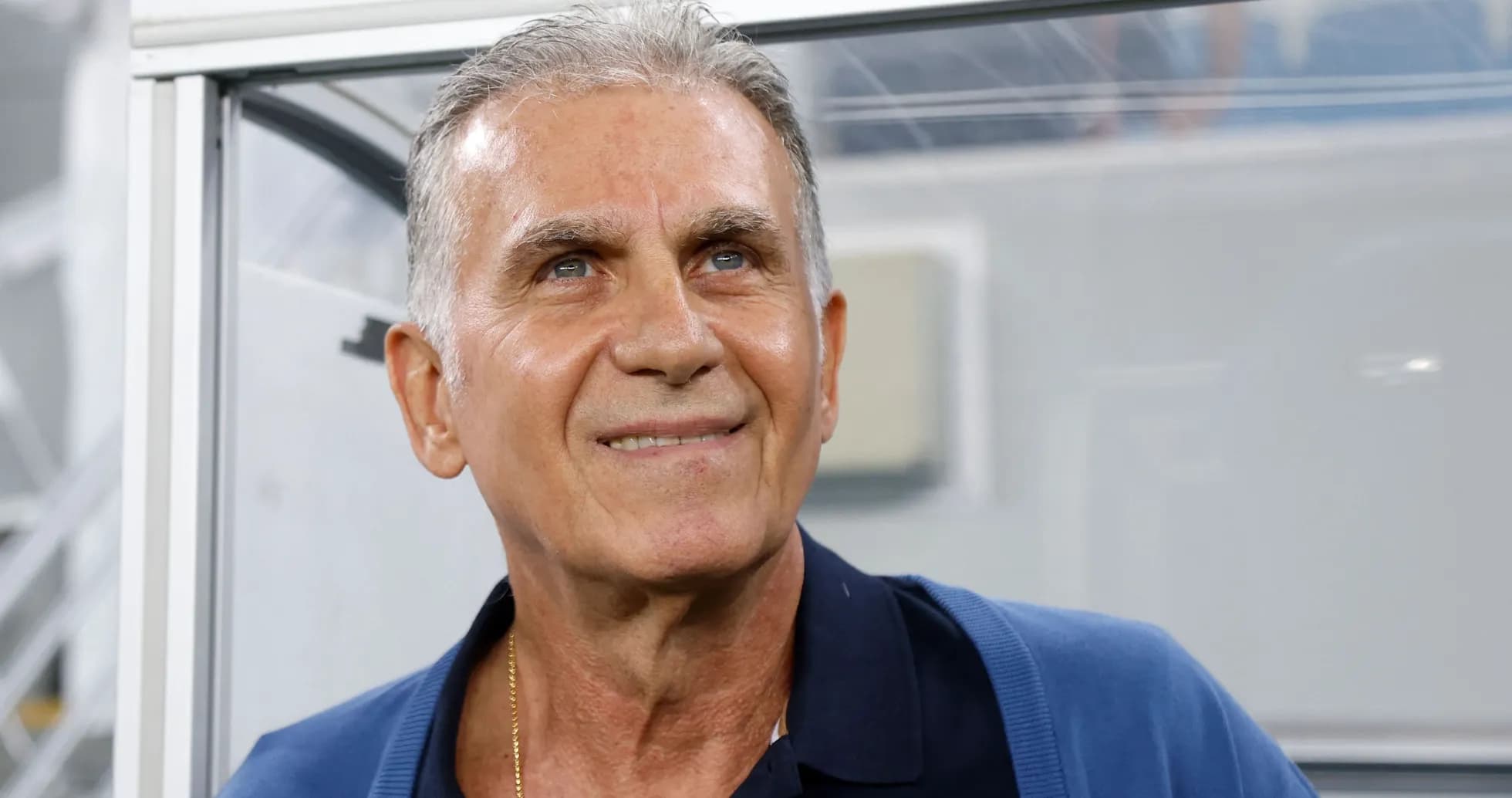
Carlos Queiroz Takes Charge of Ghana's World Cup Mission
Carlos Queiroz has walked into plenty of dressing rooms in his career, but Ghana have handed him something different this time: a rescue mission on the clock.
The Black Stars, bruised by four straight friendly defeats and the abrupt dismissal of Otto Addo, have turned to a 73-year-old who has seen almost everything the international game can throw at a coach. From Manchester to Madrid, Johannesburg to Tehran, Queiroz’s passport reads like a map of football’s pressure points. Now, it’s Accra.
Ghana gamble on a specialist for football’s biggest stage
The Ghana Football Association sifted through more than 600 applications before settling on Queiroz, a clear signal that this was never going to be a sentimental appointment. They wanted a World Cup specialist. They’ve hired one.
This will be his sixth World Cup as a head coach. He has taken South Africa, Portugal, and Iran to the tournament, guiding Portugal to the 2010 knockout stages and orchestrating that ruthless 7-0 dismantling of North Korea. With Iran, he built one of the most disciplined defensive units on the international scene across nearly eight years in charge.
Ghana’s decision is rooted in that pedigree. A squad that has just failed to qualify for the 2025 Africa Cup of Nations needs structure, certainty, and a clear idea. Queiroz has built entire national teams on exactly those pillars.
His contract is short-term, set to be reviewed after the World Cup, but the mandate is unmistakable: stabilise the Black Stars, restore belief, and make their fifth appearance on the global stage look like it belongs to a seasoned tournament nation, not a team stumbling into North America on the back of a slump.
A coach steeped in African and global experience
Queiroz is not walking into unfamiliar territory on the continent. He took Egypt to the AFCON final in 2022, navigating the emotional, tactical, and logistical demands that come with African football’s showpiece event. Before that, he had already led South Africa to a World Cup, adding another layer to his understanding of the unique pressures around African national teams.
The GFA, in announcing his appointment, leaned heavily on that history. They pointed to a CV that includes Real Madrid, Manchester United, Portugal, Iran, and national-team roles in Egypt, Oman, Japan, and Qatar. It is the résumé of a man used to short preparation windows, complex dressing rooms, and unforgiving tournaments.
Queiroz himself framed the job in stark, almost personal terms. “This is not just another job - it is a mission. And I am ready to give everything of my experience and knowledge once again, in service of the game and the happiness of people,” he said in an official statement via the GFA.
For a football nation still haunted by how close they came in 2010, that word – mission – will resonate.
Beating a strong field to the hot seat
The search for Addo’s successor lasted two weeks but carried the weight of a far longer debate about the team’s direction. Ghana did not lack high-profile suitors. Former West Ham manager Slaven Bilic was in the frame, as was two-time AFCON-winning coach Herve Renard.
Queiroz emerged from that group not as the glamorous outsider but as the proven tournament operator. The choice underlines where Ghana see their priorities: less about rebuilding over a long cycle, more about hitting the ground running before June 2026.
The GFA made the strategic aim explicit. “The former Real Madrid, Manchester United, Portugal, and Iran coach will lead Ghana’s campaign at the 2026 FIFA World Cup in Canada, Mexico, and the United States,” they confirmed, stressing that his wealth of experience is expected to “bear” directly on the World Cup campaign.
He starts immediately. There is no soft landing here.
Group L and a race against time
The task in front of him is brutally clear. Ghana are in Group L, alongside Panama, England, and Croatia. It is a section that punishes disorganisation. England and Croatia bring tournament know-how and technical quality; Panama will be desperate to scrap for every point. Any lapse in discipline could be fatal.
The opener against Panama at BMO Field on June 11, 2026, already looks like a must-win fixture if Ghana want to control their own path. Queiroz’s history suggests he will prioritise compactness, clear roles, and a collective mindset built on defensive resilience.
He will need buy-in fast.
Kudus, Semenyo and the spine of a new-look Black Stars
There is talent to work with. Mohammed Kudus, a Premier League star with the ability to unlock tight games, offers the sort of creative spark Queiroz has sometimes been accused of suppressing in favour of organisation. How he balances Kudus’s freedom with the structure he craves will be one of the defining tactical questions of Ghana’s tournament.
Antoine Semenyo brings power and direct running in attack, a profile that can thrive in a well-drilled, counter-attacking setup. Around them, Queiroz must identify a core group that can absorb his ideas quickly and carry them under the spotlight of a World Cup.
Upcoming friendlies against Mexico and Wales are no longer just tune-ups. They are auditions, stress tests, and perhaps the last chance to halt a worrying run of form before the world is watching.
The recent sequence of four consecutive friendly defeats cost Addo his job. It also stripped away any illusions about where this team stands. Queiroz steps into a dressing room that knows it is underperforming and a fanbase that demands more than brave exits and hard-luck stories.
Chasing the echo of 2010
Every major decision around Ghana’s national team still carries the echo of 2010. The quarter-final run in South Africa, the heartbreak against Uruguay, and the sense that the Black Stars were on the cusp of something era-defining continue to shape expectations.
This appointment is framed against that backdrop. The mission is not just to qualify – that box is already ticked – but to show that Ghana remain a force capable of going deep into a World Cup, of standing toe-to-toe with the established powers.
For that, Queiroz must do what he has so often done: impose tactical discipline, sharpen the team’s mentality, and turn fragile promise into hardened competitive edge.
He has the experience. He has the stage. He has very little time.
The question now is whether the veteran architect of so many World Cup campaigns can build one more run – this time in black and gold – that lives up to a nation’s restless ambition.