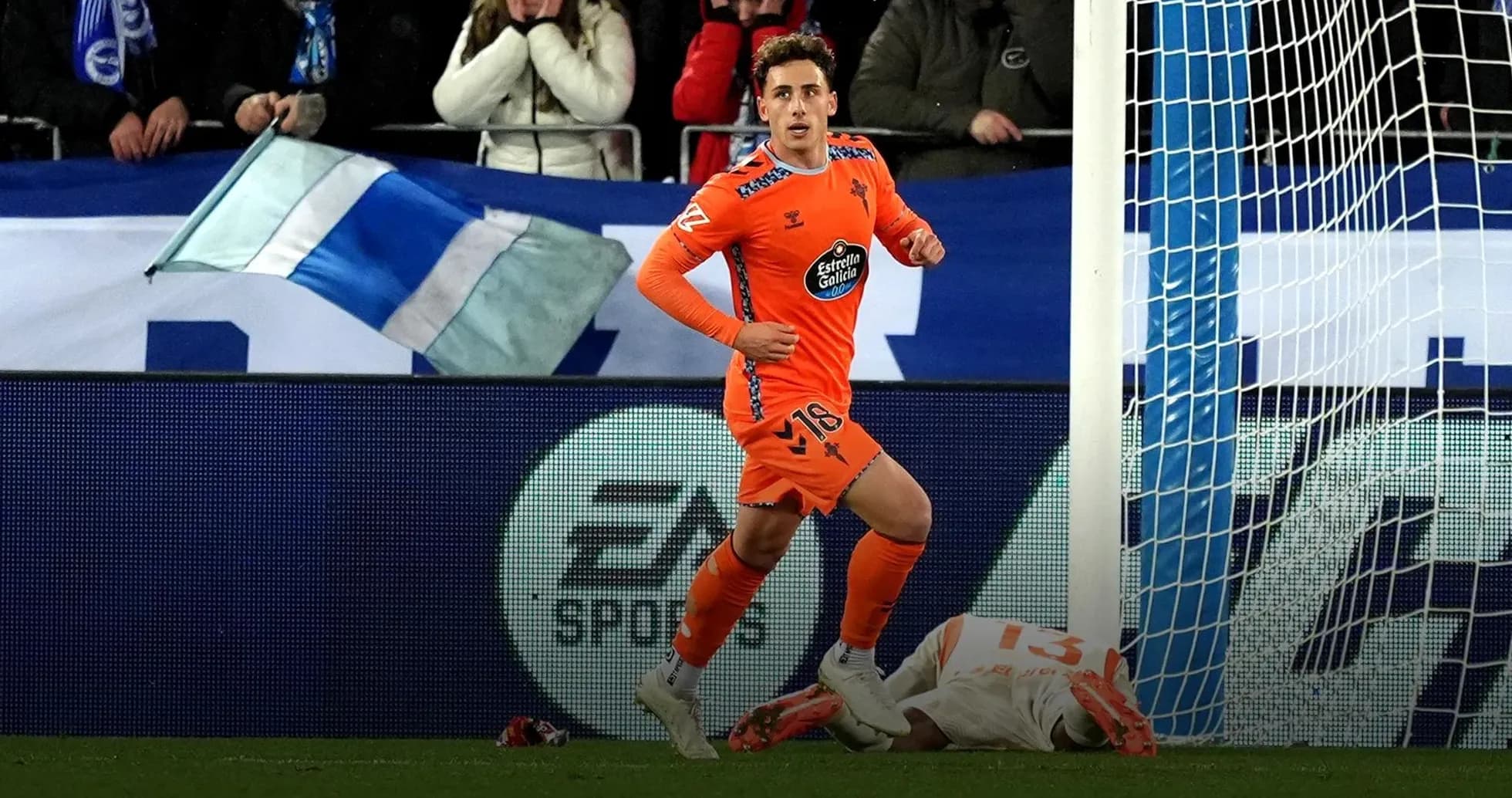
Celta Vigo's 3-4 Defeat to Alaves: A Tactical Analysis
At Estadio Abanca Balaídos, Celta Vigo lost 3–4 to Alaves in a dramatic La Liga Regular Season - 29 fixture, despite leading 3–1 at half-time. Celta’s aggressive 3-4-3 and 55% possession produced an early avalanche of chances and three goals inside 37 minutes, but they failed to manage the game once Alaves adjusted. Quique Sánchez Flores’ side, in a 4-4-2, transformed the second half through structural and personnel changes, turning near-parity in xG (1.84 vs 1.83) into a ruthless four-goal return, while Celta’s attack stalled and their defensive line lost control of depth and transitions.
Scoring Sequence & Disciplinary Log
Celta’s front three immediately exposed Alaves’ back four. On 19', F. Jutgla finished a move created from the right, assisted by wing-back J. Rodriguez (shirt 32), exploiting the channel outside V. Parada. Alaves’ first booking followed quickly: on 22', Jon Pacheco (shirt 5) was shown a yellow card for a foul, a sign of the visitors’ growing stress against Celta’s rotations.
The hosts doubled their lead on 27', when H. Alvarez (23) struck after a combination with Jutgla, who dropped off the line to link play. Celta’s dominance peaked at 37': Jutgla scored again, this time assisted by central midfielder H. Sotelo (22), making it 3–0 and seemingly killing the contest.
Two key moments closed the half. On 45', T. Martinez (11) pulled one back for Alaves, assisted by A. Perez (7), punishing Celta’s high line in transition to make it 3–1. Then, at 45+3', Celta defender Javi Rodríguez (32) received a yellow card for a foul, underlining how Alaves had begun to drag the game into more direct, duelling territory.
Alaves’ tactical reset came immediately after the break. At 46', D. Suarez (4) (IN) came on for C. Alena (10) (OUT), I. Diabate (22) (IN) for L. Boye (15) (OUT), J. Guridi (18) (IN) for P. Ibanez (19) (OUT), and A. Rebbach (21) (IN) for J. Pacheco (5) (OUT). These four substitutions radically altered the visitors’ midfield and attacking structure.
The impact was swift. On 50', A. Perez scored, assisted by T. Martinez, narrowing it to 3–2 and confirming Alaves’ growing control of transitions. Celta responded with a double change on 54': S. Carreira (5) (IN) for A. Nunez (14) (OUT) and Fer López (8) (IN) for O. Mingueza (3) (OUT), attempting to stabilise the right side and refresh central energy.
Fer López’s intensity came with risk; on 65', he received a yellow card for a foul, Celta’s second booking. On 69', J. Rueda (17) (IN) replaced B. Iglesias (7) (OUT), and P. Duran (18) (IN) came on for J. El Abdellaoui (39) (OUT), changes that further disrupted Celta’s original attacking structure.
Alaves completed the turnaround through their substitutes and wide players. On 74', T. Martinez scored again, this time assisted by A. Rebbach, levelling at 3–3. Just four minutes later, on 78', Rebbach himself scored, assisted by left-back V. Parada (24), making it 3–4 as Celta’s left side collapsed under repeated overloads.
Celta’s final roll of the dice came on 82', when I. Aspas (10) (IN) replaced centre-back J. Aidoo (4) (OUT), a shift towards a desperate attacking posture that further exposed their rest defence. In stoppage time, Alaves added their second yellow: Denis Suárez (4) was booked for a foul on 90+4'. In the same minute, V. Koski (16) (IN) replaced T. Martinez (11) (OUT), a late defensive move to protect the lead.
Final disciplinary totals: Celta Vigo two yellow cards (Javi Rodríguez 45+3', Fer López 65'); Alaves two yellow cards (Jon Pacheco 22', Denis Suárez 90+4').
Tactical Breakdown & Personnel
Celta’s 3-4-3 was built to dominate the ball and pin Alaves back. With three centre-backs (C. Dominguez, J. Aidoo, J. Rodriguez) and a four-man midfield line, they created a stable 3+2 build-up: H. Sotelo and A. Nunez acted as central pivots, while J. El Abdellaoui and O. Mingueza provided width and underlaps. The front three of H. Alvarez, B. Iglesias, and Jutgla stretched the Alaves back four horizontally, allowing Jutgla to drop into pockets.
This structure explains Celta’s 55% possession, 505 passes at 87% accuracy, and 9 shots inside the box. They consistently created overloads on the right through J. Rodriguez advancing from the back three, which directly produced the 19' opener. Their 4 blocked shots reflect sustained pressure against a compact box, but their expected_goals of 1.84 versus 3 actual goals highlights clinical finishing rather than relentless high-quality chance creation.
Defensively, the same high line and aggressive wing-backs that enabled Celta’s dominance also created vulnerability. With only two central midfielders screening and wide centre-backs often pulled into wide zones, transitions through the channels behind J. Rodriguez and C. Dominguez became a recurring problem. Once Alaves raised their tempo and verticality, Celta’s rest defence was repeatedly exposed, especially after shape-disrupting substitutions.
Alaves’ initial 4-4-2, with C. Alena and A. Blanco in central midfield and A. Perez and P. Ibanez wide, struggled to control central spaces and stop Celta’s rotations. Their 16 fouls and Jon Pacheco’s early yellow card reflect a reactive, last-ditch defensive phase in the first half. However, their basic attacking pattern—direct balls into T. Martinez and L. Boye, with wide midfielders running beyond—foreshadowed the comeback.
The second-half transformation hinged on the 46' quadruple substitution. D. Suarez added control and vertical passing from midfield, J. Guridi gave extra work-rate and late runs, while A. Rebbach and I. Diabate injected pace and 1v1 threat. With Pacheco off, Alaves shifted from a conservative back line to a more aggressive, front-foot posture, using their wide players to attack the spaces behind Celta’s wing-backs.
The statistical profile underlines the shift: Alaves finished with more total shots (14 vs 12), more shots on goal (6 vs 5), and more shots inside the box (10 vs 9), despite less possession and fewer passes (404 at 82% accuracy). Their 1 blocked shot versus Celta’s 4 shows that when Alaves attacked, they reached clearer shooting positions, especially in the second half, often in transition with minimal defensive pressure.
Goalkeeper impact was limited on both sides. I. Radu made 2 saves for Celta, as did A. Sivera for Alaves. With both teams registering similar xG (1.84 for Celta, 1.83 for Alaves) and goals_prevented at 0 for each, this was not a match defined by extraordinary goalkeeping, but by finishing and structural imbalances.
The decisive factor was Alaves’ exploitation of Celta’s increasingly fragile structure. Once Celta removed A. Nunez and Mingueza, and later Aidoo for Aspas, their 3-4-3 morphed into an unbalanced, attack-heavy shape with insufficient protection for the back line. Alaves repeatedly isolated Celta’s wide centre-backs and targeted the full width, especially through A. Perez and V. Parada combining with T. Martinez and Rebbach. The 74' and 78' goals encapsulated this: wide overload, vertical run, and a finish against a stretched, undermanned defensive block.
The Statistical Verdict
On raw numbers, this was an almost even game: Celta’s xG 1.84 versus Alaves’ 1.83, identical goalkeeper saves (2 each), and similar passing accuracy (87% vs 82%). Yet Alaves converted their chances with far greater efficiency, scoring four times from 6 shots on target, compared to Celta’s three from 5.
Celta’s 55% possession and higher pass count (505 vs 404) reflected territorial control but not sustained second-half threat. Their 4 blocked shots suggest Alaves protected their box better, while Alaves’ 10 shots inside the area point to superior exploitation of central and half-space channels once the game opened up.
Discipline was balanced—two yellow cards each—but context matters: Jon Pacheco’s 22' booking came amid early Celta dominance, whereas Denis Suárez’s 90+4' yellow arrived with Alaves in full control, simply managing the final minutes. Celta’s own bookings—Javi Rodríguez at 45+3' and Fer López at 65'—mirrored their growing defensive stress.
In synthesis, Celta’s structured, possession-heavy 3-4-3 produced a commanding 3–0 platform but lacked in-game defensive adaptability. Alaves, through bold half-time changes and a more vertical, wing-driven 4-4-2 variant, maximised almost identical underlying numbers to engineer a high-impact, four-goal comeback.