Celtic's Champions League Collapse: McGregor's Fury and Team's Implosion
Callum McGregor has worn just about every kind of European humiliation Celtic can offer, but rarely has he sounded like this.
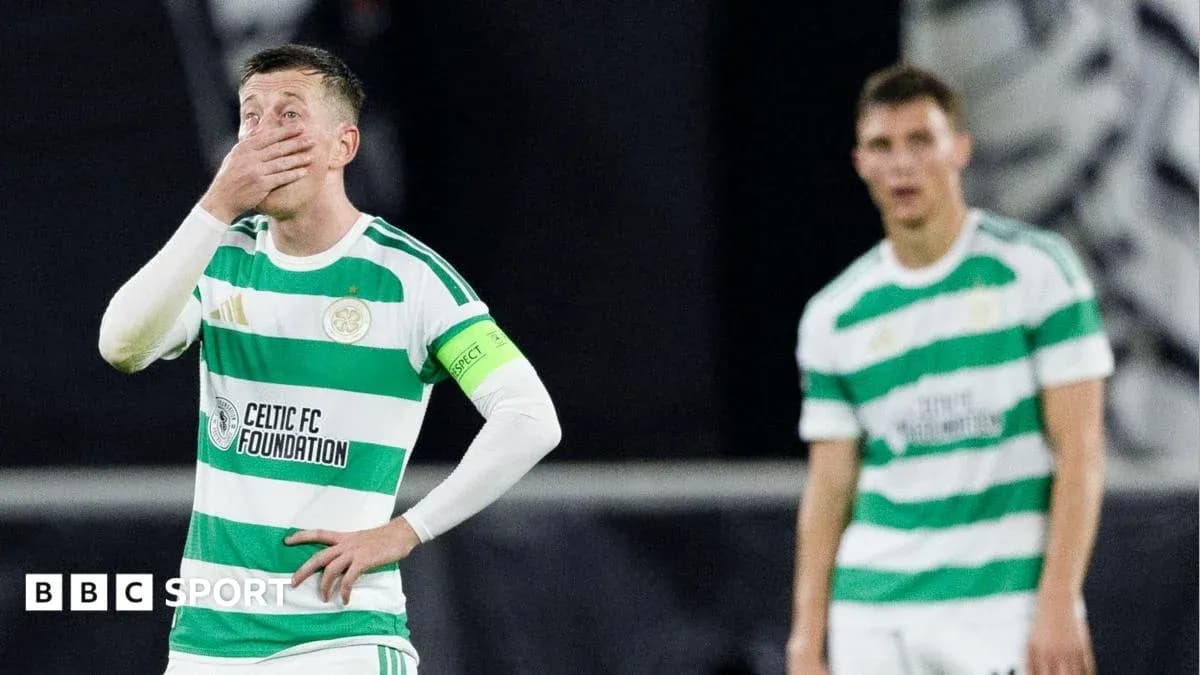
After LASK turned a 4-0 aggregate deficit into a 5-1 win on the night and a place in the Champions League group stage at Celtic’s expense, the captain did not bother with diplomacy. He called his own teammates “passive” and “scared” – while they were still 4-0 up on aggregate.
For a player who has lived through Barcelona, PSG, Atletico Madrid and Borussia Dortmund thrashings, for a man who has trudged off after exits to Kairat Almaty, Midtjylland, Ferencvaros, AEK Athens and Cluj, this felt different. This was not just another sore one. This was an implosion.
A captain’s fury
McGregor has been Celtic’s constant for the best part of a decade. Medals, yes. Memories, plenty. Scars, even more.
He was there when Celtic failed to score in 210 minutes against Kairat before missing three of five penalties in the shootout. He was on the pitch for 7-1 against Dortmund, 6-0 against Atletico, 7-1 against PSG, 7-0 against Barcelona. He has seen play-off hopes die in Denmark, Greece, Romania and Hungary.
Yet in Linz, after another collapse, he was as cold and cutting as he has ever been.
There was no rant, no raised voice. McGregor spoke quietly, which only sharpened every word. “Scared” is not a description from a pundit or a headline writer. It came from the man wearing the armband, the one player who has earned the right to judge what went on out there.
He had started the night like a leader too. His deflected strike made it 1-0 on the evening, 4-0 on aggregate. LASK had already shown menace in Glasgow and again in the early minutes in Austria, but that goal looked like the punch that would finally empty their lungs.
Four down over the tie, chances missed, time slipping away. Most teams fold. LASK did the opposite.
From control to chaos
Celtic invited them back. Painfully.
The first crack came from Benjamin Nygren. His slack, almost casual pass gifted LASK their first goal of the night after 32 minutes. Suddenly, at 4-1 on aggregate, Celtic looked uneasy. It sounded absurd, but the tension was real.
Three minutes into the second half, the wobble turned into something darker. Auston Trusty was brushed aside in a duel he had to win. LASK scored again. 4-2 now, and the Austrian side could smell panic.
Trusty struggled, but he was not alone. LASK targeted his side relentlessly and Celtic never found a way to protect him.
Ten minutes later, the third goal arrived. By then, too many in green and white were playing with fear, shrinking as the volume rose around them. What had been a slow bleed became a rush.
Camilo Duran, the star of the first leg, vanished from the contest. Kasper Hogh ran and chased, but with no real effect. Passes flew astray, attacks broke down, and Celtic lost any sense of structure. This was a team in retreat, not a side protecting a commanding lead.
McGregor tried to hold it together, barking orders, demanding calm. He could not cut through the anxiety that had gripped his teammates.
On the touchline, Martin O’Neill looked like a man living one of the worst nights of his career. He later called it exactly that and took responsibility, but he was far from the only one at fault.
He emptied his bench, five changes in 12 frantic minutes. Nothing changed. Celtic did not register a single shot on target in the second half or in extra time. In a £40m match, they were reduced to clinging on like a man hanging from a cliff edge, fingers slipping.
There was only one way this could end.
Overrun and exposed
LASK’s fourth, deep in the 90th minute, felt inevitable. By then they had rained 33 shots at the Celtic goal, on their way to 40 attempts on the night. Add the 20 they had in Glasgow and the scale of the onslaught becomes brutal.
Cameron Carter-Vickers was limping, Hogh too. Celtic tried to resist the waves with a makeshift back four of Anthony Ralston, Dane Murray, Trusty and Liam Scales. For a club chasing Champions League money and credibility, that image will linger.
The fifth goal felt like a mercy killing. This time it was Luke McCowan who erred, another Celtic player making the wrong decision in the wrong area at the worst possible moment. Nygren, Trusty, McCowan – three individual mistakes, one collective collapse. Out of the Champions League again.
The game drifted to its conclusion. LASK even missed a penalty that would have made it 6-1. Then Miguel Freckleton, recently of St Mirren, slalomed through Celtic’s defence and almost scored himself. In those few minutes he looked like a serious attacking force. The truth is, Celtic made him look that way.
By the end, Celtic were beyond disorganised. They were spooked, out-muscled, out-fought and out-played. The slick, ruthless side that dazzled at Celtic Park a week earlier now looked like a mirage, something that had disguised deep psychological frailties.
Nobody saw them disintegrating from 4-0 up. Yet they did.
Old lessons, still unlearned
The shortcomings are not exactly a mystery.
Celtic still lack a reliable back-up to Kieran Tierney at left-back. They know it. Everybody knows it.
They are crying out for a physical presence in midfield, a player with stature and steel, someone who would not be bullied as they were in Austria. That profile has been talked about all summer. It has not arrived.
There have been some smart signings, but not enough of them. The club sits in net profit on transfers in a year when Champions League qualification was worth around £40m. When you finish a tie of this magnitude with a back four of Ralston, Murray, Trusty and Scales, the recruitment strategy stands naked.
The financial damage of another failure is obvious. The hit to Celtic’s self-worth might be even greater.
They thought the days of going back to the Champions League drawing board were over. They believed the era of Kairat, Midtjylland, Ferencvaros, Cluj and AEK Athens was a bad memory, not a recurring theme.
Now another name joins that list. And McGregor, medals in one hand and scars in the other, is left asking the same question as every Celtic supporter: how many times can a club relive the same nightmare before it finally changes who it is?