Champions League Controversy: Bayern Munich vs. PSG Handball Incident
The handball that lit the fuse on a Champions League classic left Bayern Munich furious, Paris Saint-Germain ruthless and the law book once again under the spotlight.
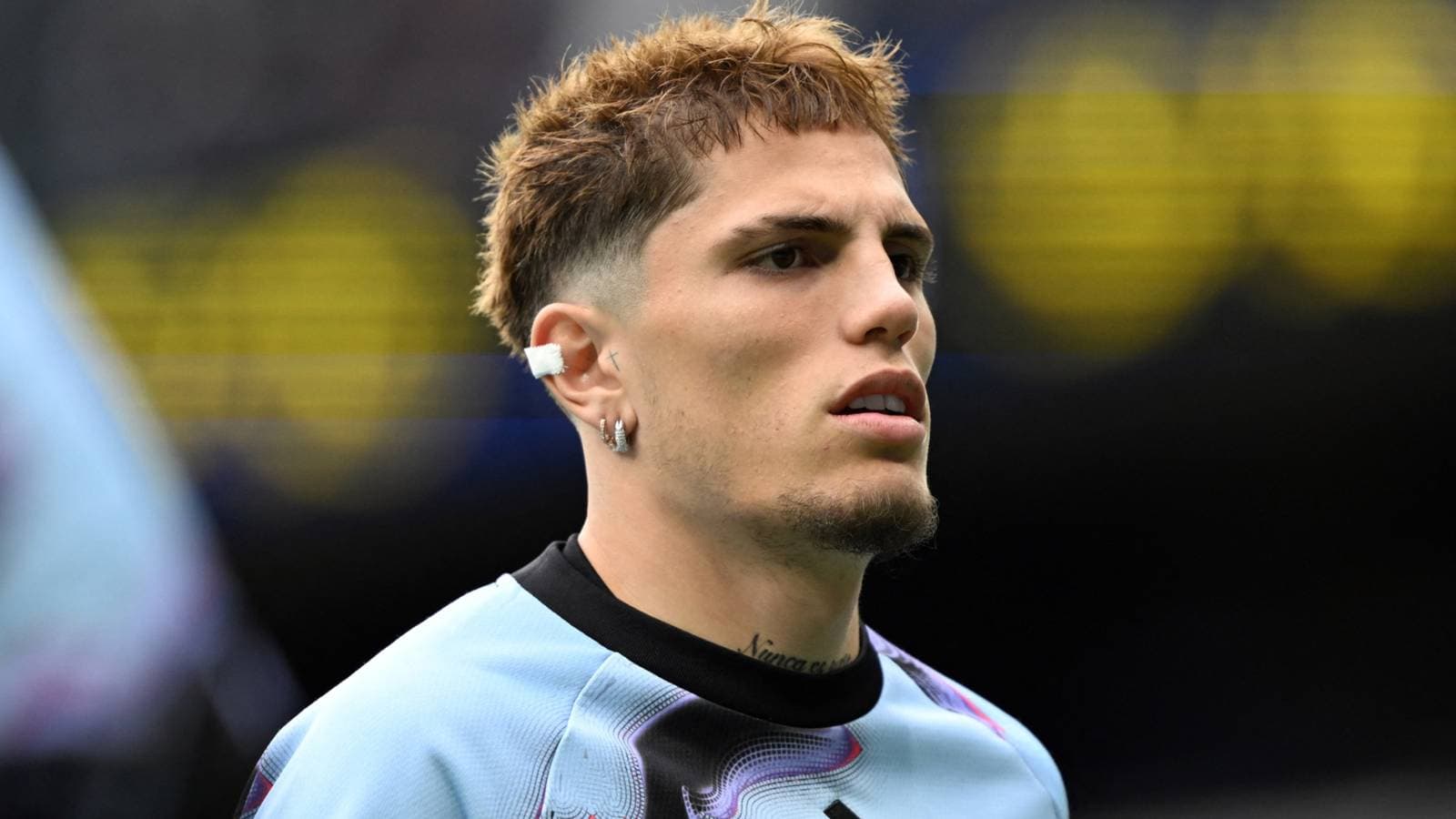
Midway through a breathless semi-final first leg, Alphonso Davies threw himself in front of an Ousmane Dembélé cross inside the Bayern box. The ball cannoned off his hip from close range, then flicked up onto his left hand. No time to react, no hint of intent. Play went on.
Then came the familiar pause.
Video assistant referee Carlos del Cerro Grande signalled for a review, referee Sandro Schärer jogged to the monitor, and the temperature in the stadium dropped a notch. Moments later, his decision went the way that now feels almost inevitable in modern football: penalty.
A law applied to the letter – and still in dispute
From a pure refereeing standpoint, the call found prominent backing. Leading referee analyst Lutz Wagner saw no grey area in the images.
“The left arm extends and increases the defensive surface area. The left arm comes out and increases the blocking surface. In my view, it is definitely a punishable handball because the body surface area is widened. Based on these images, the decision was correct,” he argued, leaning firmly on the current interpretation of the law.
On the pitch and in the Bayern camp, the mood was very different.
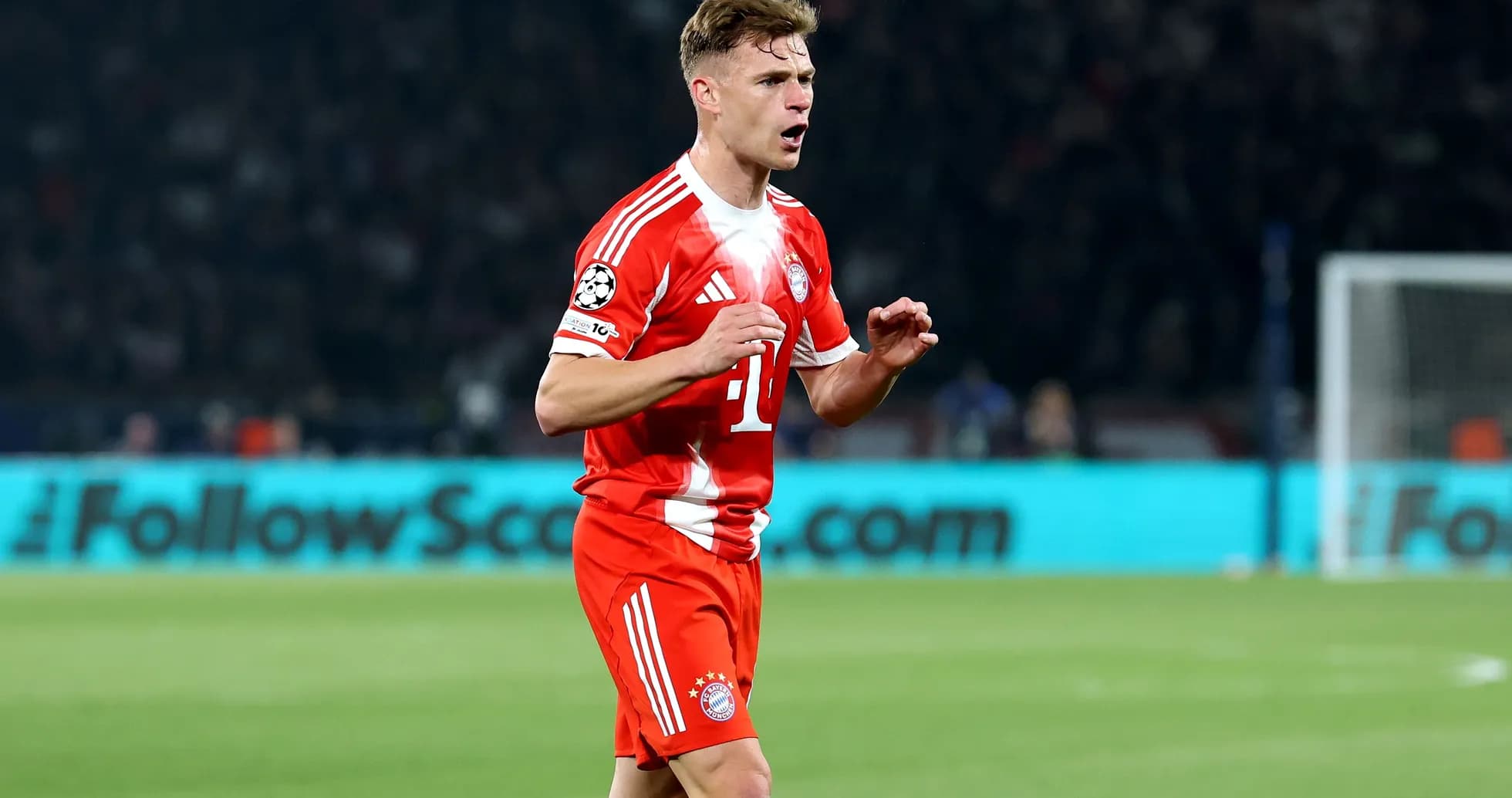
Joshua Kimmich, already simmering from the chaos of the night, could barely hide his irritation. “That’s really frustrating, because there’s no opponent behind him who could have scored. The rule could use a tweak,” he said. The 31‑year‑old went further, outlining a vision that runs against the hardline trend of recent years: he would prefer a system in which not every handball in the area automatically results in a penalty, with accidental incidents punished less severely.
Vincent Kompany chose his words carefully but made his stance clear. The Bayern manager labelled the incident “highly debatable”, a diplomatic phrase that still carried an edge. Sporting director Max Eberl, speaking in the mixed zone, echoed the frustration while acknowledging the futility of dwelling on it.
“There’s plenty to discuss. The ball hits the body first, then the hand, so perhaps it shouldn’t have been given. But what’s the point of getting worked up now? Unfortunately, he blew the whistle,” Eberl said, summing up the sense of injustice and resignation in a single breath.
Former internationals weigh in
The verdict from the pundits’ chairs was just as scathing. Two Prime experts and former Germany internationals, Christoph Kramer and Mats Hummels, tore into the decision and the technology that underpinned it.
“It’s that super slow-motion again; that’s the worst thing in football, it makes everything look much worse,” Kramer complained, pointing to a growing belief among players that freeze-frames and frame-by-frame replays distort the reality of split-second actions.
Hummels focused on the optics of the replay. “After the shot, the hand flails away, which makes it look worse. The ball bounces off the hip; I always thought that shouldn’t be a penalty,” he said. In his view, the decisive touch off Davies’ hip should have been the end of the discussion, not the beginning.
The argument cut to the heart of the modern handball debate: should referees punish the outcome or the intention? On this night, outcome won.
Goals, chaos and a tie left hanging
The controversy unfolded inside a match that was already tearing up the record books. By half-time, PSG and Bayern had produced the highest-scoring first half in Champions League semi-final history, Bayern trailing 3–2 in a wild, open contest that swung like a pendulum.
After the interval, Paris looked ready to run away with the tie. The pressure told in a brutal two-minute burst. Khvicha Kvaratskhelia struck in the 56th minute, Ousmane Dembélé followed in the 58th, and suddenly the scoreboard read 5–2. Bayern were reeling.
“You all saw what happened after the 5–2. You’re standing on the pitch thinking, what on earth is going on? We weren’t three goals worse than them,” Kimmich admitted, describing that hollow feeling players know too well when the scoreline and the performance don’t quite align.
In that moment, the semi-final teetered on the brink of collapse for Bayern. Chase the game recklessly and risk humiliation? Or shut up shop and accept a heavy defeat to protect what was left of the tie?
“It was important to stay relatively calm. The dilemma is clear: do you throw caution to the wind to get back into it, or do you try to avoid the worst-case scenario?” Kimmich said. Bayern chose something in between – and it kept their season alive.
Dayot Upamecano rose in the 65th minute to head in and drag the score back to 5–3, a goal that restored belief as much as it adjusted the aggregate. The Allianz Arena suddenly felt a little closer. Shortly after, the outstanding Luis Díaz cut through again and made it 5–4, turning what had threatened to become a rout into a one-goal thriller.
The final whistle came as a relief to PSG and as a strange, conflicted moment for Bayern. Relief at the comeback. Regret at what they had allowed to happen.
“We always knew it would be a back-and-forth contest, but not quite this open,” Kimmich reflected afterwards. “It feels odd to be losing by only one goal. We were three down, fought back, and still needed to equalise. Paris were clearly tiring at the end.”
Allianz Arena awaits the verdict
So the semi-final moves to Munich with the tie finely balanced at 5–4 to PSG and the sense that the decisive blows are still to come.
On 6 May at the Allianz Arena, Kimmich and his team-mates will try to turn the injustice they feel – over the handball, over the way the game ran away from them – into fuel. One goal is all they need to erase in front of their own crowd.
If Bayern can complete the turnaround and reach Budapest at the end of May, they will meet either Arsenal or Atlético Madrid, who open their own semi-final on Wednesday.
By then, the arguments over Davies’ handball may have faded. Or they may stand as a defining moment in a campaign that now hangs on the finest of margins.