Champions League Showdown: Chelsea vs Paris Saint Germain
Stamford Bridge hosted this UEFA Champions League 1/8 final second leg between Chelsea and Paris Saint Germain, with S. Vincic in charge and the tie decided in regular time as the visitors ran out 3–0 winners. At the break the score was 0–2, and Paris Saint Germain closed the night with a 0–3 full-time margin.
1. Context: Rankings, Form and Season Profile
Standings snapshot (Champions League 2025)
- Chelsea
- Rank: 6th
- Points: 16
- Description: Promotion – Champions League (Play Offs: 1/8-finals)
- Overall in standings: 8 matches, 5W–1D–2L, 17–10 goal record (goal difference +7)
- Home in standings: 4W–0D–0L, 10–1 goals – an excellent home record coming into this tie.
- Paris Saint Germain
- Rank: 11th
- Points: 14
- Description: Promotion – Champions League (Play Offs: 1/16-finals)
- Overall in standings: 8 matches, 4W–2D–2L, 21–11 goals (goal difference +10)
- Away in standings: 2W–1D–1L, 10–5 goals – already a strong away side before this trip.
Overall season profile (Champions League 2025)
Using the team season statistics (the primary reference for totals):
- Chelsea – overall this season
- Matches: 10 (5 home, 5 away)
- Results: 5W–1D–4L
- Goals:
- For: 19 (10 home, 9 away) – 1.9 per game on average
- Against: 18 (4 home, 14 away) – 1.8 conceded per game
- Home defensive record before this match was solid: 4 goals conceded in 5 games and 3 clean sheets.
- Clean sheets: 3
- Failed to score: 1 match
- Penalties: 3 taken, 3 successful penalties, none missed (100% conversion so far this season).
- Discipline (yellow cards by minute range):
- Spikes between 31–60' (7 yellows combined) and a notable late-game trend with cards also appearing from 91–105'.
- Red cards: 1, shown between 91–105'.
- Paris Saint Germain – overall this season
- Matches: 12 (6 home, 6 away)
- Results: 7W–3D–2L – a stronger overall record than Chelsea.
- Goals:
- For: 34 (18 home, 16 away) – 2.8 per game, a high-powered attack.
- Against: 17 (10 home, 7 away) – 1.4 conceded per game.
- Clean sheets: 3
- Failed to score: only 1 match.
- Penalties: 1 taken, 1 successful penalty, none missed.
- Discipline (yellow cards):
- Concentrated in 16–30', 31–45' and especially 76–90', then again from 91–105'.
- Red cards: 2 overall, one between 31–45' and one between 91–105'.
From a season-wide perspective, Paris Saint Germain arrived with the more explosive attack (34 vs 19 goals) and a slightly tighter defense (17 vs 18 conceded), while Chelsea’s main strength had been their home form – which this 0–3 result has badly dented.
2. Tactical Setups and Squad Structure
Chelsea: 4-2-3-1 base
Formation used: 4-2-3-1 (their most common shape this season – 9 uses in 10 games).
Starting XI
- Goalkeeper: Robert Sánchez (1)
- Back four:
- Right back: Mamadou Sarr (19)
- Centre backs: Trevoh Chalobah (23), Jorrel Hato (21)
- Left back: Marc Cucurella (3)
- Double pivot:
- Andrey Santos (17)
- Moisés Caicedo (25)
- Advanced line of three:
- Right side: Pedro Neto (7)
- Central creator: Cole Palmer (10)
- Left side: Enzo Fernández (8) operating high as a left-sided midfielder/10 hybrid
- Centre forward: João Pedro (20)
This structure leans on Caicedo and Andrey Santos to protect a relatively young central pairing (Chalobah–Hato) while giving Palmer freedom between the lines. Neto and Enzo Fernández are tasked with both progression and pressing from the flanks.
Bench options
A deep attacking bench:
- Forwards: Liam Delap (9), Alejandro Garnacho (49), Estêvão (41), Marc Guiu (38), Shumaira Mheuka (62), Ryan Kavuma-McQueen (76)
- Midfield: Roméo Lavia (45)
- Defence: Josh Acheampong (34), Tosin Adarabioyo (4), Wesley Fofana (29)
- Goalkeepers: Teddy Sharman-Lowe (28), Max Merrick (50)
This gives Chelsea multiple profiles to change the front line (power in Delap, direct dribbling in Garnacho and Estêvão, penalty-box presence in Guiu) plus the option to shift to a back three with Fofana or Adarabioyo if chasing or protecting a result.
Paris Saint Germain: 4-3-3 continuity
Formation used: 4-3-3 (their only system this season – 12/12 games).
Starting XI
- Goalkeeper: Matvey Safonov (39)
- Back four:
- Right back: Achraf Hakimi (2)
- Centre backs: Marquinhos (5), Willian Pacho (51)
- Left back: Nuno Mendes (25)
- Midfield three:
- Right 8: Warren Zaïre-Emery (33)
- Central: Vitinha (17)
- Left 8/6: João Neves (87)
- Front three:
- Right wing: Bradley Barcola (29)
- Central/right hybrid: Ousmane Dembélé (10)
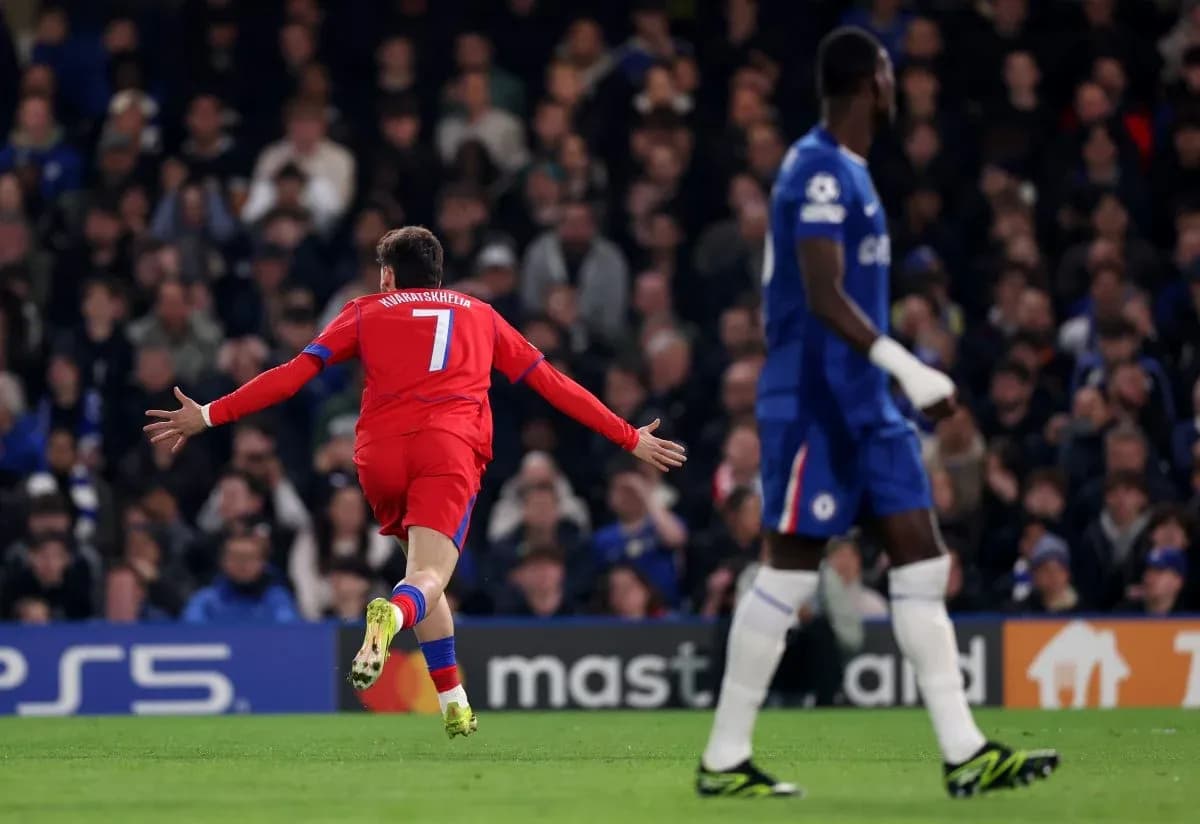
- Left wing: Khvicha Kvaratskhelia (7)
This is a highly fluid 4-3-3 with Hakimi and Nuno Mendes pushing high, Zaïre-Emery and João Neves shuttling, and Vitinha orchestrating. Kvaratskhelia is the primary end-product threat, with Dembélé and Barcola stretching and dribbling.
Bench options
- Attack: Désiré Doué (14), Gonçalo Ramos (9), Ibrahim Mbaye (49)
- Midfield: Senny Mayulu (24), Kang-in Lee (19), Dro Fernández (27)
- Defence: Lucas Hernández (21), Lucas Beraldo (4), Ilya Zabarnyi (6)
- Goalkeepers: Lucas Chevalier (30), Renato Marin (89)
PSG’s bench is balanced: Ramos offers a classic 9, Doué and Kang-in Lee add creativity between the lines, while Hernández, Beraldo and Zabarnyi provide left-footed, ball-playing and aerial defensive options respectively.
3. Availability, Absences and “The Void”
Chelsea absentees
Missing Fixture:
- L. Colwill – knee injury
- D. Essugo – inactive
- J. Gittens – muscle injury
- R. James – hamstring injury
- F. Jorgensen – groin injury
- M. Mudryk – suspended
- T. Sharman-Lowe – inactive
- G. Slonina – inactive
- C. Wiley – inactive
Questionable:
- M. Gusto – illness
The biggest structural void is Reece James at right back and Levi Colwill as a left-footed centre-back. In their absence, Mamadou Sarr and Jorrel Hato started, with Chalobah as the senior centre-back.
Battle 3 – The Void (Chelsea’s defense)
- Colwill’s absence removes a progressive left-foot from the back line and aerial presence; James’ absence removes elite ball progression and crossing from the right.
- Replacement structure:
- Hato (21) steps into the left centre-back role: young, progressive but less experienced at this level.
- Sarr (19) covers right back: more conservative profile than James, reducing Chelsea’s ability to overload wide zones against Kvaratskhelia.
Given Chelsea’s overall season numbers (18 goals conceded in 10 games) and a previously strong home defensive record, the 0–3 here underlines how costly that void in the back line was against PSG’s elite wide players.
Paris Saint Germain absentees
Missing Fixture:
- Q. Ndjantou – muscle injury
- F. Ruiz – knee injury
PSG’s midfield depth is slightly trimmed by Fabián Ruiz’s absence, but with Vitinha, João Neves, Zaïre-Emery and Kang-in Lee available, they could still field a high-quality three and have bench cover.
4. Key Individuals and Statistical Matchups
Battle 1 – Top Scorer vs Opponent Defense
The top scorer in this Champions League season from the data is:
- Khvicha Kvaratskhelia (Paris Saint Germain)
- Goals: 7
- Assists: 4
- Shots: 20 (10 on target)
- Passing: 417 total passes, 13 key passes, 89% accuracy
- Duels: 109, with 52 won
- Dribbles: 34 attempts, 18 successful
- Discipline: 2 yellow cards, no reds
- Penalties: has won 1, but has 0 scored and 0 missed in this competition.
He was up against a Chelsea defense that, overall this season, had conceded 18 goals in 10 games, but just 4 in 5 home matches prior to this fixture. PSG still managed to put three past them on the night, validating the threat profile of their front line.
From Chelsea’s side, there is no Chelsea player listed among the overall top scorers in the provided data, which reinforces the idea that their threat is more distributed, with Cole Palmer and João Pedro likely among their main finishers but without a single standout at Kvaratskhelia’s level.
Battle 2 – Playmaker vs Enforcer
With no league-wide “top yellow cards” table, we pivot to assists vs defensive discipline as instructed.
- Playmaker – Achraf Hakimi (Paris Saint Germain)
- Assists: 5 – joint-leading creative output from full-back.
- Goals: 1
- Key passes: 20
- Passing: 630 passes at 89% accuracy
- Defensive work: 15 tackles, 1 block, 6 interceptions
- Discipline: 1 yellow card, no reds.
Hakimi’s forward surges from right back are a major supply line, especially for Kvaratskhelia and Dembélé attacking the box from wide-to-central positions. His combination of 5 assists and strong defensive numbers makes him a two-way weapon.
- Enforcer – Paris Saint Germain’s red-card leaders
- Ilya Zabarnyi:
- Cards: 1 yellow, 1 red
- Tackles: 7, blocks: 4, interceptions: 1
- Lucas Hernández:
- Cards: 1 red
- Tackles: 2, interceptions: 1
Both are on the bench here, so PSG start with a back four that is statistically cleaner in terms of red cards (Marquinhos–Pacho–Hakimi–Nuno Mendes). The disciplinary edge therefore sits with the starting unit, allowing Hakimi to play aggressively without the same risk profile as Zabarnyi or Hernández.
On Chelsea’s side, the team-level card distribution shows late-game yellow and one late red across the season, but no individual “top card” profile is given. That makes Hakimi’s creativity the clearest standout in this battle, with Chelsea relying more on collective pressing from Caicedo and Santos than on a single enforcer figure.
5. Squad Functionality: How the Pieces Fit
Chelsea – structure and issues exposed
- Defensive line
- The back four is relatively short on Champions League knockout experience, especially without Colwill and James.
- Hato and Sarr are both promising but were asked to contain Kvaratskhelia and Hakimi/Nuno Mendes overlaps – a very high level of difficulty.
- Season numbers (18 goals against in 10 games) suggest Chelsea are solid but not elite defensively; conceding 3 at home aligns more with the away defensive record (14 conceded in 5) than with the previously strong home record.
- Midfield
- Caicedo and Andrey Santos form a double pivot built for ball-winning and transitions.
- Enzo Fernández and Cole Palmer both like to come inside, which can leave the flanks exposed to full-back overlaps if the wide players don’t track diligently.
- Against PSG’s 4-3-3, Chelsea’s double pivot can be outnumbered centrally by Vitinha, Zaïre-Emery and João Neves, forcing Palmer or Enzo to drop deeper and reducing Chelsea’s attacking threat.
- Attack
- João Pedro leads the line, with Palmer as the main creative hub.
- Season-wide, Chelsea average 1.9 goals per game (19 in 10), which is respectable but not at PSG’s 2.8 level.
- With Mudryk suspended, Chelsea lose a pure vertical runner and direct threat in behind, which could have been valuable against PSG’s high line.
Paris Saint Germain – coherence and firepower
- Defensive unit
- Marquinhos anchors the back line with Willian Pacho, giving a blend of anticipation and physicality.
- PSG have conceded 17 goals in 12 games overall this season, a better defensive rate than Chelsea’s 18 in 10.
- Importantly, the starting back four are not the primary red-card offenders (Zabarnyi and Lucas Hernández are on the bench), lowering the risk of a numerical disadvantage in high-pressure moments.
- Midfield
- Vitinha is having an outstanding Champions League campaign:
- 6 goals, 1 assist
- 1264 passes at 93% accuracy
- 15 key passes
- 20 tackles, 11 interceptions
- He is both playmaker and controller, and his 6 goals from midfield give PSG a second scoring wave behind Kvaratskhelia.
- Zaïre-Emery and João Neves add athleticism, pressing and vertical running, ideal for exploiting spaces around Chelsea’s double pivot.
- Attack
- Kvaratskhelia as top scorer and joint top assister is the focal point.
- Dembélé and Barcola stretch the pitch and isolate full-backs in 1v1s.
- With 34 goals in 12 games, PSG’s front three plus Vitinha are producing at a level Chelsea have struggled to match.
6. Blocked Shots and Shooting Dynamics
The raw match event-level shot data is not provided, so we cannot quote exact shot totals or blocked shots for this specific game. Across the season, however:
- Paris Saint Germain’s volume (34 goals, high averages) implies a high shot count and sustained pressure.
- Chelsea’s 19 goals from 10 games suggest a more moderate shot volume and a greater reliance on efficiency.
Because blocked shots data is not present in the JSON, we cannot state exact figures for how many attempts each side saw blocked by the opposition in this fixture. Any such numbers would be speculative and are therefore omitted.
7. Discipline Balance
At season level:
- Chelsea
- Yellow cards: spread across the match, with a clear concentration from 31–60' and again in added time.
- Red cards: 1, shown late (91–105').
- Paris Saint Germain
- Yellow cards: most frequent in 16–30', 31–45', 76–90' and 91–105'.
- Red cards: 2 total, one in the first half (31–45') and one in extra-time period (91–105').
Mentioning both teams’ disciplinary profiles keeps the picture balanced: PSG have slightly more severe disciplinary issues (2 reds vs Chelsea’s 1), but in this particular 90-minute contest, the match finished in regular time without extra-time, and there is no event-level card data provided to detail who was booked.
8. Verdict – Statistical Edge and Squad Outlook
Statistical edge (overall this season)
- Attack: Clear advantage Paris Saint Germain
- PSG: 34 goals in 12 (2.8 per game)
- Chelsea: 19 goals in 10 (1.9 per game)
- Top scorer: Kvaratskhelia (7 goals, 4 assists) vs no Chelsea player in the top-scorer list.
- Defense: Slight advantage Paris Saint Germain
- PSG: 17 conceded in 12 (1.4 per game)
- Chelsea: 18 conceded in 10 (1.8 per game)
- Clean sheets: both on 3, but PSG have maintained solidity while playing a more expansive style.
- Playmaking and control:
- PSG: Hakimi (5 assists), Kvaratskhelia (4 assists) and Vitinha (15 key passes, 93% accuracy) give them multiple elite creative sources.
- Chelsea: rely heavily on Cole Palmer and Enzo Fernández for progression and final-third quality, with less statistical evidence of high-volume creativity at this level.
- Discipline:
- PSG carry more red cards across the season (2 vs Chelsea’s 1), but their starting XI here is relatively clean in that regard.
- Both sides show a tendency to pick up cards in the middle and late phases of games.
Squad-level conclusion
Chelsea’s squad is talented but structurally weakened by key defensive absences (Colwill, James) and the suspension of Mudryk. Their 4-2-3-1 is coherent but depends heavily on a young back line and on Palmer’s creativity to compensate for a comparative lack of firepower.
Paris Saint Germain’s squad is built for this level: a consistent 4-3-3, a top scorer in Kvaratskhelia, a midfield leader in Vitinha, and a high-output full-back in Hakimi. Their bench offers like-for-like quality in almost every line.
Over the course of the season and reflected in this 0–3 at Stamford Bridge, the statistical and squad-depth edge lies clearly with Paris Saint Germain. Their superior attacking numbers, slightly stronger defensive record, and multiple elite individual performers give them a significant advantage in a Champions League 1/8 final context.